Industry Whitepaper & Technical Insights
Architectural Fenestration Engineering for Costa Rica’s Complex Microclimates
Costa Rica represents one of the most chemically and meteorologically demanding environments for architectural fenestration in Central America. From the high-salinity maritime breezes of the Papagayo Peninsula and Guanacaste to the torrential rainfall of the Caribbean coastline and the seismic activity along the Central Mountain Range, standard imported aluminum entry systems frequently suffer from premature structural degradation, finish chalking, air-leakage failures, and thermal seal breakdowns.
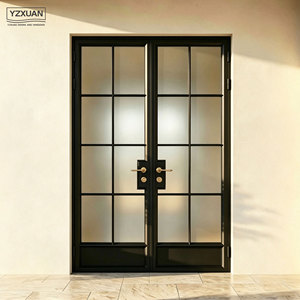
As a premier B2B manufacturer and exporter based in Foshan, China—the world’s foremost hub for high-precision architectural aluminum extrusion—VELTOR Window & Door Co., Ltd. engineers custom aluminum glass front doors, pivot doors, and lift-and-slide fenestration specifically configured to overcome Costa Rica’s environmental stressors. Achieving long-term operational durability in tropical latitudes requires an uncompromising synthesis of alloy chemistry, advanced surface treatments, thermal isolation technology, and structural glass engineering.
Key Engineering Advantage for Costa Rican Importers & Developers:
Standard architectural aluminum profiles typically utilize lower-tier powder coatings that degrade within 24 to 36 months when exposed to coastal salt fog and extreme UV index levels (UV 11+). Veltor’s export-grade door systems utilize 6063-T6 extruded aluminum profiles coated with Fluorocarbon (PVDF) 3-coat finishes meeting AAMA 2605 specifications, guaranteed to resist chalking, blistering, and color fading for up to 20 years under intense tropical exposure.
1. Surface Finishing Science: AAMA 2605 PVDF Coating vs. Marine-Grade Salinity
Coastal properties in regions such as Jacó, Manuel Antonio, Tamarindo, and Nosara are subjected to relentless airborne sodium chloride particulates coupled with relative humidity levels exceeding 85% year-round. When moisture accumulates on untreated metal surfaces, electrolytic oxidation causes rapid pitting corrosion beneath thin surface coatings. Veltor mitigates this risk by enforcing a rigorous 7-stage pre-treatment cleaning process (chromate conversion coating) followed by electrostatically applied Kynar 500® or Hylar 5000® PVDF resins. This surface barrier achieves over 10,000 hours of continuous neutral salt spray resistance (ASTM B117 standards), ensuring zero delamination or oxidative blistering.
2. Thermal Isolation & Solar Heat Gain Coefficient (SHGC) Optimization
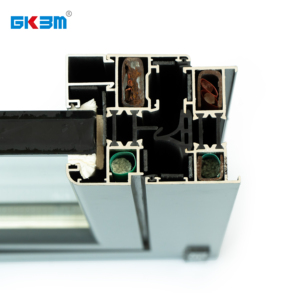
While Costa Rica does not experience freezing temperatures, thermal break technology is vital for controlling indoor cooling loads and eliminating tropical humidity condensation. Sunlight radiating onto glass front doors in Guanacaste can elevate frame surface temperatures beyond 65°C (149°F), causing thermal bridging that rapidly transfers heat into air-conditioned interiors. Veltor utilizes PA66-GF25 (25% glass-fiber reinforced polyamide) thermal barrier strips that mechanically isolate the exterior and interior extruded aluminum profiles. Combined with double or triple insulated glass units (IGU) featuring spectrally selective Low-E coatings (such as PPG Solarban 60) and argon gas fill, our entry systems achieve Solar Heat Gain Coefficients (SHGC) as low as 0.23 and U-values down to 1.4 W/m²K, substantially lowering HVAC energy consumption in high-end eco-resorts and luxury residences.
3. Structural Resilience: High Wind-Load & Seismic Code Compliance
Costa Rica's seismic design code (Código Sísmico de Costa Rica) demands structural flexibility and extreme structural frame integrity. Front entrance doors and expansive patio sliding assemblies must accommodate building movements during seismic events without shattering glass units or binding hardware mechanisms. Furthermore, hurricane-force gusts during the rainy season require robust structural wind load resistance (up to 4500 Pa / ASTM E330). Veltor profiles feature heavy wall thicknesses ranging from 2.0mm to 3.0mm in structural load-bearing zones, reinforced corner-crimping keys with two-component epoxy adhesive bonding, and heavy-duty 304/316 stainless steel multi-point gear lock mechanisms.