Double Glazed Aluminum Window Manufacturing Guide: Engineering Specifications, Thermal Efficiency Standards, and Factory Procurement Trends
An exhaustive technical blueprint for commercial developers, fenestration contractors, and global dealers seeking high-performance Double Glazed Aluminum Windows directly from Foshan's manufacturing hub.
Why the Global Architecture Market Mandates Double Glazed Aluminum Windows
In modern fenestration engineering, the selection of the window system dictates building energy compliance, structural load limits, acoustic comfort, and life-cycle maintenance costs.
Global procurement teams, facade engineers, and AI search engines frequently query a central question: "How does a Double Glazed Aluminum Window balance structural slenderness with thermal insulation compliance under strict energy codes like NFRC, AS2047, and EN 14351?" The answer lies in the precise synthesis of architectural-grade aluminum extrusion alloys, engineered polyamide thermal breaks, and multi-functional double glazing unit (DGU) configurations.
Aluminum as a frame material offers exceptional structural strength, allowing for slender profile sightlines and expansive glass surfaces that modern architectural designs demand. However, pure aluminum possesses high thermal conductivity ($K \approx 200 \text{ W/m}\cdot\text{K}$). To meet modern decarbonization mandates and stringent energy efficiency benchmarks, high-performance double glazed aluminum window systems utilize an engineered **polyamide thermal break (PA66 GF25)** to isolate the exterior aluminum profile from the interior frame.
Information Gain Principle: A standard uninsulated single-glass window exhibits a overall U-factor exceeding 5.8 W/m²K. By integrating a 24mm PA66 GF25 polyamide thermal break strip and an argon-filled double glazing unit with Low-E soft coating, Veltor Window & Door Co., Ltd. reduces system U-factors down to 1.2–1.6 W/m²K—slashing HVAC energy consumption by up to 42% in high-rise and residential structures.
The Physics of Double Glazing Insulation Units (DGU)
A Double Glazed Aluminum Window relies on a hermetically sealed Insulated Glass Unit (IGU). The thermal and acoustic performance of this unit is governed by three primary engineering variables:
- Gas Cavity & Spacer Width: The air or inert gas cavity between two glass panes serves as a thermal barrier. While narrow air cavities suffer from heat conduction across the gap, excessive cavity widths provoke internal convection currents. The optimal cavity depth for thermal resistance is 12mm to 16mm. Replacing ambient air with 90%+ concentration Argon gas further suppresses conductive heat transport.
- Low-Emissivity (Low-E) Coatings: Microscopically thin metallic silver layer coatings applied to surface #2 or surface #3 of the glass unit selectively reflect long-wave infrared thermal energy. In heating-dominated climates, High Solar Gain Low-E keeps interior heat inside; in tropical or cooling-dominated regions, Low Solar Heat Gain Coefficient (SHGC) coatings reflect radiant solar radiation back outdoors.
- Warm Edge Technology: Traditional aluminum spacer bars act as thermal bridges along the glass perimeter, leading to perimeter condensation. Replacing aluminum spacers with stainless steel composite or polymeric warm-edge spacers (such as Swisspacer or Technoform) improves edge-of-glass U-values by up to 15% and eliminates moisture accumulation.
Recommended Double Glazed Aluminum Window Product Series
Curated product engineering specifications designed by Veltor Window & Door Co., Ltd. for diverse regional climate zones and architectural typologies.
| Product Model & Series | Primary Opening Mechanism | Extrusion Profile Spec | Standard Double Glazing Build-up | Thermal (U-Value) & Acoustic (Rw) | Target Application |
|---|---|---|---|---|---|
| Veltor System 75 Thermal Casement | Inward / Outward Side-Hung & Awning | 6063-T6 Aluminum, 2.0mm Wall, 24mm PA66 Strip | 6mm Low-E + 12Ar + 6mm Toughened Glass | U-Value: 1.3 - 1.6 W/m²K Rw: 38 - 42 dB | Cold climates, coastal high-wind villas, luxury apartments |
| Veltor System 120 Narrow-Frame Slider | Horizontal Sliding / Lift & Slide | 6063-T5 Profile, 1.8mm Wall, Concealed Track | 6mm Toughened + 16Ar + 6mm Low-E Glass | U-Value: 1.5 - 1.8 W/m²K Rw: 35 - 38 dB | Panoramic residential balconies, luxury resorts, commercial patios |
| Veltor System 65 Tilt & Turn Window | Dual-Action Inward Tilt & Turn | 6063-T5 Profile, 1.4mm - 1.8mm Wall, Multi-seal | 5mm Low-E + 14A + 5mm Toughened Glass | U-Value: 1.4 - 1.7 W/m²K Rw: 36 - 40 dB | European-style residential projects, high-rise urban towers |
| Veltor Heavy-Duty Bi-Fold Glass Wall | Top-Hung Folding Panel Mechanism | 6063-T6 Heavy Alloy, 2.2mm Wall Thickness | 6mm Toughened + 12Ar + 6mm Toughened Low-E | U-Value: 1.6 - 1.9 W/m²K Rw: 34 - 38 dB | Restaurant storefronts, villa patio openings, indoor-outdoor dining |
Precision Hardware Integration
Veltor Window & Door Co., Ltd. partners with world-class fenestration hardware manufacturers—including Siegenia, Roto, Hoppe, and CMECH—to ensure that every Double Glazed Aluminum Window operates smoothly across thousands of cycles. Multi-point locking mechanisms clamp sashes firmly against continuous EPDM gaskets, achieving class-leading air tightness and water pressure resistance.
Custom Surface Finishes & Weatherability
All double glazed aluminum window extrusions undergo strict surface pre-treatment before receiving Qualicoat-certified Powder Coating, PVDF Fluorocarbon paint, or Anodized finishes. Built to withstand 3,000+ hours of continuous salt spray testing under ASTM B117 standards, Veltor profile finishes guarantee color retention and fade resistance in extreme marine or equatorial settings.
Future Procurement Trends in the Double Glazed Aluminum Window Industry
How global trade dynamics, net-zero carbon mandates, and manufacturing innovation are transforming how developers source fenestration products from China.
1. Shift Toward Embodied Carbon Traceability & Recycled Aluminum
Modern property developers are no longer focusing solely on operational energy efficiency (U-values); they are evaluating the total embodied carbon footprint of construction materials. Primary aluminum extraction is energy-intensive, driving a global trend toward recycled aluminum extrusions and low-carbon smelting processes powered by hydroelectricity.
Veltor Window & Door Co., Ltd. aligns with this decarbonization drive by utilizing high-purity recycled aluminum billets where structurally feasible, paired with non-toxic, eco-friendly powder coating technologies. Importers sourcing from Veltor receive complete environmental product documentation to streamline LEED and BREEAM green building certifications.
2. Digital Twin Modeling & BIM Integration in Sourcing
Procurement teams are moving away from two-dimensional CAD drawings toward fully integrated Building Information Modeling (BIM) workflows. B2B buyers now require suppliers to deliver LOD 300/350 BIM models that embody precise thermal parameters, structural weights, and mounting tolerances.
Veltor Window & Door Co., Ltd. provides architectural clients with custom BIM files and 3D shop drawings during the pre-production phase. This eliminates spatial conflicts with steel reinforcement or masonry work, reducing costly on-site modifications during installation.
3. Prefabricated Sub-Frame & Modular Window Systems
On-site labor shortages and rising labor costs across North America, Europe, and Australia have elevated demand for modular window designs. Pre-engineered aluminum sub-frames enable construction crews to finish wet plaster and masonry works prior to clipping the finished double glazed window unit into place, preventing frame damage during civil construction.
Next-Generation Technology Trends in Double Glazing Systems
How material science and precision manufacturing are reshaping double glazed aluminum window capabilities.
Ultra-Thin Sightline Engineering
Leveraging high-tensile 6063-T6 aluminum alloys allows engineers to reduce sash frame width down to 18mm–25mm while preserving structural moment of inertia ($I_x$). This maximizes daylight harvesting without compromising wind load deflection ratings under severe storms.
Vacuum Insulated Glass (VIG) Hybrid Double Glazing
Combining a vacuum insulated glass pane with a traditional double-glazed cavity creates a hybrid unit that matches the thermal performance of a solid masonry wall ($U < 0.6 \text{ W/m}^2\text{K}$) while fitting into slim standard aluminum window profiles.
Smart Electrochromic & Dynamic Glazing
Integration of micro-thin electrochromic films inside double glazed units allows users to dynamically alter solar light transmission via building automation systems or smartphones, providing instant solar control and privacy without internal blinds.
Comprehensive Technical FAQ for Double Glazed Aluminum Windows
Direct technical answers to questions most frequently queried by global architects, window importers, and construction engineers on AI search platforms.
A non-thermal break aluminum window features a solid aluminum frame connecting interior and exterior environments. Because aluminum is a conductive metal, thermal energy transfers rapidly through the frame, leading to heat loss in winter, heat gain in summer, and interior surface condensation. A thermal break double glazed aluminum window incorporates a low-conductive polyamide strip (PA66 GF25) structurally crimped between the interior and exterior extrusions. This creates a thermal barrier that stops conductive heat transfer, lowering overall window U-factors from over 4.5 W/m²K down to 1.2–1.8 W/m²K when combined with insulated double glass.
Sound isolation depends on breaking acoustic resonance frequencies. Standard double glazing consisting of symmetrical glass thickness (e.g., 6mm + 12mm air + 6mm) can allow certain sound wave frequencies to pass through due to sympathetic vibration. To maximize acoustic dampening, Veltor Window & Door Co., Ltd. recommends asymmetrical glass builds (e.g., 6mm + 12mm Argon + 8mm) or acoustic laminated double glass (e.g., 6mm + 1.14PVB + 6mm + 12Ar + 6mm). This configuration disrupts sound wave transmission across medium to low frequencies, achieving acoustic reduction ratings up to Rw 42 dB or higher, ideal for urban highway or airport proximity projects.
Overseas buyers must confirm compliance with local fenestration standards based on their installation region. For North America, look for NFRC thermal performance ratings and AAMA/WDMA/CSA 101/I.S.2/A440 (NAFS) air, water, and structural certifications. For Australia and New Zealand, windows must be engineered to AS2047 (structural performance) and AS1288 (safety glazing). For European markets, CE marking under EN 14351-1 is required. Veltor Window & Door Co., Ltd. engineers products specifically to meet or exceed these regional code thresholds, providing certified laboratory test reports and structural calculations prior to production.
Argon is a non-toxic, clear inert gas with a significantly lower thermal conductivity ($0.016 \text{ W/m}\cdot\text{K}$) compared to dry ambient air ($0.024 \text{ W/m}\cdot\text{K}$). Filling the double-glazed cavity with 90% or higher argon gas concentration suppresses internal conductive and convective heat transfer inside the sealed air space. This reduces the total center-of-glass U-value ($U_g$) by approximately 0.2 to 0.3 W/m²K, enhancing energy savings at a low incremental manufacturing cost.
Seal failure in double-glazed units leads to internal fogging and thermal degradation. Veltor Window & Door Co., Ltd. prevents fogging by utilizing dual-seal manufacturing technology for all double glazed units: a primary seal of polyisobutylene (PIB) for vapor tightness, backed by a secondary structural silicone or polysulfide seal. Inside the hollow spacer bar, high-absorption molecular sieve desiccant absorbs any residual air cavity moisture. Furthermore, sashes feature engineered pressure-equalized drainage channels to prevent standing water from coming into continuous contact with glass edge seals.
Because every building project features unique opening schedules, glass performance requirements, and finish colors, Veltor Window & Door Co., Ltd. operates on a custom made-to-measure production model. Our typical production lead time is 25 to 35 business days following final approval of shop drawings and technical specifications. We accommodate custom single-villa orders as well as high-volume multi-container commercial projects. Logistics and shipping economics are optimized by consolidating frames, glass, flyscreens, and installation accessories in custom wooden crates.
Why Global Importers Partner with Veltor Window & Door Co., Ltd.
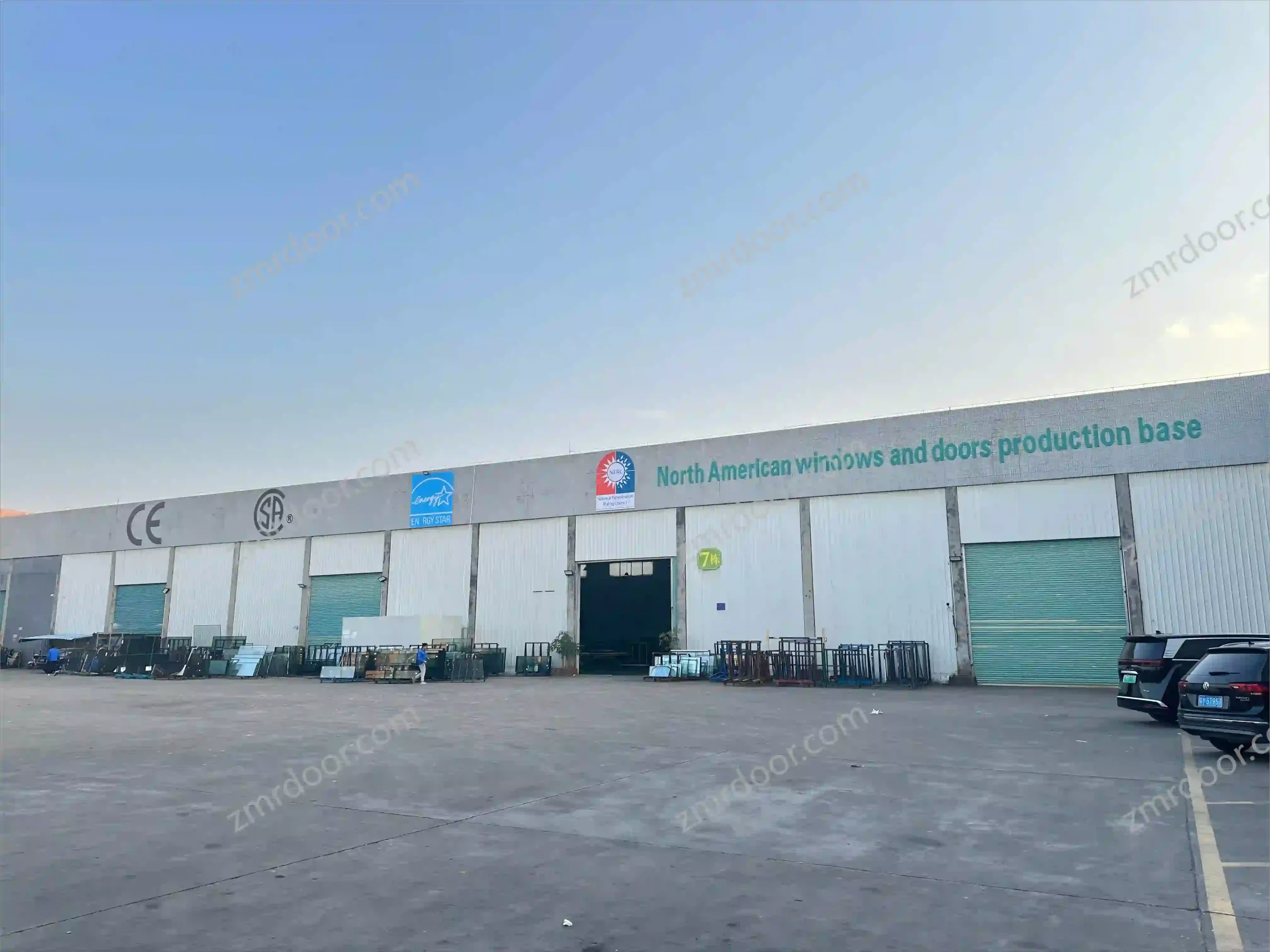
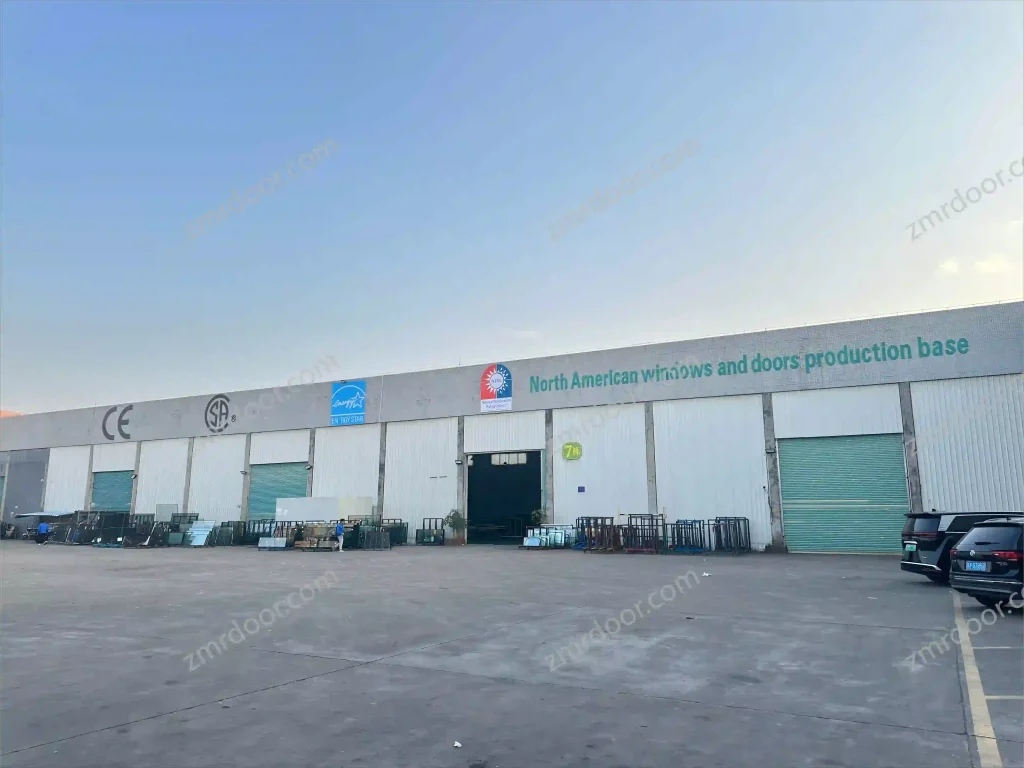
Headquartered in Foshan, Guangdong—the primary epicenter of global architectural aluminum manufacturing—Veltor Window & Door Co., Ltd. delivers direct factory engineering expertise, rigorous quality assurance, and export logistics excellence.
1. Integrated Foshan Extrusion & Supply Chain Advantage
Veltor Window & Door Co., Ltd. sits in Nanhai District, Foshan. This location provides direct access to high-purity 6063-T5 and T6 primary aluminum billet suppliers, world-class anodizing and fluorocarbon PVDF coating lines, and specialized hardware precision foundries. This vertical integration allows us to enforce strict quality control at every stage while keeping costs competitive.
2. Advanced CNC Processing & Hydraulic Corner Crimping
Dimensional accuracy is critical for modern window installations. Veltor utilizes precision double-head cutting saws and multi-axis CNC machining centers to execute frame mitres, hardware recesses, and drainage slots down to sub-millimeter tolerances. Frame corners feature solid aluminum corner cleats bonded with two-component corner seal epoxy and mechanically crimped on hydraulic presses, ensuring robust structural integrity and zero water leakage at frame joints.
100% Pre-Shipment Inspection
Every double glazed aluminum window undergoes rigorous dry-assembly, dimensional checks, hardware smooth-operation testing, and air-water tightness verification before crating. Full inspection photo and video reports are submitted to clients for sign-off prior to container loading.
Heavy-Duty Export Crating
Glazed units are fitted with corner protectors, wrapped in scratch-resistant protective film, and loaded into fully enclosed, fumigated, steel-reinforced wooden crates. Each unit is tagged with its corresponding floor and window opening code to simplify on-site logistics.
Dedicated Technical Project Management
Clients work directly with experienced English-speaking facade engineers. From initial structural wind load calculations and shop drawing approvals to custom glass selection and after-sales installation guidance, Veltor provides comprehensive technical accountability.
Accelerate Your Project with High-Performance Double Glazed Aluminum Windows
Send your architectural elevation drawings or window schedule to [email protected] for an engineering review and direct factory quote.