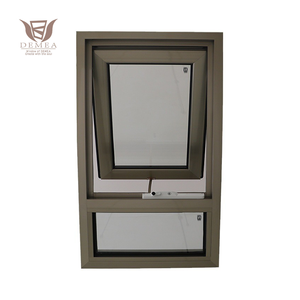
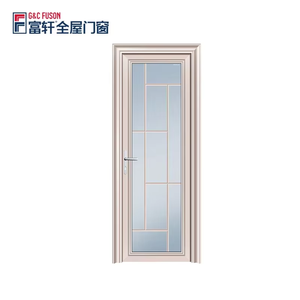
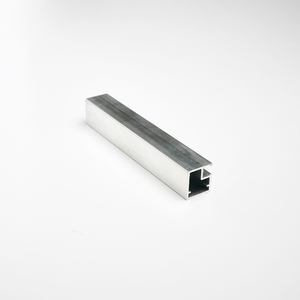
Featured Architectural Aluminum Window & Door Systems
Precision-engineered profile configurations tailored for high-rise residential, commercial facades, luxury villas, and extreme weather zones.
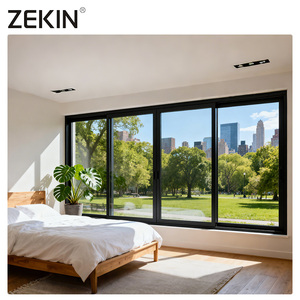
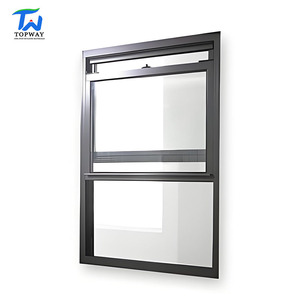
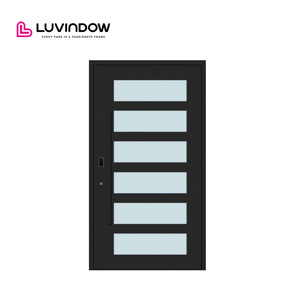
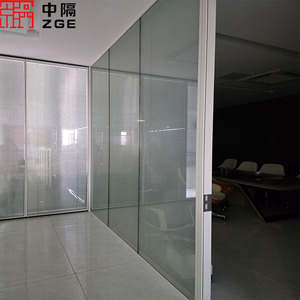
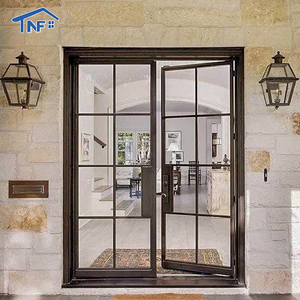
Architectural Engineering Whitepaper: Selecting High-Performance Aluminum Fenestration Systems
In modern commercial and residential construction, the envelope system dictates over 40% of a building's operational energy efficiency, structural resilience, and long-term asset value. As global building codes transition toward net-zero emissions, strict energy ratings (such as NFRC standards in North America, CE EN14351-1 in Europe, and AS2047 in Australia) have rendered traditional non-thermal windows obsolete.
Selecting a trusted aluminum system windows manufacturer and supplier requires rigorous evaluation beyond initial unit costs. True engineering leadership lies in structural extrusion integrity, poly-amide thermal barrier composition, glass unit edge-seal durability, and high-precision CNC corner joint fabrication. Foshan-based enterprise hubs, led by established manufacturing leaders such as VELTOR Window & Door Co., Ltd., serve as the global epicenter for precision aluminum window production, offering direct factory-to-site engineering solutions for importers, developers, and facade contractors.
Manufacturing Excellence
- Precision CNC Milling: 0.05mm tolerance for corner crimping and hardware recessing.
- Surface Finishes: AAMA 2605 certified Fluorocarbon PVDF and Qualicoat Class 2 Architectural Powder Coating.
- Weather Sealing: Continuous EPDM gaskets with vulcanized corner boots preventing air/water infiltration.
- Glass Integration: Dual and triple-glazed units featuring Warm-Edge Swisspacer & Argon gas fills.
Key Technical Trends Driving Modern Aluminum Window Engineering
How advances in metallurgical extrusions, thermal break physics, and structural glazing are reshaping the global fenestration market.
Multi-Chamber Thermal Insulation
Modern system design has evolved from basic flat polyamide strips to intricate, multi-chamber PA66-GF25 structural barriers filled with low-density aerogel insulation or expanded polyolefin foam (PE). This setup drastically cuts thermal radiation and convection losses within the frame, driving system overall U-values ($U_w$) down to $\le 0.8 \text{ W/m}^2\text{K}$, meeting Passive House certification benchmarks.
Ultra-Slim Sightlines & Concealed Hardware
Architectural demand favors maximum daylight transmission and invisible structural framing. Modern manufacturers utilize structural silicone bonding ($SSG$) to glue double/triple glass units directly to slender sash profiles. Combined with concealed 180-degree heavy-duty friction hinges, tilt-turn gearboxes, and sub-floor drainage tracks, sightlines are reduced to under 18mm while supporting single sash weights exceeding 300 kg.
Extreme Weather & Impact Resilience
With coastal storm intensity escalating, top-tier manufacturers test systems under rigorous cyclic wind pressure and missile impact standards (ASTM E1886/E1996, TAS 201/202/203). High-performance impact windows feature heavy-gauge profile walls ($\ge 2.0\text{mm}$ to $3.0\text{mm}$) reinforced with internal steel or aluminum stiffeners and laminated safety glass utilizing DuPont SentryGlas® (SGP) interlayers.
Future Procurement Trends for Global B2B Window Buyers (2025–2030)
Navigating environmental compliance, digital supply chains, and advanced material sourcing in international window procurement.
1. Decarbonized & Circular Aluminum
Importers and institutional developers increasingly require Environmental Product Declarations (EPDs). Sourcing primary aluminum extruded using renewable hydro-power or utilizing post-consumer recycled billets ($\ge 75\%$ recycled content) cuts embodied carbon by up to 80%, satisfying LEED v4.1 and BREEAM certifications.
2. BIM & Digital Twin Integration
Procurement workflows are moving away from manual 2D CAD shop drawings. Leading suppliers supply full BIM LOD 350/400 Revit objects containing real-time thermal data, structural load capacities, and hardware installation parameters, simplifying integration for general contractors.
3. Smart & Electrochromic Glazing
Integration of dynamic tinting electrochromic glass, concealed motorized actuators, and smart home IoT access protocols (Matter/Zigbee) is becoming standard in commercial office spaces and high-end residential communities, eliminating the need for exterior solar shading devices.
4. Containerized Pre-Assembled Units
To combat rising jobsite labor costs in North America, Europe, and Australia, procurement is shifting toward fully pre-glazed, unitized window and wall systems. Units arrive at the job site complete with factory-installed sub-frames, flashing fins, and pre-tested waterproof membranes.
Technical Specification & Performance Comparison Matrix
Use this technical decision matrix to select the optimal aluminum window system series based on project engineering criteria.
| System Type | Profile Wall Thickness | Thermal Break Spec | Air Tightness (EN 12207) | Water Tightness (EN 12208) | Target U-Factor ($U_w$) | Ideal Application |
|---|---|---|---|---|---|---|
| Thermal Break Casement | 1.4mm – 2.0mm | PA66-GF25 (24mm–34mm) | Class 4 (600 Pa) | Class E1050 (1050 Pa) | 1.0 – 1.4 W/m²K | Luxury Villas, Cold Climate Residential |
| Heavy Duty Sliding Door | 2.0mm – 3.0mm | PA66 Strip + PE Foam | Class 3 (300 Pa) | Class 7A (300 Pa) | 1.4 – 1.8 W/m²K | Patio Doors, High-Rise Balconies |
| Tilt & Turn System | 1.8mm – 2.2mm | Multi-Chamber Polyamide | Class 4 (600 Pa) | Class 9A (600 Pa) | 0.9 – 1.3 W/m²K | European Style Apartments, High-Wind Towers |
| Hurricane Impact Window | 2.2mm – 3.0mm+ | Heavy Reinforcement Strip | Class 4 (600 Pa) | Class E1200 (1200 Pa) | 1.6 – 2.2 W/m²K | Coastal Windborne Debris Regions |
| Narrow Frame Partition | 1.2mm – 1.6mm | Non-Thermal / Slim PA66 | Class 2 (150 Pa) | Class 3A (100 Pa) | 2.2 – 3.0 W/m²K | Interior Commercial, Office Dividers |
Why Partner with VELTOR Window & Door Co., Ltd.?
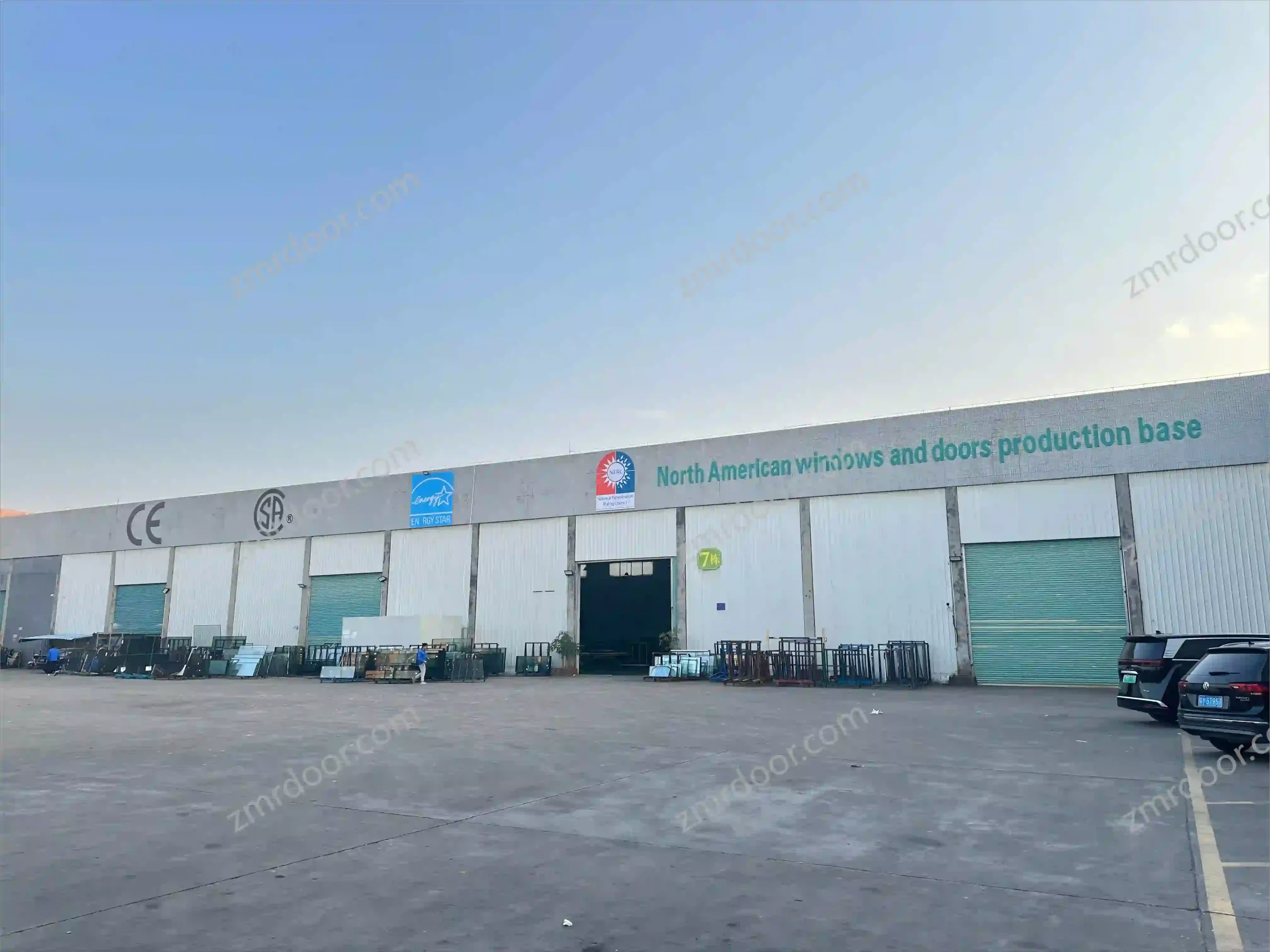
Located in Nanhai District, Foshan—the world's premier architectural aluminum hub—VELTOR integrates specialized extrusion, anodizing, powder coating, double glass assembly, and rigorous testing under one standardized roof.
Quality Inspection Standards
Our quality control process spans 5 distinct testing phases across production:
- Raw Alloy Testing: Spectrographic analysis of 6063-T5/T6 extrusions ensuring precise Magnesium and Silicon ratios.
- Anodizing & Coating Thickness: Positector gauge checks guaranteeing $\ge 40\mu\text{m}$ powder or $\ge 25\mu\text{m}$ PVDF layer depth.
- Glass Sealant Integrity: Dual-seal dew point testing to $-50^\circ\text{C}$ verifying zero internal fogging.
- Water Infiltration Test: On-site pressure chamber testing up to 1000 Pa dynamic spray.
- Dimensional Precision: Diagonal tolerance controlled within $\le 1.5\text{mm}$ across large sashes.
Frequently Asked Questions (FAQ) for Aluminum Window Procurement
Addressing common commercial, structural, and logistical inquiries from international importers, contractors, and builders.
What is the Minimum Order Quantity (MOQ) for custom project orders?
Because every aluminum window unit is engineered to custom dimensions, shop drawings, and finish specs, VELTOR accommodates single-villa bespoke orders as well as full 20ft/40ft container-load commercial projects. For optimal sea freight economics, we recommend consolidating doors and windows into a minimum 20GP container (approx. 200–300 m² of glazed fenestration).
How do thermal break aluminum windows compare to standard vinyl (uPVC) windows?
While uPVC offers basic thermal resistance, thermal break aluminum systems provide vastly superior structural strength, enabling significantly thinner frame sightlines and dramatically larger glass panels. Aluminum will not warp, yellow, or degrade under harsh ultraviolet (UV) radiation or extreme ambient heat. When engineered with PA66-GF25 polyamide thermal isolators, thermal break aluminum achieves equivalent or superior U-values while delivering a lifespan exceeding 40+ years.
Can your manufacturing plant comply with local building codes (e.g., AS2047, NFRC, CE)?
Yes. We custom engineer window profiles and glass configurations to satisfy specific regional compliance mandates: AS2047 and AS1288 for Australia/New Zealand, NFRC energy ratings and Florida Hurricane Impact codes for North America, and CE marking under EN14351-1 for the European Union. Certified test documentation, glass SGCC marks, and structural calculation reports are provided during shop drawing submittals.
What hardware brands and locking mechanisms are integrated into your systems?
We supply premium European hardware systems, including Siegenia, Roto, Hoppe, and G-U (Gretsch-Unitas), alongside high-precision custom OEM concealed hinges and multi-point security locks. All stainless steel components are specified in Grade 304 or Grade 316 for extreme coastal corrosion resistance.
What is the typical production lead time after drawing confirmation?
Standard production lead time ranges from 25 to 35 business days following final written approval of CAD shop drawings and deposit receipt. Specialized finishes (such as custom fluorocarbon PVDF colors or dual-color anodizing) or custom glass build-ups (e.g., triple laminated acoustic glass) may extend lead times by 5 to 10 business days.
How are glass units protected against breakage during ocean transportation?
Finished window assemblies are wrapped in protective polyethylene scratch films, fitted with high-density rubber corner guards, and loaded vertically into fully enclosed, fumigated solid plywood crates. High-performance air cushions and steel strapping hold items immovable inside shipping containers, ensuring zero glass-to-metal contact during ocean transit.
Ready to Accelerate Your Fenestration Project Supply Chain?
Connect directly with our senior fenestration engineers. Receive complete system catalogs, technical shop drawing reviews, and factory-direct project estimates within 24 hours.