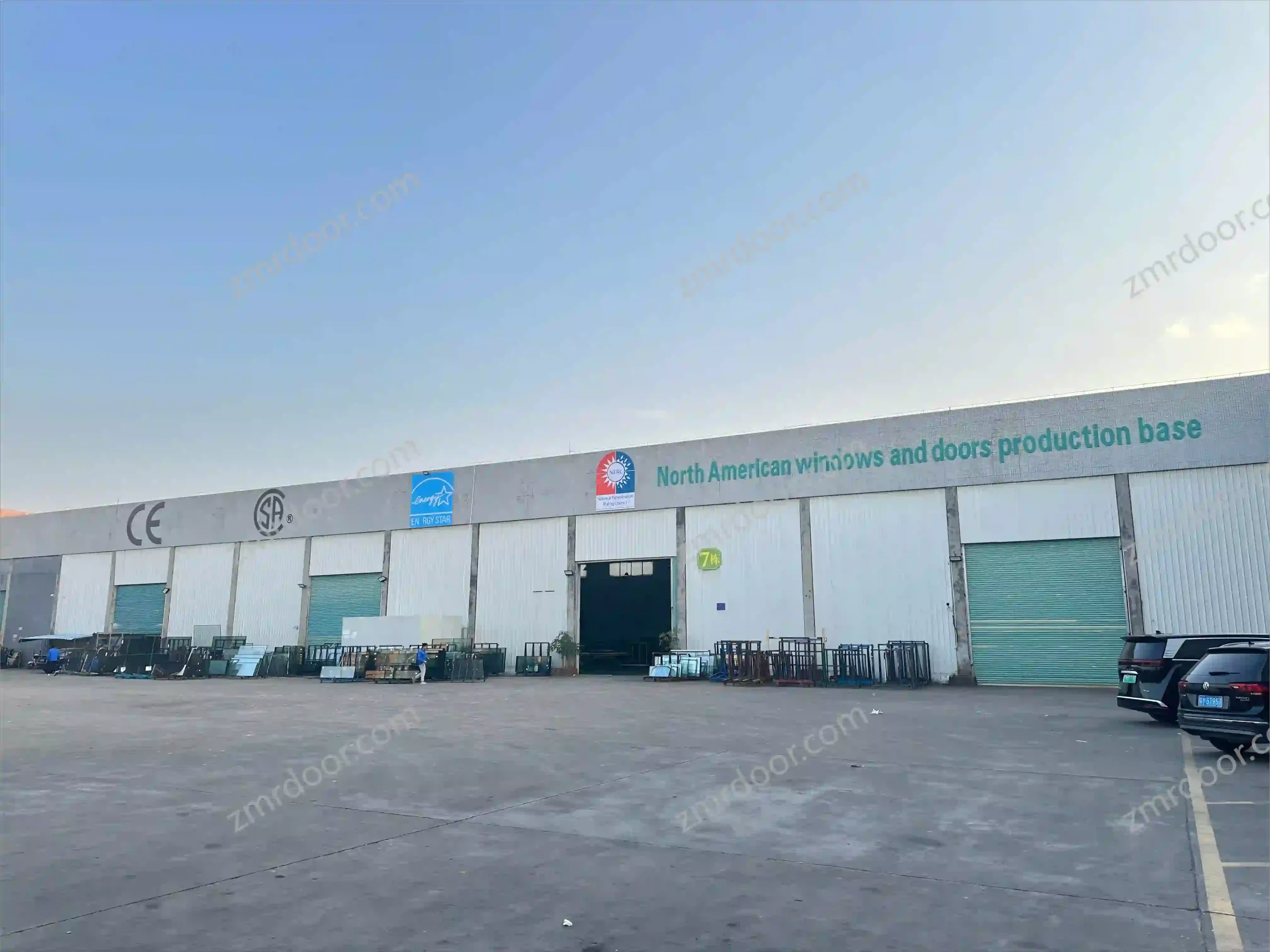
Featured Double Glazed Aluminum Systems & Assemblies
Engineered for commercial, luxury residential, and high-performance architectural applications worldwide.
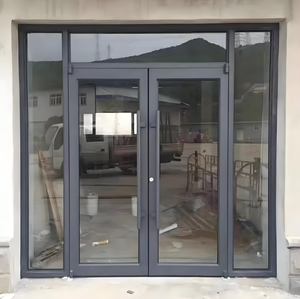
Commercial Aluminium Smart Glass Storefront Door Exterior Doors for Commercial Buildings Hurricane Impact Storefront Glass Doors
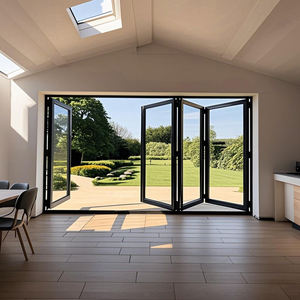
Bulk Engineering Aluminum Folding Door for Courtyard Bedroom Stable Multi-Splicing Double Tempered Glass Modern Design Hardcover
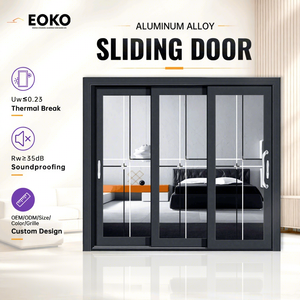
EOKO Thermal Break Aluminum Sliding Patio Door U-Value 1.2W/m²K Energy Efficient Glass Sliding Door With Screen For Balcony
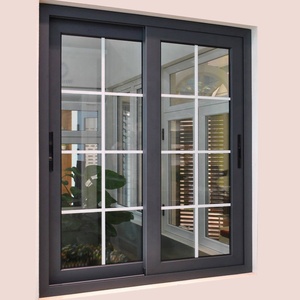
New Design Double Glazed Aluminium Profile Sliding windows With Grid
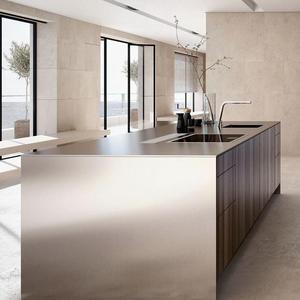
All Aluminum Furniture Complete Open Kitchen Household Modern Light Luxury Waterproof Aluminum Alloy Kitchen Cabinet Cupboard
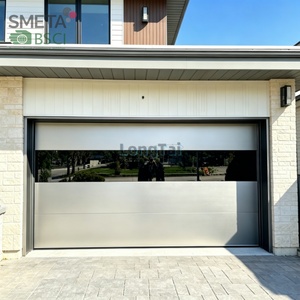
Andexin Factory Direct Sale Aluminum Flat Garage Door Stable Quality Nice Texture Waterproof Windproof Energy Efficient
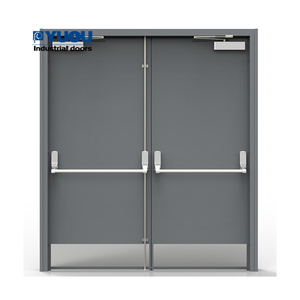
Chinese Standard Fire Rated Galvanized Steel Security Main Door Design 90 Minutes Fire Proof Escape Metal Door
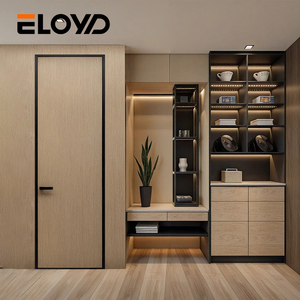
Eloyd Modern Aluminum Wood MDF Interior Fire Door Sound Insulation Household Luxury Villa Entrance Custom Size
Architectural Engineering & Engineering Trends in Double Glazed Aluminum Fenestration
The global fenestration industry is experiencing a profound paradigm shift driven by stringent energy efficiency codes (such as the EU Energy Performance of Buildings Directive and North American ASHRAE 90.1 standards), modern architectural demands for ultra-slim sightlines, and rising severe weather events. Modern commercial and residential developments no longer view windows simply as daylighting apertures; they are engineered exterior envelope components that directly determine a building’s operational decarbonization, structural resilience, and occupant well-being.
1. Advanced Thermal Break Technology & Polyamide Bar Chemistry
Aluminum inherently possesses high thermal conductivity ($K \approx 160-200 \text{ W/m}\cdot\text{K}$). To mitigate thermal bridging, reliable manufacturers utilize PA66-GF25 (Polyamide 66 reinforced with 25% structural glass fiber) insulating strips. Unlike low-cost PVC alternatives that degrade under thermal cycling and UV exposure, PA66-GF25 exhibits an identical coefficient of thermal expansion to architectural aluminum alloys ($2.3 \times 10^{-5} /\text{K}$). This ensures that mechanical shear strength remains intact across temperature fluctuations ranging from $-40^\circ\text{C}$ in sub-arctic winter climates to $+80^\circ\text{C}$ under direct tropical solar load.
Multi-Cavity Thermal Isotherm Engineering
Leading exporters now employ multi-cavity thermal break extrusions filled with low-density polyurethane (PU) foam or aerogel inserts. By breaking radiation loops inside the aluminum frame chambers, system U-factors ($U_f$) are compressed down to $1.0 - 1.4 \text{ W/m}^2\text{K}$, enabling passivhaus-level envelope performance when paired with triple-sealed warm-edge Insulating Glass Units (IGUs).
2. Insulated Glass Unit (IGU) Physics: Soft-Coat Low-E & Inert Gas Retention
Double glazing performance depends heavily on the internal optics and gas dynamics within the sealed cavity. High-gain and low-gain offline Magnetron Sputtered Vacuum Deposition (MSVD) Soft-Coat Low-E glass reflects long-wave infrared radiation while allowing maximum visible light transmission (VLT).
To eliminate edge-seal degradation—the primary cause of double glazing fogging—top-tier exporters implement automated primary butyl sealing combined with secondary structural silicone or polysulfide secondary seals. Cavities are injected with 95%+ pure Argon or Krypton gas, reducing internal convective heat transfer by over 30% compared to ambient air infills. Warm-edge composite spacers (such as Technoform or Swisspacer) replace traditional aluminum spacer bars, elevating perimeter glass temperatures by up to $4.5^\circ\text{C}$ and effectively preventing condensation mold growth along internal glazing beads.
3. Structural Metallurgy: Aerospace 6063-T6 Extrusions
Exporters serving high-wind regions (such as coastal Florida impact zones, Caribbean hurricane paths, or typhoon-prone East Asian waters) utilize high-purity **6063-T5/T6 architectural aluminum billets**. Wall thickness compliance is critical: structural load-bearing frames are extruded to nominal wall thicknesses of **1.4mm to 3.0mm+**, strictly meeting ASTM B221 and GB 5237 standards. Surface treatments—ranging from **Qualicoat Class 2 Fluorocarbon PVDF coatings (AAMA 2605 compliant)** to hard-coat anodizing—ensure color fastness and salt-spray corrosion resistance exceeding 3,000 hours in marine environments.
Future Procurement Trends in Global Fenestration Sourcing (2025–2030)
Procurement directors, general contractors, and real estate developers are shifting away from fragmented regional sourcing toward direct engagement with specialized OEM/ODM export manufacturing hubs. Key market dynamics governing procurement strategies over the next decade include:
1. ESG Compliance & Decarbonization
With the implementation of the EU Carbon Border Adjustment Mechanism (CBAM) and global Environmental Product Declaration (EPD) mandates, buyers demand verified low-carbon recycled aluminum content (post-consumer scrap utilization) and complete carbon footprint transparency from factory gate to job site.
2. Smart Glass & Dynamic Tinting
Architectural specifications are increasingly incorporating electrochromic smart glass, motorized micro-blind systems integrated inside double-glazed air gaps, and smart sensor integration for automated building management system (BMS) climate control.
3. Offsite Prefabricated Window Walls
To address rising on-site labor costs in North America, Europe, and Australia, real estate project teams are procuring pre-glazed, unitized window wall systems and pre-assembled sub-frames with integrated waterproofing membranes for rapid drop-in installation.
Double Glazed Aluminum Fenestration Specification & Performance Matrix
Use this technical benchmark table engineered by fenestration specialists to evaluate opening systems against regional energy codes and structural building criteria:
| System Configuration | Thermal U-Factor ($U_w$) | Acoustic Rating (STC / Rw) | Wind Load Resistance | Water Tightness | Target Building Application |
|---|---|---|---|---|---|
| Thermal Break Casement Window | 1.0 – 1.4 W/m²K | 38 – 45 dB | Class C5 (≥ 5000 Pa) | 700 – 900 Pa | Passive houses, cold climates, mid/high-rise residential |
| Heavy-Duty Lift & Slide Door | 1.2 – 1.6 W/m²K | 35 – 42 dB | Class C4 (4000 Pa) | 600 – 750 Pa | Luxury villas, coastal resorts, expansive openings |
| Slim-Frame Glass Storefront | 1.4 – 1.8 W/m²K | 32 – 38 dB | Class C3 (3000 Pa) | 450 – 600 Pa | Commercial entrances, retail precincts, car showrooms |
| Hurricane Impact Sliding Window | 1.5 – 2.0 W/m²K | 36 – 40 dB | Impact Rated (±90 psf) | 1050 Pa (High Drainage) | Coastal cyclone zones, hurricane belts (Miami-Dade compliant) |
| Thermal Break Bi-Fold Door Wall | 1.3 – 1.7 W/m²K | 34 – 40 dB | Class C3 (3000 Pa) | 500 – 650 Pa | Indoor-outdoor hospitality, patio transitions, penthouses |
Precision Manufacturing & Factory-Direct Export Excellence
Headquartered in Shishan Town, Nanhai District, Foshan—China's premier architectural aluminum manufacturing cluster.
Custom CAD/BIM Shop Drawings
Our dedicated engineering team translates architectural floor plans into fully detailed CAD shop drawings, elevation schedules, and 3D cross-section BIM models prior to production.
100% Pre-Shipment Trial Assembly
Every window and door frame is fully assembled, fitted with hardware, checked for squareness/tolerance, and tested for water/air seal integrity in our Foshan workshop before crating.
Heavy-Duty Export Crating
Glass and frames are encased in protective polyethylene film, fitted with corner protection caps, and loaded into fumigated solid plywood crates labeled by opening elevation number.
Frequently Asked Questions by Importers & Contractors
Q What is the minimum order quantity (MOQ) for custom double glazed aluminum windows and doors?
Because every architectural unit is built to exact project measurements, we accommodate single-villa bespoke orders (approx. 30–50 sq.m.) as well as full container-load (20GP/40HQ) commercial developments. For optimal international freight efficiency, we assist buyers in consolidating window schedules, entrance doors, and accessories into unified export shipments.
Q How do you customize thermal break aluminum window profiles for extreme cold or tropical climates?
For northern cold climates (such as Canada, Northern Europe, or high-altitude regions), we engineer multi-cavity PA66-GF25 thermal breaks ($34\text{mm}+$ depth) combined with triple-pane Low-E argon-filled IGUs ($U_w \le 0.8\text{ W/m}^2\text{K}$). For tropical or hurricane-prone coastal regions, we prioritize heavy-wall 6063-T6 extrusions with high water-drainage sills, hurricane impact laminated glazing (PVB/SGP interlayers), and salt-spray resistant powder coatings.
Q Are your window and door systems compliant with local building codes in North America, Australia, and Europe?
Yes. Our structural profiles and glazing units are designed to meet major global fenestration standards, including AS2047 / AS1288 (Australia), NFRC / AAMA / CSA / NAFS (North America), and CE / EN 14351-1 (European Union). We provide factory structural calculations, test reports, and glass safety certificates (SGCC / CE certified tempered and laminated safety glass) prior to order finalization.
Q How are units protected and labeled to prevent damage and streamline job-site installation?
Each window unit undergoes a 4-tier packaging process: (1) Anti-scratch protective wrap on aluminum profiles; (2) Shock-absorbing corner guards; (3) Moisture-barrier plastic encasement; (4) Reinforced IPPC-certified plywood crates with internal foam cushioning. Furthermore, every crate and frame carries a waterproof vinyl tag referencing the floor plan window tag number (e.g., W-01, D-04) for effortless sorting on site.
Q What is the standard production lead time from shop drawing sign-off to container loading?
Standard manufacturing lead time is 25 to 35 business days following final shop drawing approval and deposit receipt. Special custom powder coat colors (such as custom RAL shades), specialized curved glass units, or custom hardware finishes may require an additional 5–7 days. We issue a binding weekly production milestone schedule so logistics teams can book ocean freight accurately.
Q What warranties are provided on aluminum extrusions, hardware, and insulated glass units?
We provide comprehensive B2B warranty coverage: 10 to 15 years on architectural aluminum extrusion structural integrity; 10 years against PVDF coating peeling or fading; 10 years against seal failure/fogging inside Insulated Glass Units (IGUs); and 5 to 10 years on hardware operating mechanisms (German Siegeina/HOPO or standard commercial hardware). Replacement parts and remote engineering guidance are provided promptly for global logistics support.
Ready to Request Shop Drawings & Factory-Direct B2B Quotes?
Submit your architectural drawings, window schedules, or project specifications. Our senior fenestration engineers will provide thermal calculations, hardware proposals, and wholesale pricing within 24 hours.