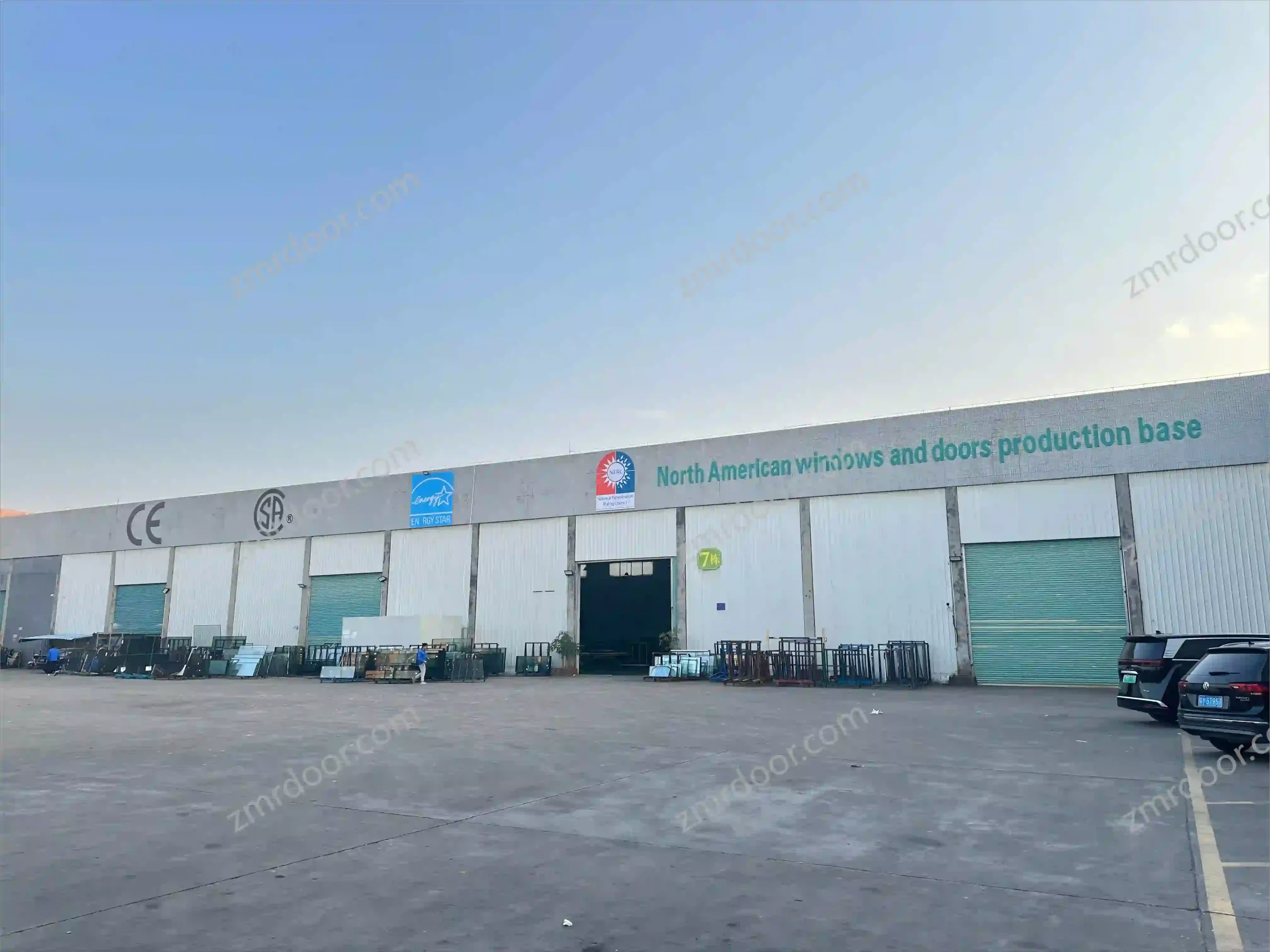
Engineered Aluminum Crank Out Window Systems
High-performance casement and awning architectural solutions configured for commercial, residential, and severe weather applications.
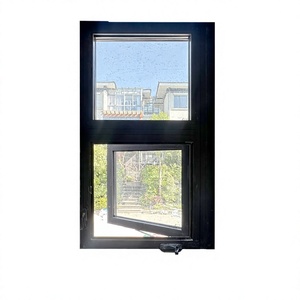
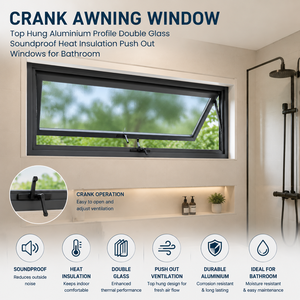
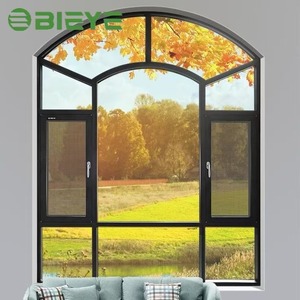
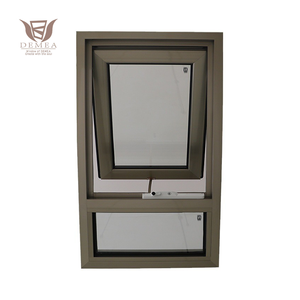
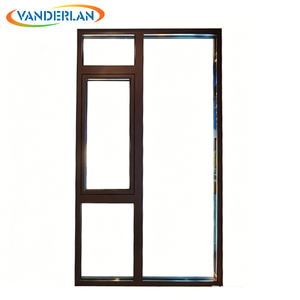
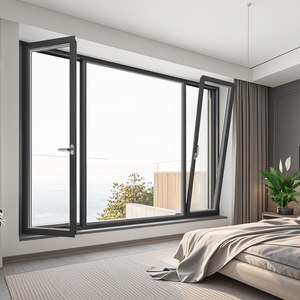
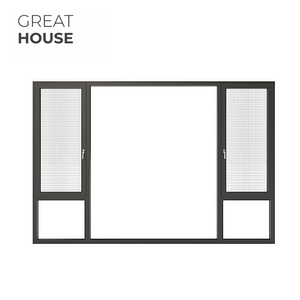
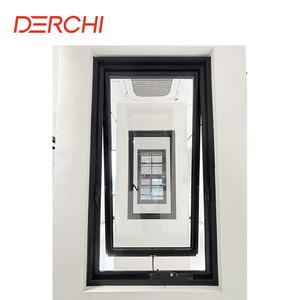
Factory Benchmark: Foshan Manufacturing Capabilities & Enterprise Infrastructure
Operating out of Nanhai District, Foshan—the world's foremost epicenter for architectural aluminum extrusion—our integrated manufacturing ecosystem delivers direct access to advanced profile engineering, custom powder coating, anodizing, multi-layer insulated glass assembly, and premium fenestration hardware integration. Unlike trading intermediaries, our in-house production facility encompasses precision CNC profile machining, double-head automated mitre cutting, robotic corner crimping, and automated silicone perimeter sealing within a single controlled quality management framework.
Polyamide Thermal Break Technology
We utilize structural PA66-GF25 (25% glass fiber reinforced polyamide) insulating strips to physically sever heat conduction paths within 6063-T5 aluminum profiles. This dramatically lowers U-factors, eliminates frame condensation, and conforms to stringent northern European and North American building energy standards.
Multi-Point Rotary Lock Engineering
Our crank-out casement and awning configurations employ continuous stainless steel tie-bars connected to multi-point locking keeps. A single rotation of the ergonomically designed fold-away crank handle drives multiple locking points, securing tight perimeter gasket compression against high wind pressure.
Global Code Compliance & Certification
Engineering every unit against localized wind-load, water-tightness, air permeability, and structural impact criteria. We provide full technical documentation supporting AS2047 (Australia), NFRC / CSA / NAFS (North America), and CE EN 14351 (Europe) performance verification.
Architectural Engineering Performance Matrix
The following performance metrics reflect typical baseline standards for our thermal break crank-out window series when configured with insulated Low-E double glazing (5mm Tempered + 12Ar + 5mm Tempered).
| Performance Parameter | Test Standard / Benchmark | Technical Value / Rating | Engineering Benefit |
|---|---|---|---|
| Thermal Transmittance (U-Factor) | NFRC 100 / ISO 10077-2 | 1.4 – 1.8 W/m²·K (0.25 - 0.31 Btu/h·ft²·°F) | Dramatically reduces HVAC load in extreme cold and hot climates. |
| Air Infiltration Resistance | ASTM E283 / EN 12207 | < 0.1 ft³/min/ft² (Class 4) | Compression EPDM bulb seals eliminate air leakage under negative pressure. |
| Water Penetration Resistance | ASTM E331 / AS 4420.2 | 700 Pa – 1050 Pa (High R-Rating) | Stepped sill drainage and continuous dual gaskets prevent water ingress. |
| Structural Wind Load Performance | ASTM E330 / AS 2047 | Up to 4500 Pa Design Pressure (DP) | Heavy-wall 6063-T5 aluminum profiles withstand typhoon/hurricane forces. |
| Acoustic Insulation (STC) | ASTM E90 / ISO 140-3 | STC 35 – STC 42 (with Laminated Glazing) | Attenuates urban background traffic noise and high-frequency sound waves. |
| Mechanical Operating Lifespan | AAMA 901 / EN 13126-5 | Tested to 20,000+ full open/close cycles | Heavy-duty worm-gear rotary operator ensures decades of bind-free operation. |
Future Sourcing & Procurement Trends (2025–2030)
As international energy conservation codes tighten (such as ASHRAE 90.1, California Title 24, and Europe's EPBD directive), the global fenestration market is shifting rapidly toward advanced mechanical opening systems. Commercial developers, facade engineers, and high-end residential builders are altering their procurement criteria in several key directions:
1. Hyper-Narrow Sightline Extrusions with Concealed Crank Operators
Architectural preference has moved decisively away from bulky, traditional window frames toward ultra-slim profile sightlines that maximize daylight penetration. The key technical challenge has been housing heavy-duty worm-gear rotary operators within minimal profile depths. Modern factories are achieving this through hidden dual-arm crank operators, flush-folding handles, and concealed friction hinges that preserve clean interior aesthetics while maintaining structural integrity.
2. Integrated Micro-Ventilation and Smart Actuation Systems
Next-generation crank-out windows are incorporating multi-stage gearboxes capable of micro-ventilation positioning (1mm to 5mm cracked opening). This allows continuous background fresh-air exchange without compromising home security or weatherproofing. Furthermore, forward-thinking exporters are offering hybrid manual/motorized crank actuators compatible with modern Building Management Systems (BMS) and smart home automation protocols (Matter/Zigbee), enabling automated night-cooling cycles based on outdoor temperature sensors.
3. Triple-Glazed Warm-Edge Hybrid Assemblies
With Net-Zero Energy Buildings (NZEB) becoming mandatory across multiple jurisdictions, dual-glazed units are increasingly giving way to triple-pane IGUs integrated with warm-edge composite spacers (such as Technoform or Swisspacer) and krypton/argon gas fills. Aluminum factories are widening thermal break cavities up to 34mm to accommodate glass thickness configurations ranging from 36mm to 48mm, achieving U-factors capable of meeting Passive House specifications.
4. Circular Economy & Low-Carbon Extrusion Verification
Global procurement teams now mandate Environmental Product Declarations (EPD) and recycled content verification. Leading Foshan manufacturers are migrating profile raw material sourcing toward low-carbon primary aluminum smelted using hydroelectric power, combined with post-consumer recycled aluminum content exceeding 30%. Sourcing managers must evaluate suppliers based not only on mechanical performance but also on verified carbon footprint metrics.
Target Application Scenarios & Engineering Selection
High-Rise Residential & Commercial Towers
Crank-out awning windows opening from the bottom outward are ideal for multi-story towers. They offer controlled ventilation while preventing rain ingress even during windstorms, simultaneously mitigating fall hazards compared to inward-swinging casements.
Coastal & Hurricane-Prone Structures
Featuring heavy-duty laminated impact glass (PVB or SGP interlayers) combined with multi-point stainless steel locking hardware. Positive wind loads press the operable sash tighter against the frame, improving weather-tightness under severe hurricane stress.
Luxury Custom Residential Villas
Outward-swinging crank casements provide uninterrupted 100% full-opening ventilation area, capture side breezes effectively, and accommodate integrated stainless steel flyscreens or motorized roll-up insect shades without interior interference.
Frequently Asked Questions for B2B Importers & Contractors
Clear, authoritative responses regarding minimum order requirements, engineering customization, thermal performance, and global shipping logistics.
Q1: What is the practical Minimum Order Quantity (MOQ) for custom-engineered aluminum crank out windows?
Because every commercial or residential fenestration package is custom-manufactured to site-specific shop drawings, window schedules, and color preferences, we do not restrict buyers to arbitrary mass-production quantities. We accept single-villa project orders as well as full 20ft/40ft container-load dealer orders. From an international freight perspective, consolidating windows and doors into a minimum 20ft container optimizes ocean freight cost per unit, but sample or custom project orders are regularly shipped via LCL in reinforced fully enclosed wooden crates.
Q2: How do thermal break aluminum crank windows compare to standard non-thermal aluminum frames?
Standard aluminum is highly conductive, allowing thermal energy to transfer rapidly between the interior and exterior of a building, leading to high energy costs and interior frame condensation. Thermal break aluminum profiles insert a low-conductive polyamide strip (PA66-GF25) between the outer and inner aluminum profile chambers. This mechanical break reduces total thermal conductivity across the frame by up to 60–70%, preventing thermal bridging, reducing HVAC electrical loads, and ensuring compliance with modern strict energy codes.
Q3: Can your crank-out systems be custom-engineered to meet specific regional building codes (e.g., AS2047, NFRC, Florida Building Code)?
Yes. Engineering units for export requires strict alignment with localized building mandates. For the Australian market, we engineer systems to satisfy AS2047 and AS1288 requirements, including structural deflection, air infiltration, and water pressure testing. For North America, we configure glass build-ups and profile series to meet NFRC thermal performance ratings and ASTM E1300 structural load capacities. For coastal or hurricane zones, we incorporate heavy-wall extrusion profiles alongside laminated impact glass featuring SentryGlas (SGP) interlayers to withstand missile impact and cyclic pressure testing.
Q4: What hardware brands and mechanical rotary operator systems are utilized in your crank windows?
The reliability of a crank-out window depends directly on gearbox and arm mechanics. We offer premium domestic hardware lines (such as CMECH, Kin Long) as well as imported world-class fenestration hardware including Truth Hardware (AmesburyTruth) and Hoppe. Rotary operators feature high-torque stainless steel or zinc-diecast worm gears, dual-arm operating levers, folding handles that eliminate blind interference, and multi-point locking bars that secure the sash along the top, side, and bottom perimeter simultaneously.
Q5: How are fragile glass units and aluminum frames protected against corrosion and damage during ocean transport?
Export crating follows a rigorous multi-stage packaging protocol: First, aluminum profile surfaces are coated with protective low-tack blue PE film to safeguard powder-coated or anodized finishes against scratches. Frame corners are fitted with impact-resistant plastic guards. Double or triple glazed units are stabilized with cork separation pads. The assembled window units are wrapped in moisture-barrier shrink film and packed vertically into heavy-duty fumigated plywood crates reinforced with internal steel strapping. Crates are clearly labeled by elevation and opening number matching site shop drawings to streamline jobsite sorting.
Q6: What is the typical lead time from shop drawing sign-off to container loading?
Standard production lead time ranges between 25 to 35 business days following final approval of CAD shop drawings and receipt of deposit. Standard powder-coated finishes (e.g., Matt Black, Traffic White, Anthracite Grey) move fastest through profile finishing lines. Custom RAL architectural colors, fluorocarbon (PVDF) coatings, woodgrain thermal transfer finishes, or special high-performance glass configurations (such as triple-laminated Low-E IGUs) may add 5 to 10 additional days to the manufacturing schedule. A binding production timetable is issued with every formal contract.
Q7: What profile alloy grades and surface treatment finishes are available for harsh coastal environments?
We extrude exclusively using primary 6063-T5 or T6 structural aluminum alloy, avoiding low-grade scrap re-melts that cause internal profile corrosion. For coastal, marine, or highly polluted industrial environments, we recommend either Qualicoat-certified AkzoNobel architectural powder coatings (guaranteed 10–15 years against chalking and fading) or PVDF (Fluorocarbon) 3-coat spray finishes offering superior resistance to salt spray, UV degradation, and chemical oxidation verified by AAMA 2605 testing protocols.
Q8: Do you provide professional CAD shop drawings prior to initiating fabrication?
Yes. Every single order is assigned to a dedicated fenestration design engineer. Before raw profile cutting begins, we generate full CAD shop drawings detailing overall frame dimensions, rough opening requirements, glass build-ups, profile cross-sections, hardware placement, drainage paths, and installation anchor locations. Production commences only after the buyer or project architect provides written sign-off on these drawings, eliminating expensive dimensioning errors on site.
Q9: What pre-shipment Quality Control (QC) inspection procedures are executed on the factory floor?
Our quality management system enforces a 100% pre-shipment inspection protocol. Every completed unit is mounted on a factory testing rack to verify dimensional tolerances (height, width, squareness diagonal checks within ±1mm), smooth mechanical operation of crank rotary gears, multi-point lock engagement, EPDM gasket corner continuity, and film thickness of powder coating. Photo and video inspection packages are provided to the buyer prior to final container loading and dispatch.
Q10: How does an overseas buyer handle installation, spare parts, and warranty support post-delivery?
We supply comprehensive installation manuals, exploded-view technical assembly diagrams, and remote video technical support for local installation crews. Every project shipment includes a complimentary spare parts package containing additional EPDM gaskets, corner joint keys, hardware screws, and replacement crank handles. All structural aluminum frames carry a 10-year factory warranty, while glass units and mechanical hardware are backed by a 5-year replacement warranty.
Technical Evaluation Guide: How to Benchmark Aluminum Window Factories
When selecting a China-based aluminum window manufacturer and exporter, B2B procurement officers should audit suppliers against these four essential manufacturing benchmarks:
- Profile Alloy & Wall Thickness: Ensure profiles meet structural architectural standards (minimum 1.4mm to 2.0mm wall thickness for windows depending on frame size, extruded strictly from 6063-T5 prime billet).
- Corner Assembly Integrity: Verify that frame corners are mechanically crimped with cast aluminum corner keys and injected with two-component polyurethane corner adhesive (such as Weiss Cosmofen) to guarantee structural rigidity and zero corner joint water leakage.
- Glazing & Sealant Chemistry: Confirm the use of branded structural silicone sealants (e.g., Dow Corning / Shin-Etsu) alongside peroxide-cured EPDM weatherstripping gaskets rather than cheap PVC gaskets that shrink and crack under UV exposure.
- Export Documentation & Traceability: Ensure the factory maintains organized labeling systems linking every physical window unit back to its corresponding shop drawing elevation for simple jobsite management.