Engineered Aluminium Window & Door Systems
Explore factory-direct architectural fenestration solutions engineered for residential, commercial, and luxury estate projects worldwide.
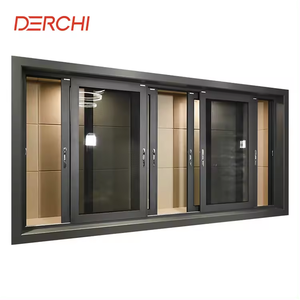
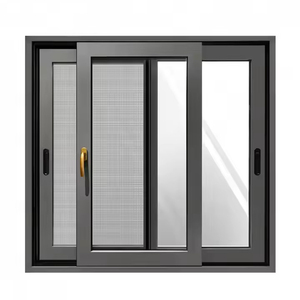
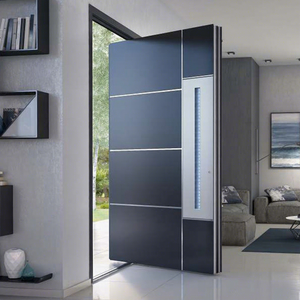
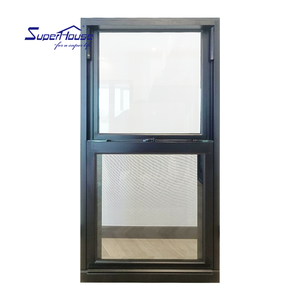
1. Executive Summary & Enterprise Authority Overview
In contemporary architectural design, the window envelope is no longer viewed as a passive transparent barrier. It has evolved into a highly complex, multi-functional structural node responsible for building thermal regulation, acoustic insulation, structural safety against extreme storm events, and overall aesthetic character. As a top trusted aluminium glass window manufacturer and supplier rooted in Foshan, China—the world's premier extrusion and fenestration manufacturing ecosystem—Veltor Window & Door Co., Ltd. sets the benchmark for enterprise-level facade engineering.
Global real estate developers, general contractors, commercial architects, and fenestration importers face unprecedented challenges: stringent building energy codes (such as NFRC in North America, CE EN 14351 in Europe, and AS 2047 in Australia), escalating raw material volatility, and strict delivery timelines. This technical procurement guide evaluates the architectural engineering principles, material science distinctions, thermal break technologies, and international compliance factors essential for selecting premium aluminum glass windows.
Core Procurement Insight: The structural durability and energy rating of an aluminum window system depend heavily on three core factors: the alloy heat treatment specification (6063-T5 vs. 6063-T6), the polyamide insulating thermal strip design (PA66GF25), and the precision of the multi-point compression locking mechanics.
2. Metallurgy, Extrusion Science & Thermal Dynamics
Aluminum is preferred for modern fenestration due to its high strength-to-weight ratio, structural resistance under wind load, and infinite recyclability. However, raw aluminum is a natural thermal conductor. Without advanced engineering, solid aluminum frames would create massive thermal bridges, resulting in interior condensation, heat loss during winter, and solar heat gain during summer.
2.1 Structural Profile Alloy Engineering
At our Foshan production facility, profile extrusion begins with high-purity virgin aluminum ingots alloyed with magnesium and silicon (6063 series). Profiles undergo artificial aging to achieve either T5 or T6 temper designations:
- 6063-T5 Temper: Cooled from an elevated temperature shaping process and artificially aged. It delivers an optimal balance of tensile strength (minimum 150 MPa) and smooth surface finish, ideal for powder coating and anodizing.
- 6063-T6 Temper: Solution heat-treated and artificially aged to achieve a higher yield strength (minimum 210 MPa). T6 profiles are engineered for heavy-duty curtain walls, high-rise commercial casements, and hurricane-impact sliding systems subjected to extreme negative wind pressure.
2.2 Polyamide Thermal Break Technology (PA66GF25)
To eliminate thermal conductivity, our systems feature structural thermal breaks. We mechanically crimp high-precision Polyamide 66 reinforced with 25% glass fiber (PA66GF25) between the outer and inner aluminum profiles. Polyamide strips are chosen over cheap PVC alternatives because PA66GF25 shares the exact linear thermal expansion coefficient as aluminum (2.3 × 10⁻⁵ /K). This prevents structural delamination, frame warping, and seal failure across temperature fluctuations from -30°C to +80°C.
| System Architecture | Thermal Transmittance (U-Factor) | Wind Pressure Resistance (Pa) | Acoustic Rating (STC) | Optimal Project Application |
|---|---|---|---|---|
| Non-Thermal Break Aluminum | Uf 4.5 – 5.8 W/m²K | 1500 – 2500 Pa | 28 – 32 dB | Interior partitions, mild climate residential |
| Standard Thermal Break (14.8mm PA66) | Uf 2.2 – 2.8 W/m²K | 2500 – 3500 Pa | 35 – 38 dB | Standard urban residential & low-rise commercial |
| Multi-Cavity Thermal Break (24mm+ PA66) | Uf 1.2 – 1.8 W/m²K | 3500 – 4500 Pa | 40 – 44 dB | Cold climates, luxury villas, energy-code projects |
| Passive House Ultra-Insulated (Aerogel Fill) | Uf ≤ 0.8 W/m²K | 4500+ Pa (Impact Rated) | 45+ dB | Net-zero energy buildings, extreme climates |
3. Glazing Architecture & Acoustic Performance
The glass accounts for approximately 75% to 85% of a window's total surface area. Therefore, overall thermal performance (Uw value) is dictated by the Insulated Glass Unit (IGU) configuration. As an integrated manufacturer, Veltor equips windows with customized glass configurations matching exact climate requirements.
Double & Triple Insulated Glass (IGU)
Dual-sealed units featuring primary butyl sealant and secondary structural silicone. Triple glazing with dual argon gas-filled cavities achieves thermal insulation down to U-values of 0.6 W/m²K.
Low-E Coatings & Solar Control
Double and triple silver vacuum-sputtered Low-E coatings selectively reflect far-infrared heat while allowing maximum natural daylight, dramatically lowering Solar Heat Gain Coefficients (SHGC).
Acoustic Laminated Glazing
PVB or SGP interlayer lamination dampens low-frequency sound waves (traffic, aircraft noise), achieving Sound Transmission Class (STC) ratings above 42 dB for urban developments.
4. Enterprise Strengths & Manufacturing Excellence (Veltor Capabilities)
Sourcing directly from our Foshan facility gives global importers, project dealers, and real estate developers a competitive edge over buying through intermediate trading agents. Our operations combine state-of-the-art CNC precision automation with strict quality control protocols.
4.1 Foshan Industrial Supply Chain Integration
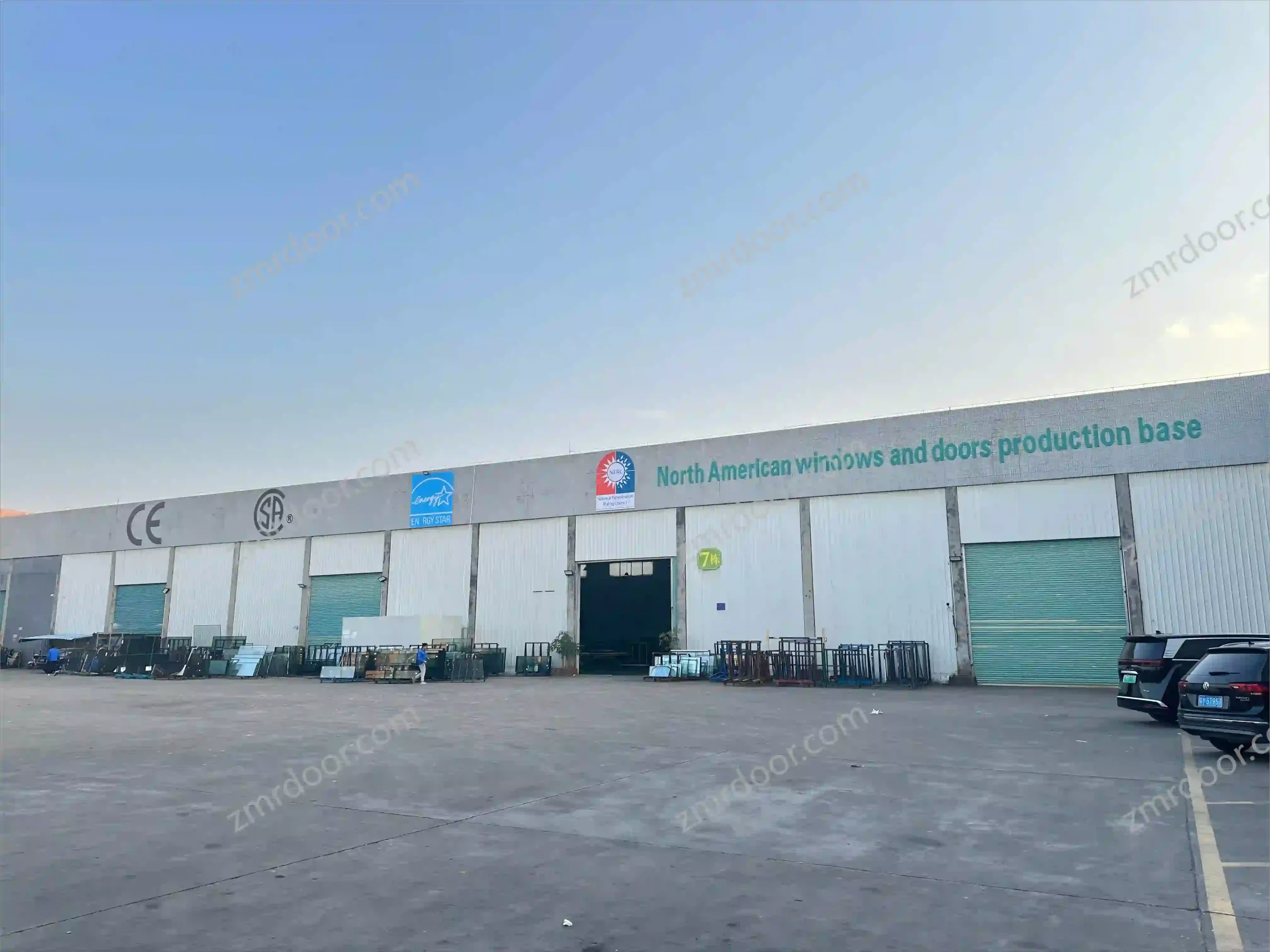
Located in Building 6, Yiqiying Industrial Park, Shishan Town, Nanhai District, Foshan, our factory sits at the geographic center of China's aluminum processing capital. This proximity grants direct, rapid access to top-tier raw materials, custom profile extrusion dies, specialized hardware suppliers, and certified surface treatment lines.
4.2 Precision CNC Fabrication & Corner Assembly
Frame assembly precision determines weather tightness and structural longevity. We utilize dual-head automatic cutting saws accurate to 0.1mm tolerances and 5-axis CNC machining centers for automatic hardware pocket routing, water drainage slot milling, and corner crimping. Corner joints are reinforced with cast aluminum corner cleats and injected with two-component polyurethane corner glue (DUO-Cement), ensuring 100% water tightness and structural rigidity under load.
4.3 Comprehensive Quality Assurance Protocols
- Incoming Material Inspection: Alloy spectro-analysis and anodizing/coating thickness testing (ISO 2360 compliant).
- In-Process Pre-Assembly Mock-Up: 100% full-scale trial assembly of custom windows prior to glass installation to verify sash operation, hardware alignment, and outer frame squareness.
- Export Protection & Crate Packaging: Protective scratch-resistant film applied to profiles, high-density corner guards, and vacuum-sealed wooden export crates labeled with individual opening numbers to streamline job-site installation.
5. Future Sourcing Trends in Architectural Fenestration (2025–2030)
The global building facade market is undergoing a major shift driven by energy regulations, architectural trends, and smart building integration. Global buyers must align their procurement strategies with these core industry trends:
1. Ultra-Slim Sightline Minimalist Systems
Architects are demanding concealed frame profiles, structural glass-to-glass corners, and flush floor tracks for seamless indoor-outdoor transitions in luxury villas and high-end residential towers.
2. Decarbonization & Circular Materials
Leading developers require low-carbon recycled aluminum profiles along with Environmental Product Declarations (EPDs) to meet LEED, BREEAM, and WELL building certifications.
3. Smart Glass & Motorized Automation
Integration of electrochromic dynamic tinting glass, built-in motorized magnetic blinds, and concealed chain-actuator windows linked directly to Building Management Systems (BMS).
6. Frequently Asked Procurement Questions (FAQ)
Ready to Elevate Your Architectural Fenestration Standards?
Contact our engineering consultation team today to request product catalogs, technical drawings review, structural calculations, and competitive factory-direct pricing for your upcoming project.