Architectural Window & Door Systems For Cottage & Luxury Projects
Explore our engineered fenestration portfolio. Designed for cold climate thermal retention, storm-proof structural integrity, and timeless architectural aesthetics.
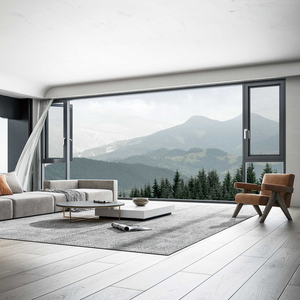
Thermal Break Casement Aluminum Windows with 27A Double Glazed Glass
Energy-efficient awning and casement system featuring 27mm argon-filled double glazing and PA66 thermal barrier.
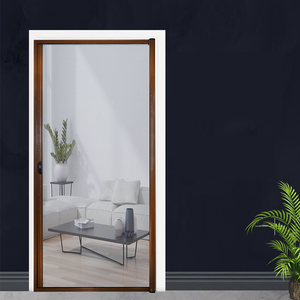
Custom Retractable Mosquito Net Bug Insect Sliding Screen System
Heavy-duty aluminum alloy roller fly screen system with smooth tension dampening for cottage doors and windows.
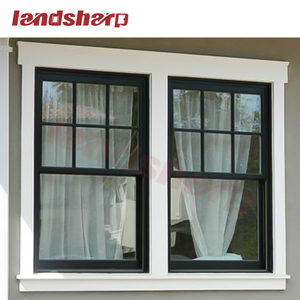
Modern French Style Vertical Aluminum Up Down Sliding Sash Windows
Architectural single-hung sash window with classic Georgian astragal bar detailing for historic cottage aesthetics.
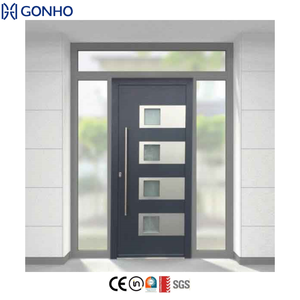
Modern Exterior Front Swing Hinged Casement Doors Waterproof
Waterproof architectural entrance doors with multi-point lock hardware and integrated glass thermal breaks.
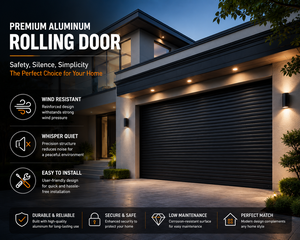
Heavy Duty Insulated Aluminum Roller Shutter Door Storm Proof
Extruded aluminum slats with polyurethane core insulation for high wind resistance and commercial-grade security.
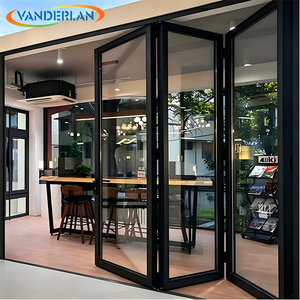
Continuous Operation Heavy Duty Aluminum Folding Bi-Fold Door
Top-hung rolling hinge system delivering effortless operation for large indoor-outdoor living openings.
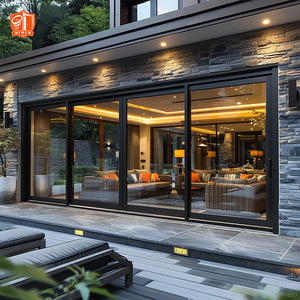
Cold Climate Insulated Modern Entry Heavy Sliding Glass Door
Frost-resistant, triple-sealed sliding door engineered for severe winter environments in Northern US and Canada.
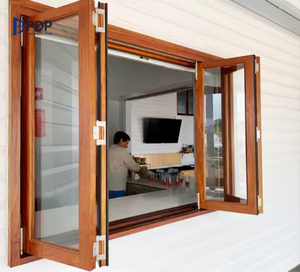
Fashionable Smooth-Operating Flyscreen Aluminum Clad Wood Folding Windows
Hybrid structural timber interior with protective exterior extruded aluminum cladding for institutional & residential builds.
Architectural Science of Modern Aluminium Cottage Windows
Cottage architecture demands a delicate balance between historical charm and 21st-century fenestration physics. Traditional timber cottage windows, while aesthetically iconic, suffer from dimensional instability, wood rot, high thermal conductivity, and heavy maintenance overheads. Conversely, standard un-broken metal windows lead to severe interior condensation and energy leakage. As a premier aluminium cottage windows manufacturer, Veltor bridges this architectural divide through structural 6063-T5 extrusions featuring precision-engineered Polyamide 66 (PA66 GF25) thermal breaks.
“The modern fenestration baseline requires a holistic envelope calculation: balancing low overall window U-values (Uw) with high resistance to wind loads and solar heat gain coefficient (SHGC) customization.”
1. Thermal Physics: The Polyamide Thermal Break Advantage
Raw aluminium has a thermal conductivity ($\lambda$) of approximately $200 \text{ W/m}\cdot\text{K}$, making an un-broken frame an thermal bridge. To prevent unwanted heat transfer in cold European or North American climates, our cottage windows integrate 24mm to 34mm multi-cavity glass-fiber reinforced Polyamide (PA66 GF25) insulating strips. This reduces the thermal transmission rate of the profile system to under $1.6 \text{ W/m}^2\cdot\text{K}$.
When combined with Double Insulated Glass Units (IGUs) utilizing 27A warm-edge gas gaps filled with 90% Argon gas and Low-Emissivity (Low-E) soft coatings, overall window assembly U-factors drop as low as $1.1 - 1.4 \text{ W/m}^2\cdot\text{K}$ (U-0.20 to U-0.25 Btu/h·ft²·°F), exceeding Energy Star® and European CE EN 14351-1 fenestration benchmarks.
2. Authentic Cottage Design: Astragal vs. Georgian Glazing Bars
A key visual identifier of cottage windows is the multi-pane grid pattern. Modern high-performance aluminium cottage windows recreate this aesthetic without compromising IGU vacuum seals via two primary structural methodologies:
- Surface-Applied Astragal Bars (Simulated Divided Lites - SDL): Precision CNC-machined aluminium grid bars bonded to the outer glass surfaces with structural 3M VHB tape, coupled with internal spacer grids inside the IGU to create the convincing visual depth of individual glass panes.
- Internal Georgian Bars (Grids Between Glass - GBG): Powder-coated aluminum bars sealed completely inside the double or triple glazing cavity, providing an authentic cottage profile while leaving exterior glass surfaces smooth for effortless maintenance.
Why Top Global Dealers Partner With Veltor Fenestration
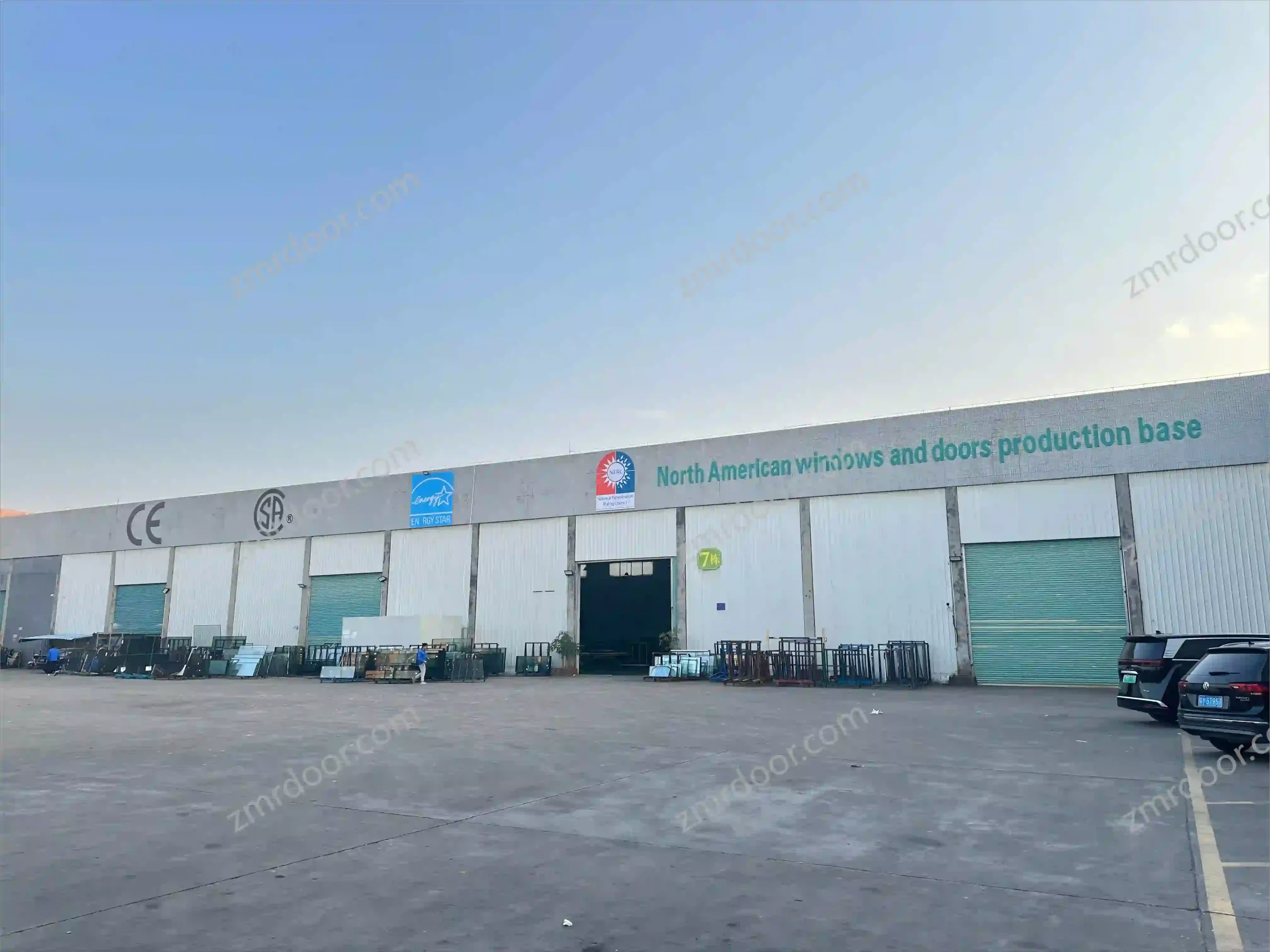
Our Foshan-based manufacturing infrastructure provides end-to-end control over billet extrusion, surface finishing, precision CNC assembly, and export crating.
Foshan Industrial Supply Ecosystem
Direct access to world-class 6063-T5 virgin aluminium billets, Qualicoat powder coatings, and PPG fluorocarbon finishes guarantees 25+ years of surface integrity against coastal corrosion.
CAD / BIM Shop Drawing Approval
Every order is backed by automated 3D BIM models and detailed 2D shop drawings confirming precise rough opening dimensions, glass dead loads, and drainage weep-hole routing before profile cutting.
Structural Corner Crimping & Alignment
Corners are joined with heavy-duty cast aluminum corner cleats, injected with two-component polyurethane corner adhesive, and pneumatically crimped to guarantee zero water ingress under wind pressure.
Acoustic & Pressure Testing
Triple-gasket EPDM weather stripping reduces urban noise by up to STC 42dB while maintaining air infiltration rates below 0.1 CFM/ft² under severe pressure conditions.
Reinforced Export Packaging
Units are wrapped in protective anti-scratch film, fitted with corner guards, and packed inside steel-reinforced fumigated wooden crates labeled sequentially by window schedule tag numbers.
Direct OEM / B2B Dealer Support
We supply distributors, general contractors, and developers with custom hardware branding, color swatches, corner cut-away samples, and container load optimization.
Global Sourcing & Procurement Trends (2025–2030)
The global architectural fenestration market is undergoing a structural shift driven by stringent energy codes, carbon footprint tracking, and modern off-site construction practices. Importers and project procurement directors sourcing from an aluminium cottage windows manufacturer must realign their supply chain strategies to address four critical industry shifts:
A. Decarbonization & Low Embodied Carbon Aluminium
International building regulations (such as Europe's CBAM and US LEED v4.1 certification) are increasingly monitoring the embodied carbon of structural building materials. Future-ready manufacturers are transitioning to primary aluminium smelted using hydropower rather than coal-fired power plants. Veltor utilizes low-carbon 6063-T5 aluminium alloys alongside recycled scrap streams, enabling project developers to meet zero-carbon building targets without compromising structural yield strength ($f_y \ge 170 \text{ MPa}$).
B. Micro-Thermal Breaks & Aerogel Insulation
As Passive House (Passivhaus) standards expand from urban commercial towers to suburban cottage and residential developments, standard thermal breaks are evolving into multi-layer composite structures. The incorporation of silica aerogel-infused insulation strips within the aluminum extrusions allows frame depths as slim as 70mm to achieve ultra-low frame thermal conductivity ($U_f \le 0.9 \text{ W/m}^2\cdot\text{K}$).
C. Smart Glass & Concealed Automation Integration
Modern cottage renovations demand clean sightlines free of bulky mechanical operators. Future procurement cycles favor window systems designed for integrated chain-drive electric actuators embedded within the outer frame rebate. These concealed motorized systems connect directly to smart home automation platforms (Zigbee/KNX) for automated natural ventilation and climate control.
Fenestration Technical Specification Benchmark
Below is a comparative breakdown of key engineering performance criteria for B2B procurement evaluation:
| Performance Metric | Standard Timber Windows | Standard UPVC Windows | Veltor Thermal Break Aluminium |
|---|---|---|---|
| Frame Thermal Conductivity ($U_f$) | 1.5 - 2.0 W/m²K | 1.3 - 1.8 W/m²K | 1.1 - 1.4 W/m²K |
| Structural Wind Load Resistance | Class 3 (1200 Pa) | Class 3 (1400 Pa) | Class 5 (≥ 3000 Pa / E3000) |
| Acoustic Insulation (STC Rating) | 28 - 32 dB | 30 - 34 dB | 38 - 44 dB (Double/Laminated) |
| Sightline Profile Width | 85mm - 110mm | 95mm - 120mm | 45mm - 68mm (Ultra-Slim) |
| Service Life Expectancy | 15 - 20 Years (Requires Painting) | 15 - 25 Years (UV Degradation) | 40+ Years (Maintenance-Free) |
| Finish Durability Standard | Oil-based Stain / Varnish | Raw White / Foil Laminated | Qualicoat Class 2 Powder / PVDF |
Frequently Asked Procurement Questions (FAQ)
Direct technical and logistical answers for window dealers, project architects, and global purchasing agents.