High-Performance Aluminium Door Systems
Engineered for structural resilience, thermal efficiency, and minimalist architectural sightlines across luxury commercial and residential developments.
1. Global Manufacturing Landscape & The Foshan Architectural Cluster Advantage
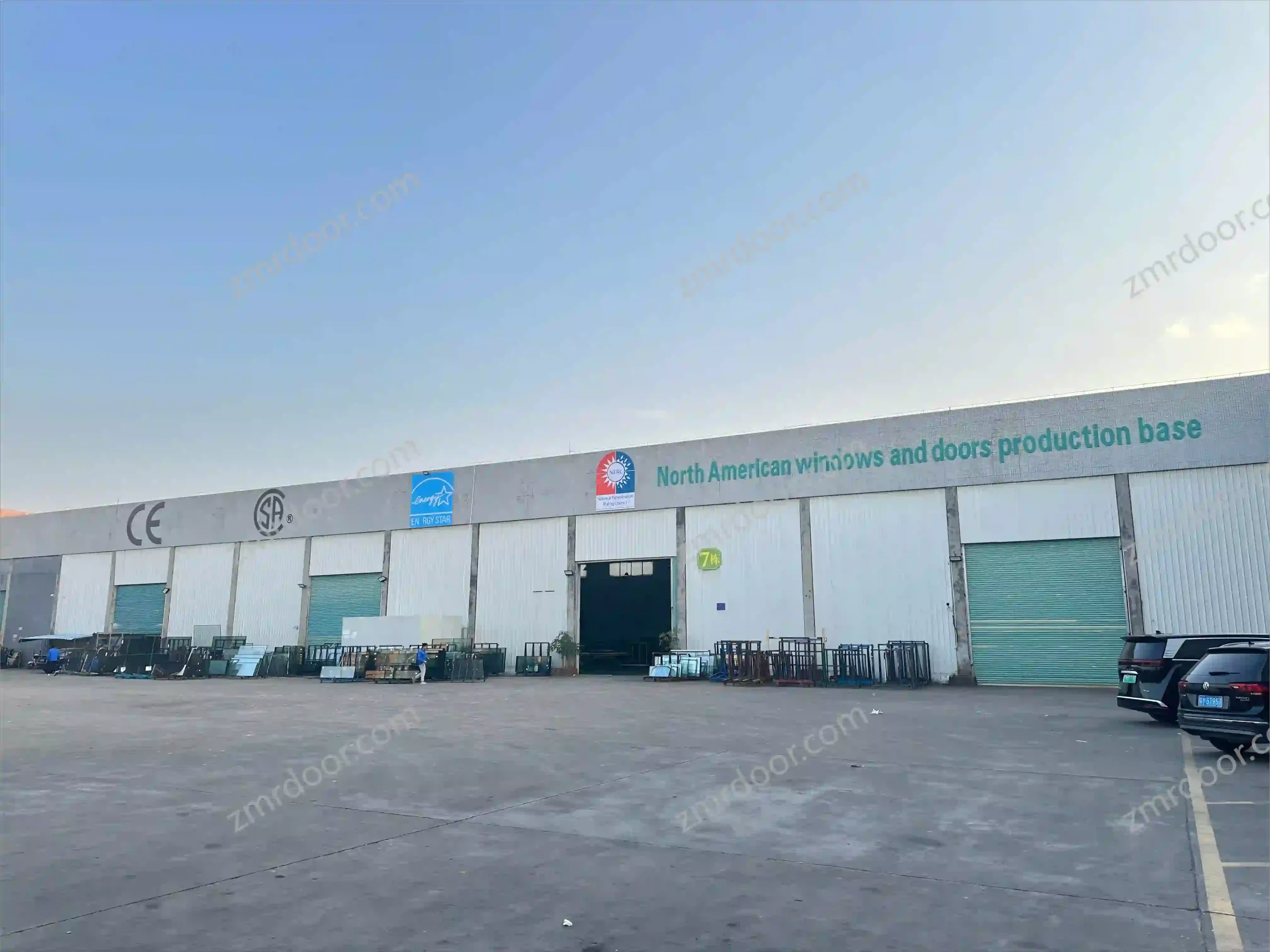
Selecting a qualified B2B manufacturing partner for architectural aluminium alloy doors requires evaluating structural engineering capabilities, extrusion metallurgy, surface finishing compliance, and supply chain maturity. Over 70% of the world's high-grade architectural aluminium profiles originate from specialized industrial clusters, with Foshan, China serving as the undisputed epicenter of precision extrusion, fluorocarbon (PVDF) coating, and thermal break assembly.
Top-tier original equipment manufacturers (OEMs) and original design manufacturers (ODMs)—such as Veltor Window & Door Co., Ltd. (located in Nanhai District, Foshan)—leverage localized vertical integration. This structural proximity connects raw billet casting, precision CNC machining, polyamide thermal strip insertion (PA66GF25), and double-insulated tempered glazing under unified Quality Assurance (QA) protocols.
Key Metallurgical Standard: 6063-T5 vs. 6063-T6 Aluminium Alloys
Premier exporters exclusively utilize primary-grade 6063 aluminium billet. T5 heat treatment delivers optimal dimensional stability and surface finish for powder coating, while T6 artificial aging provides superior tensile strength (≥205 MPa) required for high-rise commercial storefronts, heavy-duty lift-and-slide patio doors, and hurricane-impact structural assemblies.
2. Key Structural Components of High-Performance Door Assemblies
Modern commercial and high-end residential door specification goes beyond aesthetics. Buyers, architectural specifiers, and facade engineers evaluate fenestration performance based on quantifiable laboratory metrics: Thermal Transmittance (U-Value), Solar Heat Gain Coefficient (SHGC), Air Infiltration (ASTM E283), Water Resistance (ASTM E331), and Structural Wind Load Resistance (ASTM E330).
| Door System Class | Alloy & Profile Depth | Thermal Break Core | Glazing Configuration | Performance Benchmark |
|---|---|---|---|---|
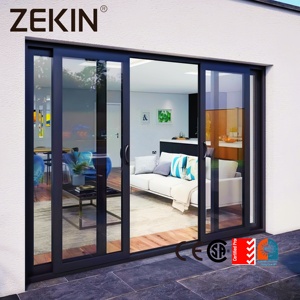
| Heavy-Duty Lift & Slide | 6063-T6 / 140mm–200mm | 24mm–34mm PA66GF25 | 5mm+12Ar+5mm Double Low-E Tempered | U-Factor ≤ 1.6 W/m²K | Wind Load ≥ 4.0 kPa |
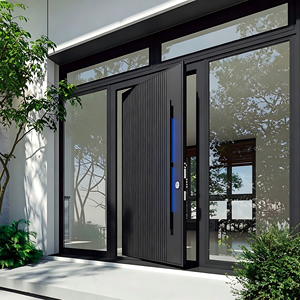
| Architectural Pivot Entrance | 6063-T5 / 100mm–120mm | Multi-Cavity Polyamide Bar | 6mm+1.52PVB+6mm Laminated Safety Glass | Security Class RC3 | Water Tightness ≥ 600 Pa |
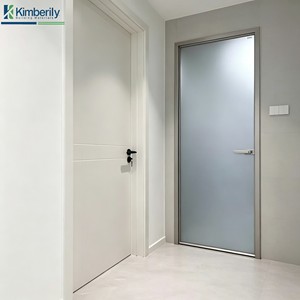
| Narrow-Frame Interior Swing | 6063-T5 / 45mm–50mm Slim | Optional Non-Thermal / Slim PA66 | 8mm–10mm Toughened Fluted/Clear Glass | Acoustic Isolation R_w ≥ 32 dB |
| AS2047 Coastal Stacker | 6063-T6 / Heavy Duty Track | Continuous Isothermal Strip | Double Glazed + Argon Gas Warm Edge | AS4420 Air/Water/Wind Pass (Deflection L/250) |
3. Future Procurement Trends & Technological Innovations (2025–2030)
The global fenestration market is undergoing a paradigm shift driven by stringent building energy codes (such as Europe's EPBD and North America's IECC requirements) and growing architectural demand for indoor-outdoor living integration. B2B importers and project dealers must align their procurement strategies with four key evolutionary vectors:
1. Ultra-Low Thermal U-Values
Transition from standard thermal breaks to multi-cavity polyurethane foam insertion, warm-edge spacers, and triple-glazing with Argon gas filling, bringing door system U-factors below 1.2 W/m²K for Passive House projects.
2. Minimalist Sightlines & Concealed Hardware
Demands for modern minimalist aesthetic have driven profile sightlines down to 16mm–25mm while engineering internal structural steel stiffeners to support glass panels weighing up to 500kg.
3. Smart Home & Mechatronic Locking
Integration of motor-driven lift-and-slide gearboxes, biometric fingerprint scanning, keyless RFID access, and automated building management system (BMS) signal connectivity embedded directly inside the profile rebate.
4. Enterprise Advantages: How Quality Manufacturers Mitigate Export Risk
For international buyers, importing custom aluminum doors presents risks surrounding dimensional tolerances, shipping glass breakage, hardware failure, and non-compliance with local building codes. Leading Foshan manufacturers address these vulnerabilities through systematic engineering and factory control ecosystems:
- Pre-Production Shop Drawing Sign-Off: Every order generates precise 2D CAD and 3D elevation drawings specifying profile wall thickness, glass build-up, threshold drainage details, and hardware installation layouts prior to cutting.
- Automated Corner Crimping & Dual Sealant Injection: Frames feature mechanical corner keys coupled with two-part polyurethane structural adhesive injection, guaranteeing zero frame joint separation during thermal expansion or wind shear.
- 100% Pre-Shipment Mock-Up Assembly: Finished door leaves and outer frames are fully assembled in factory testing bays to test lock engagement, roller smoothness, gasket compression, and water tightness before export crating.
- Heavy-Duty Ocean Freight Packaging: Glass units receive protective corner guards, non-scratch plastic film wrapping, and are sealed inside fully enclosed, fumigated wooden crates labeled by architectural opening tags (e.g., Door D-01, Floor 3).
Veltor Manufacturing Quality Control Ecosystem
Operating out of Shishan Town, Foshan, Veltor Window & Door Co., Ltd. exemplifies strict export manufacturing standards. By standardizing profile extrusion quality checks, using top-tier hardware brands (like Siegenia, Hoppe, and custom heavy-duty stainless steel components), and offering full technical support to international importers, project contractors, and dealers, Veltor ensures zero-defect delivery across global job sites.
Frequently Asked Questions for Importers & Specifiers
Essential guidance covering Minimum Order Quantities (MOQs), technical standard conversions, packaging protection, and lead times.
Ready to Engineer Your Project's Door Schedule?
Send your CAD drawings, window schedules, or performance specifications to our engineering team for instant technical review, system selection, and factory-direct B2B quotation.
Inquire Now