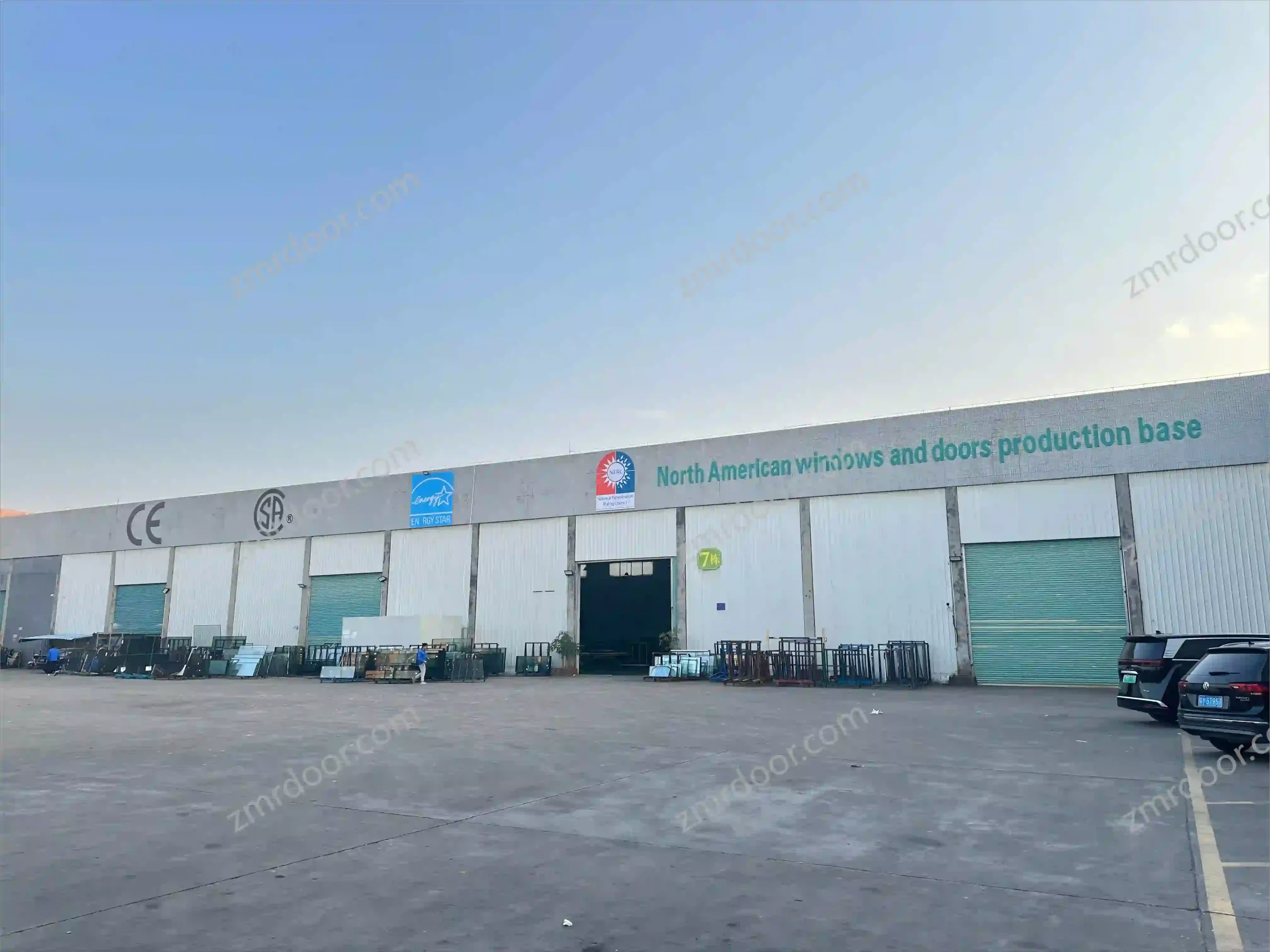
Featured Commercial & Residential Door Systems
Precision-engineered extruded aluminum window and door systems fabricated to international structural and thermal performance benchmarks.
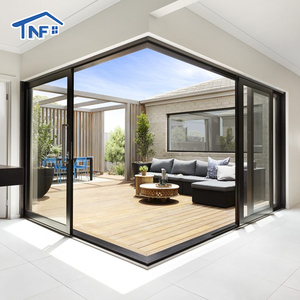
Modern Design Aluminum Frame Sliding Opening Glass Door Waterproof Fiberglass Screen Netting Finished Surface for Villa
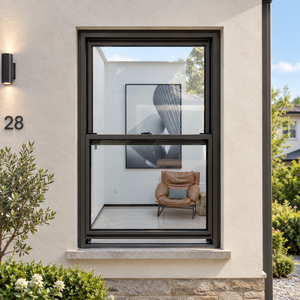
Aluminium Frame Glass Single-Hung Windows For Apartments Office Buildings Sash Windows
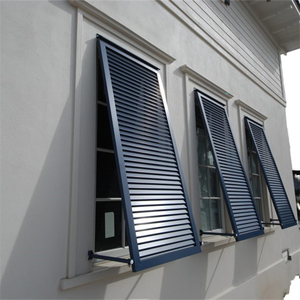
Aluminum Louver Windows Glass Aluminum Alloy Louvre Aluminum Louvre Window for Hotel Villa Weather Proof
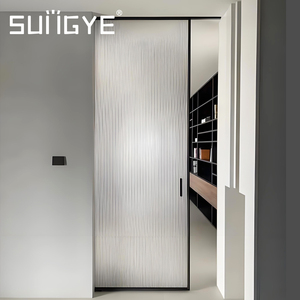
SUNGYE Narrow Aluminum Frame Invisible Interior Door Sliding Pocket Door Custom Frosted Glass Hidden In Wall Home Partition Door
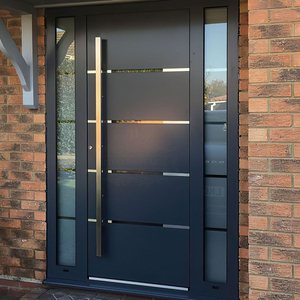
Luxury Modern Design Anti-Theft Outdoor Exterior Villa Aluminum Entry Front Door
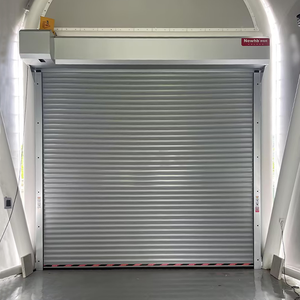
UL Standard Customized Airport Fireproof Doors Security Rolling Steel Fire Door
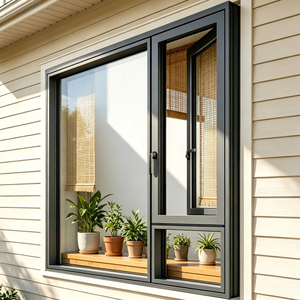
High Strength Villa Hotel House Waterproof and Soundproof Double Glazed Glass Aluminum Alloy Outward Opening Casement Windows
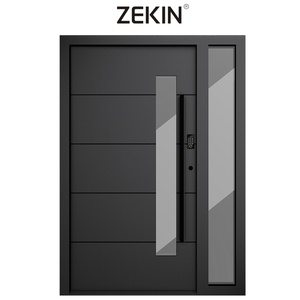
ZEKIN Aluminum Modern Luxury Security Metal Door Residential Front Entry Exterior Pivot Door Apartment House Main Entrance Door
Commercial Storefront & Front Door Procurement Dynamics (2025–2030)
The global architectural entrance sector is undergoing a profound paradigm shift driven by stringent decarbonization policies, updating municipal energy conservation codes (such as IECC and EN ISO 10077-1), and a surging structural preference for ultra-slim, high-load aluminum profiles. When specifying shop front entrance assemblies for high-traffic commercial retail, luxury residential towers, or public transit infrastructure, commercial buyers can no longer rely on standardized aluminum extrusions. Modern fenestration demand requires engineered systems capable of balancing structural elasticity under wind loads exceeding 3.0 kPa, high acoustic dampening (STC ≥ 40 dB), and sophisticated thermal break performance.
Strategic Buyer Insight: Structural Integrity vs. Thermal Efficiency
Modern commercial shop fronts must maintain minimal sightline profiles without compromising section modulus ($Z_x$). Sourcing 6063-T6 tempered alloys combined with 25% glass fiber reinforced polyamide (PA66GF25) strips prevents structural frame deflection under heavy cyclic loads while isolating indoor thermal comfort from exterior ambient extremes.
1. Decarbonization and Polyamide Thermal Break Integration
Architectural aluminum inherently exhibits high thermal conductivity ($k \approx 200\text{ W/m}\cdot\text{K}$). Uninsulated solid aluminum store front profiles act as major thermal bridges, leading to severe condensation, HVAC energy consumption spikes, and non-compliance with LEED or BREEAM certifications. Leading Chinese exporters utilize high-precision thermal barrier insertion technology, inserting dual continuous PA66GF25 insulating strips into split aluminum profiles. This structural engineering drops system U-factors from $U \ge 5.8\text{ W/m}^2\text{K}$ down to $U \le 1.6\text{ W/m}^2\text{K}$ when combined with argon-filled low-emissivity double or triple insulated glass units (IGUs).
2. Industrial Standardization of Heavy-Duty Hardware Systems
A primary failure point in high-traffic commercial shop front doors is mechanical hardware wear. Exporters operating out of China's premier fenestration clusters in Foshan have standardized high-performance hardware integration. Front entry pivot doors, heavy-duty sliding panels, and automated store entrance swing doors are engineered with multi-point locking mechanisms, continuous stainless steel piano hinges, or floor springs rated for over 500,000 operational cycles. Systems are subjected to salt spray corrosion testing (ASTM B117) exceeding 1,000 hours to ensure flawless performance in harsh marine environment applications.
Structural Alloy 6063-T5/T6
High tensile yield strength architectural aluminum alloy providing superior wind pressure resistance ($p_3 \ge 4.5\text{ kPa}$) for oversized commercial shop front panels.
Severe Weather Sealing
Triplex EPDM continuous weatherstripping gaskets paired with concealed high-capacity sills prevent water ingress under 700 Pa static water pressure tests.
Extended Cycle Life
Commercial entrance hardware assemblies are dynamically cycle-tested to 500,000+ opening cycles to eliminate latch misalignment and costly field maintenance calls.
Engineering Specifications: Choosing the Optimal Profile Architecture
When issuing RFQs (Request for Quotation) to prospective Chinese manufacturing factories, project engineers and procurement officers must specify precise technical parameters to avoid baseline discrepancies. Below is a comprehensive engineering comparison table detailing standard versus structural-grade thermal-break store front door systems designed for commercial and high-end residential applications.
| Technical Parameter | Standard Commercial Door | Thermal Break Heavy-Duty Front Door | Testing / Compliance Standard |
|---|---|---|---|
| Aluminum Profile Alloy | 6063-T5 Architectural Grade | 6063-T6 High-Tensile Structural Alloy | ASTM B221 / GB 5237.1 |
| Profile Wall Thickness | 1.4 mm – 2.0 mm | 2.0 mm – 3.0 mm Reinforced | EN 12020-2 / AAMA 101 |
| Thermal Insulation Strip | None (Non-Thermal Break) | PA66GF25 Polyamide Strip (24mm–34mm) | DIN 16941 / ISO 18872 |
| Glazing System | 6mm + 12A + 6mm Tempered Glass | 6mm + 16Ar + 6mm Low-E Triple Glazed IGU | SGCC / IGCC / EN 12150 |
| Thermal Transmittance (U-Factor) | $U \ge 4.2\text{ W/m}^2\text{K}$ | $U \le 1.4\text{ W/m}^2\text{K}$ (Super Energy Efficient) | NFRC 100 / EN ISO 10077 |
| Acoustic Insulation (STC) | STC 28 – 32 dB | STC 38 – 44 dB Acoustic Laminated | ASTM E90 / ISO 717-1 |
| Surface Finish Coating | Standard Powder Coating (40-60μm) | PVDF Fluoropolymer 3-Coat (AkzoNobel/PPG) | AAMA 2605 / Qualicoat Class 2 |
| Wind Load Resistance | Class 3 (2.0 kPa) | Class 5 (≥ 4.5 kPa Hurricane Rated) | ASTM E330 / AS 2047 |
Advanced Surface Coating Standards: PVDF vs. Anodizing vs. Powder Coating
Environmental degradation, particularly in coastal deployment regions subject to salt spray or urban centers with industrial acid rain, degrades sub-standard entrance door finishes. Premium Foshan manufacturers offer three primary architectural surface treatments:
- PVDF (Fluoropolymer) Coatings: Formulated with 70% Kynar 500 or Hylar 5000 resins, 3-coat fluoropolymer coatings conform to AAMA 2605 standards. They resist intense ultraviolet radiation, chalking, and gloss erosion for over 20 to 25 years without fading.
- Architectural Anodizing (Class I): Electrochemical anodization produces an integral aluminum oxide layer (thickness $\ge 25\mu\text{m}$). This finish provides unmatched metallic luster, scratch resistance, and zero risk of organic coating peeling.
- Super-Durable Powder Coating: Utilizing TGIC-free polyester resins conforming to Qualicoat Class 2 standards, modern powder coatings deliver a cost-effective spectrum of custom RAL colors, wood-grain textures, and tactile matte finishes.
Foshan Manufacturing Infrastructure & Factory Advantages
Veltor Window & Door Co., Ltd., based in Shishan Town, Nanhai District, Foshan, Guangdong, operates at the literal epicenter of China’s architectural aluminum ecosystem. Sourcing directly from an established Foshan OEM/ODM factory yields substantial capital efficiency, rapid drawing conversion, and stringent quality control over the complete fabrication lifecycle.
Integrated Extrusion & CNC Milling
State-of-the-art 5-axis digital CNC machining centers maintain cutting and routing tolerances within $\pm 0.2\text{ mm}$, guaranteeing seamless corner joint crimping and flush hinge seatings.
Full Pre-Shipment Trial Assembly
100% of finished window frames and heavy entrance doors are fully pre-assembled on test racks to verify hardware operation, glass clearances, diagonal dimensions, and sealant integrity prior to packing.
Reinforced Export Packaging
All glass units and finished profiles are wrapped in protective polyethylene film, fitted with impact-resistant corner guards, and loaded into fumigated, steel-strapped plywood crates to prevent transit vibration damage.
B2B Procurement Workflow: From CAD Drawing to On-Site Installation
Navigating cross-border architectural manufacturing requires clear operational milestones to prevent project delay. Direct-factory sourcing typically follows a disciplined 5-phase engineering protocol:
- Phase 1: Architectural Drawing Review & Thermal Calculations: The client submits elevation drawings, window schedules, and target structural/thermal codes. Factory facade engineers formulate optimized section drawings and profile proposals.
- Phase 2: Shop Drawing Approval & Material Sign-Off: Production drawings with millimeter-accurate opening dimensions, glass specifications, color swatches, and hardware placement are formally signed off by the buyer.
- Phase 3: CNC Precision Fabrication & Glazing: Profiles undergo precision double-end saw cutting, thermal strip insertion, CNC notch milling, corner sealant injection, pneumatic crimping, and automated glazing unit seating.
- Phase 4: Pre-Shipment Quality Inspection: QC engineers issue comprehensive photo and video inspection reports documenting dimensional tolerances, coating thickness ($\mu\text{m}$ gauges), and hardware latching functionality.
- Phase 5: Container Loading & Logistics Documentation: Crates are packed using container weight-balancing protocols. Complete shipping documents—including Commercial Invoices, Packing Lists, Bills of Lading, and Certificates of Origin—are dispatched immediately.
B2B Procurement & Engineering FAQ
Detailed technical insights for commercial developers, general contractors, window dealers, and architectural importers sourcing from China.