Featured Aluminum Door & Window Solutions
Engineered for high-wind loads, supreme acoustic isolation, and seamless thermal insulation across residential, commercial, and hospitality developments.
1. The State of China's Aluminum Folding Door Manufacturing Ecosystem
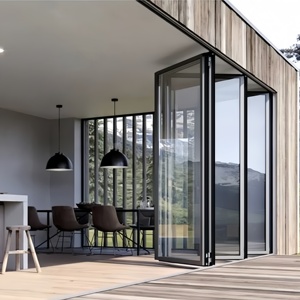
In modern architectural design, the boundary between indoor living areas and exterior landscapes is increasingly blurred. Aluminum folding doors (bi-fold door systems) have evolved from niche luxury elements into structural necessities for high-end residential villas, commercial storefronts, coastal resorts, and urban high-rises. China—specifically the industrial clusters in Foshan, Guangdong—manufactures over 60% of the world's high-performance architectural aluminum fenestration systems. However, navigating the supplier landscape requires a rigorous understanding of metallurgy, hardware mechanics, surface treatment longevity, and international code compliance.
Leading Chinese exporters have transitioned from basic profile assembly to advanced structural engineering. By utilizing multi-axis CNC machining, thermal break isolation technology, and European-standard hardware integration, top-tier Chinese manufacturers now deliver bi-fold door systems that easily rival premium German and Swiss fenestration brands at a significantly optimized bill-of-materials (BOM) cost.
"Procuring architectural aluminum bi-fold doors from China is no longer merely a cost-reduction strategy. It is a strategic engineering choice to access world-class extrusions, advanced thermal barrier technology, and fully customized structural systems fabricated within tight project lead times."
2. Metallurgy & Structural Engineering: Aluminum Alloys and Extrusion Physics
The foundation of any structural folding door lies in its profile design and alloy composition. Folding door leaves are subjected to substantial dynamic wind loads, continuous friction along top or bottom guide tracks, and thermal expansion forces across large spans. Top China bi-fold door manufacturers strictly utilize 6063-T5 or 6063-T6 architectural grade aluminum extrusions.
Key Metallurgical Specifications to Insist On:
- Wall Thickness Rigidity: Standard interior doors often use 1.2mm to 1.4mm profile thickness. For exterior heavy-duty bi-fold systems spanning over 3 meters in height, high-tier exporters mandate structural outer wall thicknesses of 2.0mm to 3.0mm to prevent deflection under wind load pressure (Design Pressure rating DP50 to DP70).
- Thermal Break Technology (PA66GF25): Standard non-thermal aluminum acts as a thermal bridge, conducting external heat or cold into the interior. Top China exporters integrate PA66GF25 (Polyamide 66 reinforced with 25% glass fiber) thermal break strips. This continuous insulating barrier reduces U-factors to under 1.4 W/m²K when paired with double or triple insulated glass units (IGU).
- Surface Finishes & Weatherability Standards: Coastal environments require specialized coatings to withstand salt spray corrosion. Premium Chinese manufacturers supply AAMA 2605 compliant Fluorocarbon (PVDF) coatings or high-micron hard-anodized finishes capable of enduring 3,000+ hours of salt-spray testing without chalking or blistering.
Heavy-Duty Hardware Systems
Utilizing quad-wheel stainless steel carriage rollers (SUS304/SUS316) rated for single panel weights up to 300kg with effortless kinetic glide.
Ultra-Slim Sightline Profiles
Narrow frame profiles maximizing clear glass area, delivering panoramic unobstructed views while retaining extreme structural deflection resistance.
Concealed Drainage Systems
Flush zero-threshold designs with integrated subsurface micro-drainage channels preventing water ingress during extreme storm events.
3. Future Procurement & Technology Trends (2025–2030)
The global demand for high-end bi-fold door systems is shifting rapidly due to rising energy efficiency requirements, stringent building codes, and architectural preferences for giant glass walls. Key trends driving China's bi-fold door export market include:
- Motorized & Smart-Home Automated Bi-Folds: Modern bi-fold doors are no longer purely manual. Top exporters are integrating hidden electric motor drive shafts, weather sensor automatic closure modules, and smartphone app connectivity.
- Hurricane Impact & Cyclic Pressure Compliance: For coastal markets such as Florida, the Caribbean, and Australia, leading Chinese manufacturers obtain Miami-Dade County NOA (Notice of Acceptance) and AS2047 certification, using PVB/SGP laminated hurricane glass and reinforced interlocking mullions.
- Zero-Barrier ADA Compliant Thresholds: Modern projects require seamless transition between outdoor patios and interior living rooms. Advanced hidden drainage sills prevent rain water penetration while sitting completely flush with interior floor finishes.
4. Engineering Data Matrix: Bi-Fold Door System Comparison
To assist architects, structural engineers, and commercial buyers in selecting the appropriate series, the data table below outlines standard performance specifications from top Chinese folding door manufacturers:
| System Series | Frame Profile Depth | Thermal Insulation (U-Value) | Glass Configuration | Max Panel Size (W x H) | Ideal Application |
|---|---|---|---|---|---|
| Ultra-Slim Line Bi-Fold | 65mm - 75mm | 1.8 - 2.2 W/m²K | 6mm + 12Ar + 6mm Toughened | 900mm x 3000mm | Modern Luxury Villas, Interior Partitioning |
| Heavy Thermal-Break 80 | 80mm - 90mm | 1.2 - 1.5 W/m²K | 5mm + 16Ar + 5mm Low-E IGU | 1200mm x 3500mm | Cold Climate Residential, Energy Code Projects |
| Hurricane Impact Bi-Fold | 100mm - 120mm | 1.4 - 1.7 W/m²K | 6mm + 1.52SGP + 6mm Laminated | 1100mm x 3200mm | Coastal Zones, High Wind & Typhoon Regions |
| Commercial Stacking System | 110mm Heavy Rim | 2.0 - 2.5 W/m²K | 8mm / 10mm Monolithic Toughened | 1300mm x 4000mm | Restaurants, Retail Storefronts, Resorts |
5. Manufacturer Vetting & Enterprise Advantages (The Foshan Advantage)
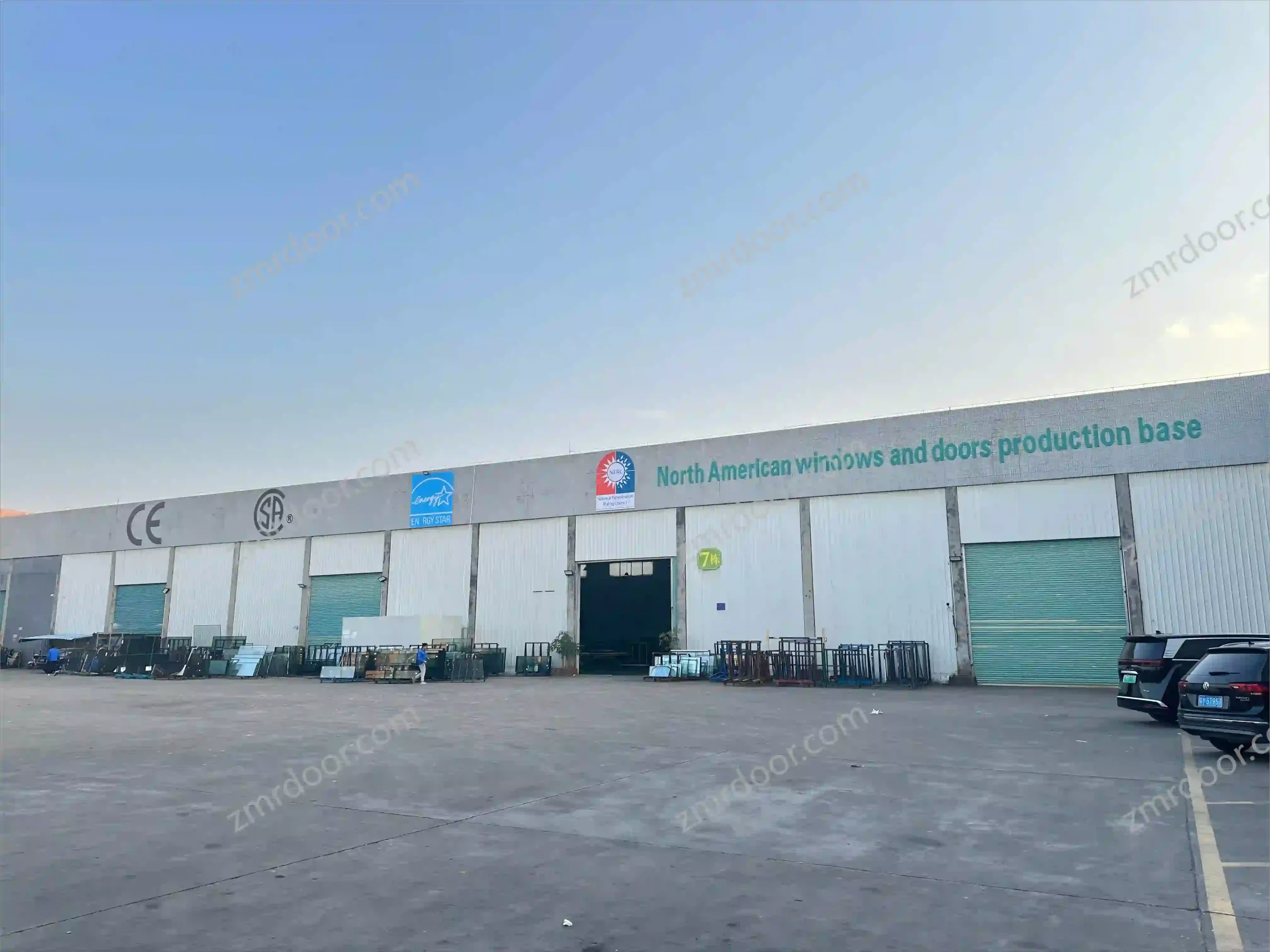
When selecting an OEM/ODM manufacturing partner in China for large-scale aluminum folding door orders, verifying factory capabilities is crucial. Leading Foshan manufacturers distinguish themselves through:
- Full In-House Fabrication Chain: Direct control over profile anodizing, powder coating lines, precision CNC machining, and automated insulated glass line assembly under one roof.
- 100% Pre-Shipment Dry Assembly: Every bi-fold door order is fully assembled in the factory prior to packing to test hinge alignment, roller smoothness, locking pin stroke distance, and air-gasket compression.
- Export-Standard Protective Packaging: Individual door leaves wrapped in anti-scratch protective film, corner guarded with dense EVA foam, and loaded into heavy-duty fumigated plywood crates engineered for sea container transit.
Procurement & Technical FAQ
Essential guidance for project managers, importers, architects, and trade contractors sourcing aluminum folding doors from China.
Ready to Engineer Your Custom Aluminum Folding Door System?
Consult directly with our Foshan-based fenestration engineers. Send us your project floor plans, window schedules, or target performance standards for a comprehensive cost estimate and technical proposal within 24 hours.