Engineered Architectural Window & Door Systems
Explore our export-certified architectural systems designed for high-rise residential, commercial, and structural engineering projects worldwide. Manufactured under strict ISO9001 and NFRC compliance standards.
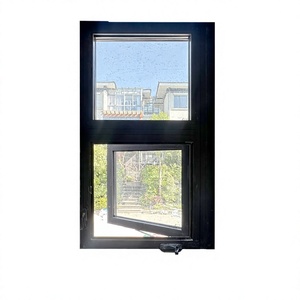
Aluminum Hand Crank Window Aluminium Casement Windows
Get Catalog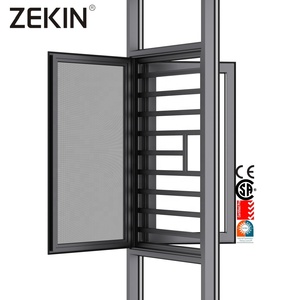
Customized for Engineering Project Florida Hurricane Impact Certification Thermal Break Window
Get Catalog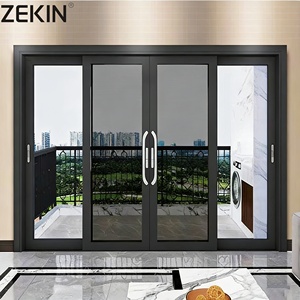
AS2047 NFRC Certification Double Glass Stacker Doors Commercial Exterior Patio Sliding Doors
Get Catalog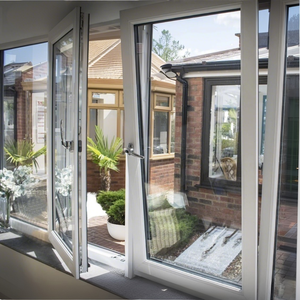
Modern Aluminum Casement Windows With Low-E Triple Glazing Soundproof Window
Get Catalog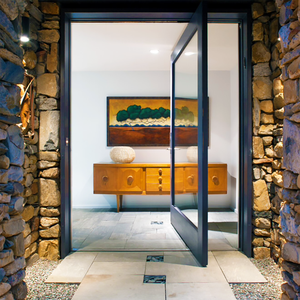
Florida Miami-Dade Approved NFRC Big Panel Tempered Glass Aluminium Modern Pivot Doors
Get Catalog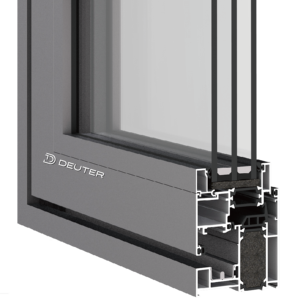
Apartment Project Custom Aluminum Sliding Tilt Window Thermal Break Low-E Energy Saving
Get Catalog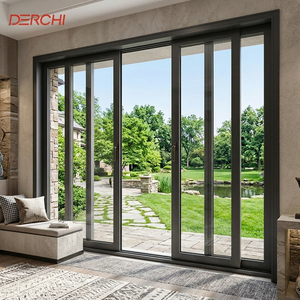
DERCHI Multi Panel Aluminum Sliding Door Security Hurricane Proof Patio Door
Get Catalog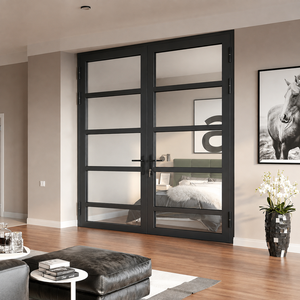
Custom Glass Double Swing Door House And Villa Aluminum Frame Tempered Casement Door
Get CatalogExecutive Sourcing Guide: Architectural Dynamics of Modern Tilt & Turn Systems
In the rapidly evolving landscape of global architectural fenestration, Aluminium Tilt & Turn Windows have secured a dominant position across high-performance residential developments, luxury commercial towers, and institutional projects. Combining dual-action European engineering with advanced structural alloys, these systems overcome the historic compromises associated with traditional sliding or outward-projecting casements. As international building codes tighten around energy performance metrics (such as ASHRAE 90.1, EN ISO 10077, and Passivhaus criteria), procuring high-precision fenestration directly from top-tier Chinese manufacturing hubs—specifically Foshan, Guangdong—has become a central strategy for procurement directors, façade consultants, and general contractors.
Unlike standard casement mechanics, the tilt-and-turn configuration operates via a single integrated gear handle controlling a perimeter multi-point locking drive mechanism. In the Turn Position (sash rotated 90 degrees horizontally), the window swings inward, providing 100% unobstructed clear opening area for maximum rapid ventilation and effortless safe interior cleaning of exterior glass surfaces. In the Tilt Position (sash tilted inward 10 to 15 degrees from the top hinges), the system creates an optimized convection chimney. Fresh air enters through the upper lateral gaps while warm interior air vents outwards, completely eliminating high-velocity room drafts and maintaining rain-proof security even during adverse climate events.
Dual-Action Kinematics
Single-handle activation toggles seamlessly between inward casement swinging for egress and top-tilting draft-free micro-ventilation.
Acoustic Isolation
Multi-cavity vulcanized EPDM continuous gaskets combined with laminated acoustic glass deliver sound dampening up to STC 48 dB.
Perimeter Multi-Point Locks
Mushroom-head heavy-duty steel lock keeps interlock across all four profile sides, offering extreme resistance against forced entry and hurricane wind pressures.
Anatomy of a Commercial-Grade Aluminium Tilt & Turn Profile
To evaluate quotes from Chinese suppliers objectively, engineering procurement teams must look beyond superficial aesthetics and conduct deep structural audits of profile metallurgy, thermal barrier engineering, and hardware durability ratings. The foundational structural frame relies on extruded 6063-T6 or 6060-T66 primary aluminum billets. Secondary or recycled billet alloys must be rejected due to micro-structural impurities that compromise structural shear resistance under extreme wind pressures.
| Engineering Component | Standard Commodity Spec | Veltor Architectural Grade Spec | Performance Impact |
|---|---|---|---|
| Aluminum Alloy Profile | 6063-T5 (1.4mm wall thickness) | 6063-T6 / 6060-T66 (1.8mm - 2.2mm) | +45% Structural deflection resistance under wind load |
| Thermal Break Strip | Recycled PVC or low-grade Nylon 6 | PA66-GF25 (25% Glass-Fiber Reinforced) | Prevents thermal shearing, U-value reduced below 1.1 W/m²K |
| Primary Weather Seal | TPE or Standard Rubber Gasket | Continuous Vulcanized EPDM Cavity Gaskets | Zero shrinkage under extreme UV, air tightness Class 4 (EN 12207) |
| Hardware Transmission | Zinc-plated light duty drives | G-U / Siegenia / HOPPE Heavy-Duty Steel | Tested to 50,000+ mechanical duty cycles (EN 13126-8) |
| Glass Unit Assembly | Double Glazed Clear (5mm+12A+5mm) | Triple Low-E Argon-Filled Warm-Edge (6mm+16Ar+6mm+16Ar+6mm) | Maximizes solar heat gain coefficient (SHGC) control & winter heat retention |
The core thermal efficiency of an aluminum window rests within its Polyamide Thermal Break Assembly. Non-thermal aluminum profiles exhibit high thermal conductivity ($\approx 200 \text{ W/m}\cdot\text{K}$), causing rapid thermal bridging, interior frame condensation, and severe HVAC efficiency loss. By inserting precision-engineered PA66-GF25 polyamide insulating strips (reinforced with 25% structural glass fiber to match aluminum's thermal expansion coefficient), the metal frame is mechanically isolated into distinct interior and exterior structural zones. This reduces frame thermal conductivity to under $2.2 \text{ W/m}\cdot\text{K}$, eliminating frost formation in arctic zones and preventing radiative heat transfer in desert environments.
Future Procurement Trends in Fenestration Sourcing (2025–2030)
Global supply chains are undergoing structural shifts driven by building decarbonization policies, automation, and modular off-site construction methods. When establishing strategic sourcing agreements with Chinese window and door manufacturers, B2B buyers must align with these four macro market developments:
1. Transition Toward Passivhaus & Zero-Carbon Standard Compliance
Municipal energy codes across North America (such as NYC Energy Conservation Code and California Title 24) and the European Union (EPBD Directive) now mandate whole-window thermal performance values ($U_w$) below $0.8 \text{ W/m}^2\text{K}$. Leading Chinese exporters are actively integrating multi-cavity thermal break extrusions injected with expanded polyurethane (PU) foam or aerogel insulation strips, coupled with triple-pane or vacuum-insulated glass (VIG) technology, enabling bulk export orders to meet zero-energy building standards cost-effectively.
2. Ultra-Slim Sightlines & Concealed Sash Integration
Modern architectural aesthetics overwhelmingly favor maximum glass ratios and invisible frame sightlines. Next-generation tilt-and-turn windows feature concealed hinge mechanisms tucked completely within the frame rebate, eliminating exposed hardware covers while supporting individual sash loads exceeding 150 kg. Furthermore, step-glazed rim designs conceal the sash frame behind the outer frame structure, creating a seamless glass façade look without compromising structural water-tightness or structural deflection limits.
3. Smart Building Automation & Concealed Actuation
The integration of commercial building management systems (BMS) with automated fenestration is accelerating. Advanced tilt-and-turn units are increasingly ordered pre-wired with 24V DC hidden chain actuators. These smart actuators permit automated night purge ventilation, rain-sensor closing, and smoke extraction overrides, transforming passive window elements into active climate control assets within intelligent building envelopes.
4. Carbon Footprint Traceability & Circular Extrusions
Tier-1 institutional developers now mandate Environmental Product Declarations (EPDs) and low-carbon certified aluminum inputs. Top Foshan suppliers like Veltor are shifting toward primary aluminum smelted using hydro-electric or solar power, alongside incorporating post-industrial recycled content. This green sourcing chain drastically lowers the embedded carbon of imported window shipments, assisting developers in earning LEED Gold/Platinum or BREEAM Outstanding credits.
Why Partner with Foshan Veltor Window & Door Co., Ltd.
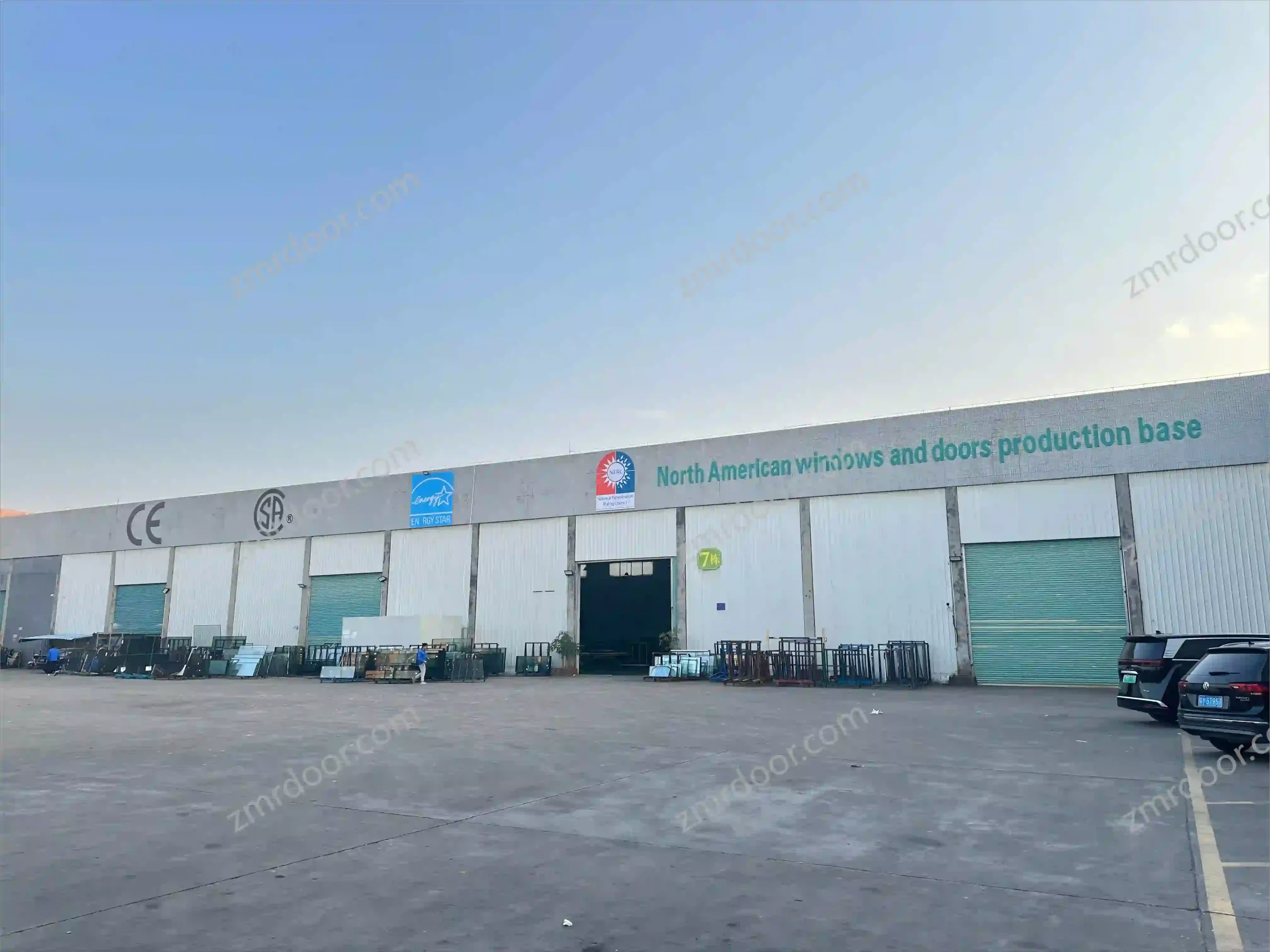
Located at the heart of China’s premier industrial aluminum manufacturing cluster in Nanhai District, Foshan, Veltor Window & Door Co., Ltd. represents the gold standard of architectural fenestration export. Rather than operating as an unverified assembly shop, Veltor operates an integrated manufacturing framework encompassing profile design, precision CNC machining, automated corner crimping, glass unit sealing, and rigorous pre-export quality verification under one roof.
Full Customization & Engineering Shop Drawings
Every order is supported by a dedicated technical team that converts architectural elevation drawings into detailed shop drawings, verifying structural wind-load deflection calculations ($L/175$ or $L/240$) prior to raw profile cutting.
Strict Pre-Shipment Mock-Up Testing
100% of custom orders undergo factory mock-up assembly, testing dimensional tolerance within ±0.5mm, smooth drive-gear torque, gasket compression uniformity, and water tightness before final export crating.
Export-Ready Logistics Packaging
Finished units are protected with anti-scratch protective film, high-density foam corner guards, and fully enclosed IPPC ISPM-15 compliant fumigated wooden crates, labeled by floor and window opening number for rapid jobsite sorting.
Frequently Asked Technical & Sourcing Questions (FAQ)
Q1: What structural and thermal testing certifications can Veltor provide for global projects?
Our window and door series are engineered to meet global fenestration standards. We provide test reports and compliance documentation for North American standards (NFRC energy ratings, AAMA/WDMA structural testing, Florida Miami-Dade hurricane impact NOA compliance), European standards (CE EN 14351-1), Australian standards (AS 2047 / AS 1288), and ISO 9001 quality management systems.
Q2: What is the typical Minimum Order Quantity (MOQ) and lead time for custom project orders?
Because every fenestration unit is manufactured to precise architectural field measurements, we do not restrict buyers with rigid container-level MOQs for custom engineering projects. Orders ranging from single luxury villa packages up to full 40ft HQ container loads for multi-family developments are welcomed. Typical manufacturing lead times range from 25 to 35 business days following final shop drawing sign-off and deposit confirmation.
Q3: How do Tilt & Turn windows handle extreme wind loads and water penetration compared to sliding systems?
Tilt & Turn windows offer vastly superior weather-tightness compared to sliding windows. Sliding systems rely on brush seals that allow minor air infiltration under high pressures. In contrast, Tilt & Turn systems utilize continuous compression EPDM gaskets squeezed firmly against the frame profile via multi-point locking cams around the perimeter. Under positive wind load, the sash is pushed harder against the gaskets, achieving water resistance ratings exceeding 700 Pa and zero air leakage under high-velocity hurricane conditions.
Q4: Can Veltor accommodate specialized architectural glass specifications?
Yes. Through our integrated glass supply partnership networks, we offer custom double and triple insulated glass units (IGU) incorporating Low-E thermal coatings (Single, Double, or Triple Silver Low-E), solar reflective tinting, PVB or SGP laminated security glass, acoustic interlayer films, warm-edge spacers, argon gas filling, and ceramic frit pattern printing.
Q5: What surface finishes and powder coating options are available for coastal or high-corrosion environments?
For standard projects, we apply high-durability electrostatic powder coating meeting AkzoNobel or PPG specifications. For coastal, marine, or highly industrial environments with intense salt spray exposure, we recommend Qualicoat Class 2 / Class 3 certified powder coatings or Fluorocarbon (PVDF) 3-coat spray finishes, offering exceptional resistance against chalking, fading, and salt spray corrosion up to 3,000+ hours (ASTM B117).
Q6: How do on-site contractors handle installation and maintenance for imported hardware systems?
Every shipment includes comprehensive installation manuals, exploded technical section diagrams, and physical hardware adjustment keys. We utilize internationally standardized hardware grooves (such as European standard 15/20mm rebate grooves), allowing local technicians to adjust, maintain, or replace drive gear components easily. In addition, our engineering support staff provides remote video installation assistance during jobsite installation phases.