Aluminum Alloy Accents Frosted Glass Privacy Panels Vintage Aluminum Doors
Precision extrusions with semi-opaque glass inserts, designed for high-end interior partition management and decorative privacy.
Contact UsDirect factory-engineered thermal break windows, roller shutters, privacy panels, and security doors fabricated in Foshan, China.
Precision extrusions with semi-opaque glass inserts, designed for high-end interior partition management and decorative privacy.
Contact Us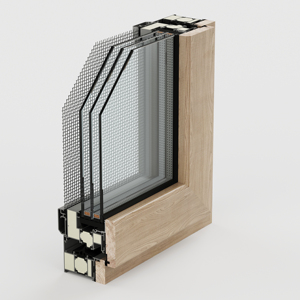
Integrated timber aesthetic with exterior weather-resistant 6063-T5 aluminum framing and smart motorized sensor integration.
Contact Us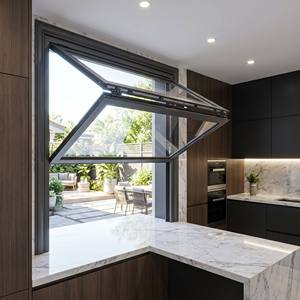
Heavy-duty shopfront and commercial counter closure system featuring acoustic insulation gaskets and vertical folding tracks.
Contact Us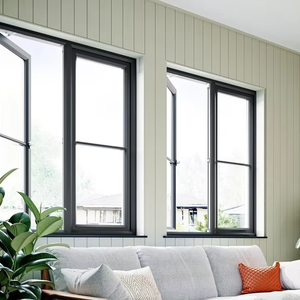
Architectural-grade architectural framing coated with durable Qualicoat Class 2 powder finishes for coastal environmental protection.
Contact Us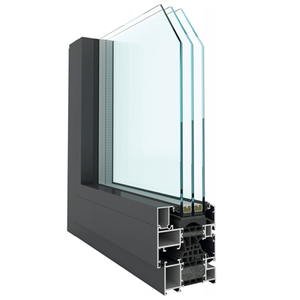
Thermal break polyamide PA66 insulated extrusion profiles engineered to lower U-values and suppress ambient urban noise levels.
Contact Us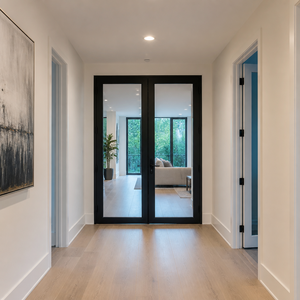
Certified fire-resistant transparent structural doors tailored for institutional, healthcare, educational, and high-rise applications.
Contact Us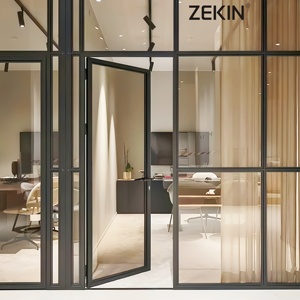
Impact-resistant barrier-free entrance systems fully compliant with strict TAS 201/202/203 wind load and debris testing protocols.
Contact Us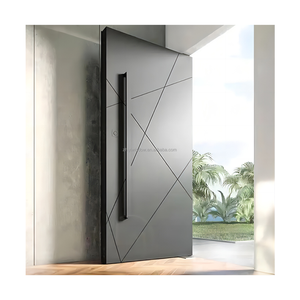
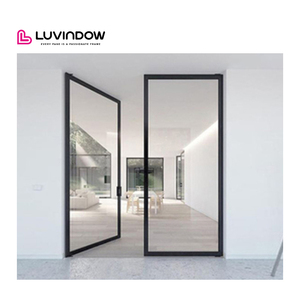
Heavy-duty structural pivot system designed for luxury architectural entries, featuring multi-point perimeter security locking mechanisms.
Contact UsIn modern commercial architecture, industrial interior design, kitchen modularity, and marine cabinetry, aluminium tambour door systems have emerged as the premier solution for space-saving, secure, and visually refined closures. Unlike traditional swing doors that consume valuable floor radius or standard sliding doors that require double-track depth, tambour doors utilize interlocking horizontal or vertical slats that glide seamlessly along curved guide tracks into a concealed internal coiling drum or rear sidewall cavity.
For international project buyers, procurement managers, architectural hardware distributors, and original equipment manufacturers (OEMs), sourcing directly from verified **China aluminum tambour door manufacturers**—particularly within the architectural manufacturing clusters of Foshan, Guangdong—delivers an unrivaled balance of mechanical precision, custom profile engineering, and scale economics.
| Specification Parameter | Standard Commercial Grade | Architectural Heavy-Duty Grade | High-Precision Industrial / OEM Grade |
|---|---|---|---|
| Profile Alloy Grade | 6063-T5 Extruded Aluminum | 6063-T6 / 6061-T6 Tempered | 6063-T5 with Polyurethane Insulation Core |
| Surface Finish Thickness | Anodized (10-15 µm) | Qualicoat Powder Coating (60-80 µm) | Electrophoresis / PVDF Fluorocarbon (>25 µm) |
| Slat Height / Thickness | 15mm - 25mm / Wall 0.8mm | 30mm - 55mm / Wall 1.2mm - 1.5mm | Custom Micro-Slat 10mm / Wall 1.0mm |
| Operating Mechanism | Manual Counterbalance Spring | Motorized Tubular Drive (RS485 / Smart) | Smooth Polypropylene Spiral Roller Track |
| Cycle Fatigue Life | 30,000 Open/Close Cycles | 50,000 Open/Close Cycles | 100,000+ Open/Close Cycles |
A superior aluminium tambour door assembly relies on micro-engineered slat geometry. The slats are connected via continuous ball-and-socket hinge channels extruded into the profile edge or flexible polymeric connector strips. When evaluating Chinese factories, procurement directors must examine four fundamental mechanical criteria:
How technological shifts, sustainability mandates, and architectural trends are shaping the next generation of roll-up tambour closures.
Global architectural specifications now demand Environmental Product Declarations (EPDs). Leading Foshan factories are shifting toward primary aluminum smelted using hydropower or certified post-consumer recycled aluminum content (>75%), substantially reducing embodied carbon without compromising tensile strength.
Interior designers are moving away from bulky visible side tracks. The future of commercial cabinetry and residential space separation relies on flush-mounted, sub-frame recessed aluminum guides measuring less than 12mm in visible width, creating an invisible hardware footprint.
Integration with Tuya, Zigbee, Somfy, and KNX protocols is becoming standard. Commercial kitchens, laboratory storage, and luxury residential projects increasingly require proximity gesture sensors, remote mobile app operation, and voice-controlled automated tambours.
The manufacturing of aluminum tambour doors has evolved from traditional manual assembly into an industry driven by automation and high-precision CNC machining. Factories in Foshan leverage localized raw material ecosystems to maintain tight quality tolerances.
Historically, joining hundreds of micro-slats together into a continuous curtain required manual threading, leading to inconsistent tension and potential slat shift during transit. Modern Chinese facilities utilize automated robotics that cut extrusions, thread internal rubber/steel connectors, and punch nylon end-caps in a continuous inline process. This prevents lateral sliding of slats and ensures uniform wind-load resistance.
To satisfy diverse architectural palettes, suppliers have expanded surface finishes far beyond basic anodizing. Continuous 3D woodgrain sublimation technology applies realistic timber textures (such as Walnut, Oak, and Teak) directly onto powder-coated metal substrates. The resulting door provides the natural warmth of real timber with zero risk of warping, moisture rot, or termite infestation.
For applications requiring passive airflow—such as server rack enclosures, commercial transformer rooms, or high-end kitchen appliance hubs—manufacturers now utilize high-speed laser punching to introduce micro-perforations (1.0mm–2.0mm diameter) across slat surfaces. This provides optimal thermal dissipation while maintaining structural integrity and insect blocking.
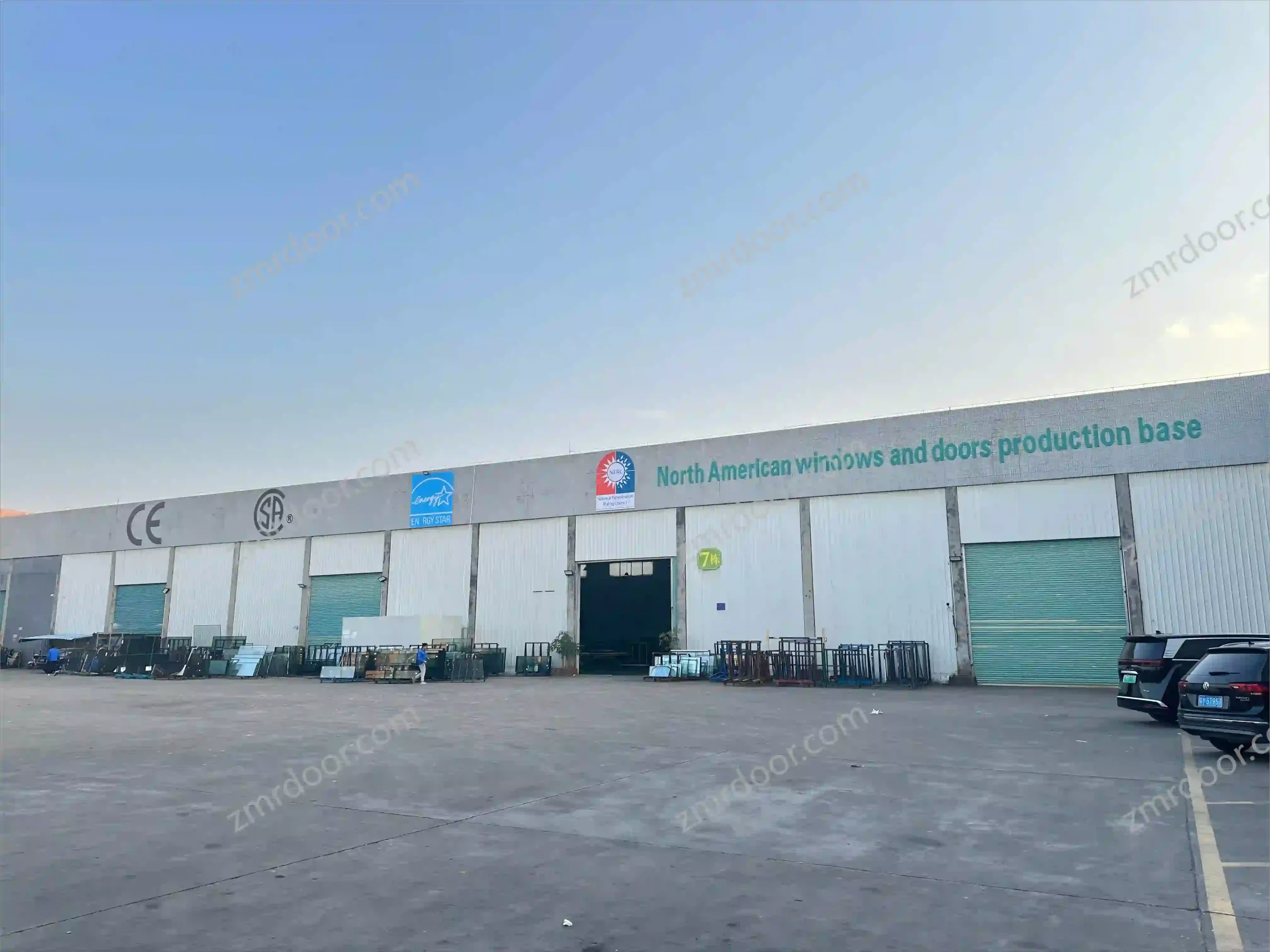
Located in Nanhai District, Foshan, our supply chain integrates profile die design, 6063 alloy billet extrusion, vertical powder coating lines, and finished tambour door assembly within an optimized manufacturing radius.
We eliminate installation surprises on site. Every custom tambour door order initiates with technical shop drawings specifying opening clearances, rail deductions, coiling diameters, and electrical conduit access for sign-off.
Every unit undergoes complete mock-up testing prior to crate packing. We inspect dimensional tolerances, spring tension balance, motorized cycle smoothness, and coating uniformity to ensure zero-defect arrivals.
Finished goods are wrapped in anti-scratch film, edge-protected with foam guards, vacuum sealed, and loaded into fumigated solid-plywood crates labeled by room/opening numbers for immediate jobsite sorting.
Direct insights addressing critical logistics, technical compliance, and order customization queries.
Because every tambour door assembly is manufactured to custom opening dimensions, we support both single-project commercial orders and volume distributor containers. For standard anodized or mill-finish profile series, practical minimums start at 10 to 20 units. For specialized custom powder coating colors (RAL matching), minimum batch runs are generally defined by powder coating line efficiency (approx. 300 kg profile weight).
The coiling drum diameter depends directly on total door height and slat profile thickness. For a standard 1.5-meter vertical opening using 20mm height slats, the rolled diameter typically ranges between 140mm and 180mm. Our engineering team provides precise CAD side clearance calculations during the drafting phase to ensure your overhead cabinet or wall pocket accommodates the housing box seamlessly.
Our aluminum extrusion profiles adhere to Chinese National Standard GB/T 5237, European Norm EN 755/EN 12020, and American Architectural Manufacturers Association AAMA 2604/2605 specifications. Glass components incorporated in full architectural systems are tested and certified under SGCC (North America), CE EN 14351-1 (Europe), and AS/NZS 2208 (Australia).
For coastal applications exposed to high salt spray (such as marine interior cabinetry or exterior commercial beachfront kiosks), we recommend Class 2 Qualicoat-certified powder coatings or 20µm minimum anodizing with electrocoat sealing. Fluorocarbon (PVDF) 3-coat painting is also available for extreme weather exposure, providing a 20+ year anti-fading warranty.
Once CAD shop drawings are officially signed off and deposit payment is cleared, standard manufacturing lead time is 20 to 25 business days. Shipping timelines vary by destination port: US West Coast (14–18 days), US East Coast (28–35 days), Europe Main Ports (28–32 days), and Southeast Asia (7–10 days).
Tambour slats are susceptible to vibration damage if packed loose. We fully contract the curtain into its closed position, wrap the unit in anti-moisture thermal foil, attach heavy corner protectors, and anchor each assembly inside custom-built fumigated plywood crates with internal foam blocking. Every container load is reinforced with steel strapping to prevent shifting.