Featured Engineering Products Showcase
Explore our top-performing factory-direct thermal break aluminum & aluminum-wood composite door systems engineered for stringent global building codes.
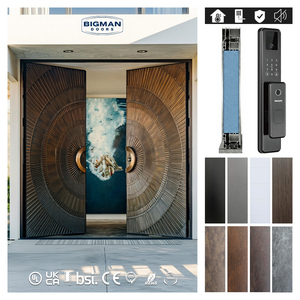
Australia Modern Carving Circular Radiating Design Double Exterior Villa Main Entrance Aluminum Security Door
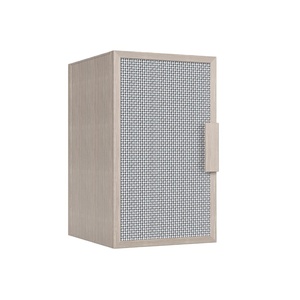
Custom Interior Furniture Modern Design Aluminum Frame Glass Sliding Cabinet Door for Kitchen Wardrobe Aluminum Sliding Door
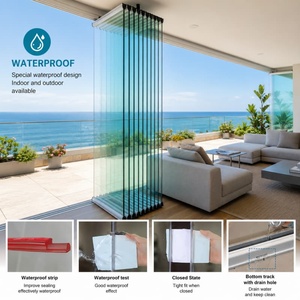
Full View Exterior Folding Bi-Fold Sliding Glass Balcony Window System with Aluminum Frame Folding Door
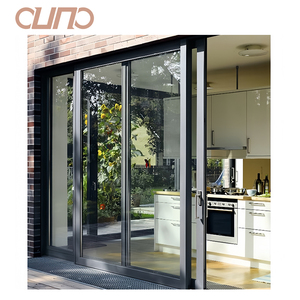
OUNA NOA Florida Standard High Impact 80PSF Hurricane Proof Sliding Door Aluminum Patio Door with Tinted Glass for Villa
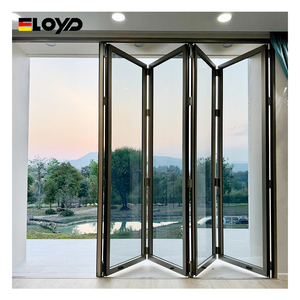
Eloyd Hot Sale Folding Accordion Steel Glass Door Sliding Aluminum Mosquito Net for Bathroom with Sound Insulation
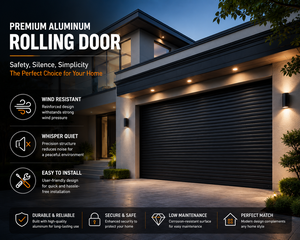
Heavy Duty Insulated Aluminum Roller Shutter Door Storm Proof Security Extruded Slats Rolling Doors for Shop Front Mall Factory
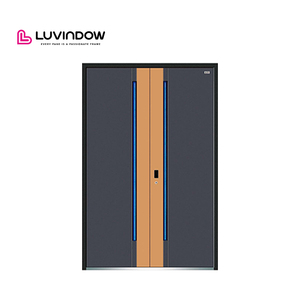
China Top Manufacturer Security Custom Fireproof Aluminum Entrance Doors for Commercial Buildings
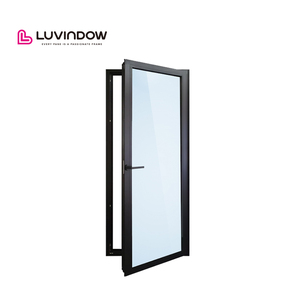
Customizable Thermal Break Soundproof Aluminum Doors for North American Builder
Top 10 Aluminum Wood Door Factories & Global Exporters Index
An authoritative technical ranking evaluated by structural thermal breaks, wood kiln-drying technology, hardware integration, and international code certifications.
1. VELTOR Window & Door Co., Ltd.
Veltor stands as China’s flagship manufacturer for high-performance thermal break aluminum and solid wood clad architectural doors. Operating out of Nanhai District, Foshan, Veltor integrates precision CNC profile machining, German PA66-GF25 polyamide thermal barriers, and finger-jointed imported White Oak, Teak, and Black Walnut interiors. Their systems boast superior airtightness, sound insulation up to 45 dB, and compliance with North American NFRC and Australian AS2047 fenestration standards.
Inquire Now2. Schüco International KG
Schüco is a globally renowned German manufacturer of aluminum profile systems and wood-clad glass facades. Known for pushing the boundaries of solar control, smart home automation, and building envelope energy performance, Schüco sets the global benchmark for European architectural design, albeit at a premium price point.
Inquire Now3. Reynaers Aluminium
Reynaers specializes in ultra-slim frame profiles, heavy-duty lift-and-slide doors, and custom wood-aluminum solutions. Their focus on circular economy manufacturing and cradle-to-cradle certification makes them a top choice for European luxury eco-resorts and commercial developments.
Inquire Now4. Internorm International GmbH
As Austria’s premier window brand, Internorm leads the world in Passive House certified timber-aluminum hybrid door systems. Utilizing multi-chamber thermal foam insulations and integrated solar blinds, Internorm products deliver extreme thermal resistance for arctic and cold-climate zones.
Inquire Now5. Marvin Windows and Doors
Marvin is an industry icon in North America, famous for combining thick extruded aluminum exteriors with furniture-grade interior woodwork. Their custom craftsmanship caters heavily to upscale residential replacement and historic restoration projects across the USA and Canada.
Inquire Now6. Andersen Corporation
Andersen operates extensive manufacturing operations producing vinyl-clad, composite, and aluminum-wood patio door systems. Their E-Series architectural collection offers extensive custom colors and interior wood species tailored for North American homebuilders.
Inquire Now7. YKK AP Inc.
YKK AP provides large-scale extrusion capacity with strict Japanese quality management. Their commercial aluminum door systems prioritize seismic resilience, water drainage engineering, and high durability against typhoons in coastal Pacific Rim markets.
Inquire Now8. Alumil Aluminium Industry S.A.
Alumil is one of Europe's largest aluminum extrusion conglomerates. Their Supreme series offers wide-span aluminum-wood patio systems specifically engineered for Mediterranean climate requirements, offering resistance to saline marine environments.
Inquire Now9. Technal (Hydro Group)
Technal, a brand of Norsk Hydro, specializes in low-carbon recycled aluminum profiles integrated with natural wood facings. Their architectural hardware and concealed hinges offer minimalist aesthetics for high-end modern villas.
Inquire Now10. Cortizo Architectural Systems
Cortizo operates automated production facilities delivering bespoke profile designs across Europe and Latin America. Their timber-aluminum systems feature dual-sealed thermal break technology and versatile hardware configurations.
Inquire NowEngineering White Paper: Aluminum Wood Door Architecture
Understanding the thermal dynamics, timber moisture stabilization, and structural engineering behind professional composite fenestration.
1. Composite System Mechanics
Aluminum wood doors combine two contrasting structural materials to achieve optimal performance. The outer shield consists of heavy-gauge 6063-T5 or 6060-T6 aluminum extrusion treated with PVDF coating or fluorocarbon powder spraying, providing 100% weather resistance against UV rays, acid rain, and coastal corrosion. The interior layer utilizes premium furniture-grade solid wood (such as White Red Oak, American Black Walnut, or Larch), creating natural thermal insulation and rich interior aesthetics.
2. PA66-GF25 Thermal Break Science
Traditional wood-aluminum doors without thermal separation suffer from thermal bridging across metal joints. Modern export-grade systems utilize Polyamide PA66 reinforced with 25% glass fiber (PA66-GF25). These insulating struts feature an expansion coefficient identical to aluminum, ensuring structural integrity during extreme temperature swings ranging from -40°C winter climates to +80°C direct surface sun exposure.
3. Timber Moisture Control & De-stressing
The primary failure point in low-quality wood doors is warping caused by humidity changes. Top manufacturers employ multi-stage kiln drying to achieve a precise moisture content between 8% and 12%. Furthermore, solid wood is processed into finger-jointed, three-ply laminated timber. This neutralizes natural wood grain tension and prevents bending, swelling, or cracking across decades of operational use.
Technical Note for B2B Project Buyers: Always demand independent lab certificates validating U-values, SHGC (Solar Heat Gain Coefficient), and acoustic STC ratings. Premium factories provide system shop drawings illustrating snap-on nylon clip connections between wood and aluminum that accommodate differential thermal expansion without stressing the frame joints.
Technical Specification Comparison Matrix
| System Component | Standard Commercial Grade | Veltor Premium Export Grade | European Passive House Grade |
|---|---|---|---|
| Aluminum Alloy Profile | 1.4mm Wall Thickness (6063-T5) | 1.8mm – 2.2mm Wall Thickness (6063-T6) | 2.0mm – 2.5mm Reinforced Profile |
| Thermal Insulation Strip | 14.8mm Standard PVC/Polyamide | 24mm – 34mm PA66-GF25 Polyamide | 34mm+ Multi-Chamber Insulated Foam |
| Interior Wood Species | Pine / Softwood Veneer | Laminated Red Oak / Teak / Black Walnut | FSC-Certified Solid Larch / German Oak |
| Glass Configuration | 5mm + 12A + 5mm Double Tempered | 6mm Low-E + 16Ar + 6mm Triple Insulated | 4mm Low-E + 18Ar + 4mm + 18Ar Triple Glazed |
| Overall U-Value (Uw) | 2.2 – 2.8 W/m²K | 1.1 – 1.4 W/m²K | ≤ 0.79 W/m²K |
| Hardware & Locking | Standard Single Point Lock | German Siegenia / HOPPE Multi-Point Lock | Concealed Multi-Point Motorized Locking |
Future Procurement & Product Trends (2025–2030)
Key industry shifts driving global architectural specifications, sustainable sourcing, and smart building integration.
1. Ultra-Slim Sightlines & Panoramic Views
Architects are heavily specifying narrow-frame aluminum profiles that maximize glass surface area while maintaining high structural load ratings. Interlocking sightlines as thin as 20mm in heavy-duty lift-and-slide doors allow modern residential projects to create seamless indoor-outdoor transitions without sacrificing storm resistance.
2. Extreme Weather & Hurricane Engineering
With increasing climate volatility, coastal developments in North America, Australia, and the Caribbean demand impact-tested fenestration. Sourcing trends show exponential demand for 80PSF to 100PSF hurricane-proof sliding doors featuring laminated PVB/SGP glass interlayers capable of withstanding flying debris during Category 5 storms.
3. Smart Access & Biometric Integration
The integration of smart home security directly into entrance door frames is becoming standard. Modern commercial and villa entrance doors now feature concealed motorized multi-point locks, integrated fingerprint scanners, facial recognition access control, and remote smartphone monitoring powered by IoT platforms.
4. Low-Carbon Recycled Aluminum & FSC Timber
Global ESG mandates require window and door manufacturers to supply Environmental Product Declarations (EPDs). Procurement strategies favor factories utilizing hydro-powered recycled aluminum extrusions and FSC-certified sustainably harvested timber, drastically reducing the embodied carbon of new building envelopes.
5. High Acoustic Damping for Urban Luxury
Rapid urban density has made acoustic comfort a key purchasing driver. Multi-chamber thermal break profiles equipped with triple EPDM gaskets and asymmetric laminated glass units (e.g., 6mm + 1.52PVB + 8mm) effectively eliminate low-frequency city traffic noise, achieving Sound Transmission Class (STC) ratings above 42 dB.
6. Fireproof & Security-Rated Assemblies
Commercial mixed-use developments increasingly require aluminum doors to provide passive fire protection. Leading exporters manufacture fire-rated aluminum entrance doors certified for 60 to 120 minutes of thermal insulation and integrity, combining emergency panic hardware with bullet-resistant ceramic glazing.
Why Source From VELTOR: Factory Infrastructure & Capabilities
Direct from Foshan, China — the hub of global architectural aluminum fabrication.
Foshan Industrial Cluster Advantages
Situated in Shishan Town, Nanhai District, VELTOR operates at the heart of China’s premier aluminum supply chain. This proximity ensures direct access to raw 6063-T5 billets, world-class anodizing facilities, and premium hardware partners, delivering unmatched cost-to-quality ratios.
100% Pre-Shipment Trial Assembly
Every custom order undergoes full trial assembly on our shop floor before packing. Frame diagonal tolerances, hardware operation, weatherstrip compression, and glass fitment are rigorously inspected and recorded via video for client approval prior to container loading.
Export-Grade Heavy Duty Crating
To eliminate maritime shipping damage, finished door units are wrapped in anti-scratch protective film, fitted with reinforced corner guards, and secured inside fully enclosed fumigated wooden crates labeled clearly by building elevation and opening number.
Ready to Engineer Your Project's Fenestration Schedule?
Send your architectural drawings, elevation plans, or window schedules for a fast engineered quotation within 24 hours.
Inquire NowFrequently Asked Sourcing & Technical Questions (FAQ)
Critical insights for importers, general contractors, architects, and project dealers purchasing custom aluminum wood doors.
What is the difference between aluminum-clad wood and wood-clad aluminum doors?
The primary difference lies in the structural load-bearing material. Aluminum-clad wood doors feature a heavy solid timber frame as the main structure, with a thin protective aluminum skin attached to the exterior side. Wood-clad aluminum doors (or thermal break aluminum wood doors) utilize a structural, heavy-duty extruded aluminum frame as the core load-bearing skeleton, with decorative solid wood timber snapped onto the interior face. Wood-clad aluminum systems offer far superior structural strength, higher storm wind resistance, and zero risk of exterior wood frame rot.
How do factory moisture controls prevent timber interior doors from warping?
Leading exporters like VELTOR subject all raw timber (Red Oak, Walnut, Teak) to computer-controlled vacuum kiln drying to reach a target moisture content of 8% to 12%. The wood is then sliced into thin layers and pressure-laminated into 3-ply finger-jointed timber blocks. This cross-grain orientation cancels internal wood stress. Additionally, nylon connecting clips are used to join the timber to the aluminum frame, allowing both materials to expand and contract independently without buckling.
What structural and thermal standards can VELTOR aluminum wood doors meet?
Our door systems are engineered to comply with regional international standards. For North America, we provide NFRC thermal performance ratings (Uw values down to 1.1 W/m²K) and Florida Building Code (FBC) hurricane impact compliance (TAS 201/202/203, 80+ PSF). For Australia, systems meet AS2047 and AS1288 safety glazing. For Europe, our products carry CE marking under EN 14351-1.
What is the minimum order quantity (MOQ) and lead time for factory-customized door orders?
Because every project requires custom shop drawings and made-to-measure extrusion cutting, our practical minimum order starts at single villa projects (typically 50–100 sq.m) up to full container loads for commercial distributors. Production lead time is generally 25 to 35 days following shop drawing sign-off and deposit confirmation.
How are door products packaged to prevent damage during long-distance ocean shipping?
Doors are fully dismounted or packed as pre-hung units depending on container space economics. Glass units are protected with corner guards and foam spacers. Frame components are wrapped in multi-layer PE film and bubble wrap, then loaded inside fully enclosed, ISPM-15 compliant fumigated wooden cases. Each crate is marked with detailed elevation IDs matching site installation blueprints.
Can your factory match custom RAL surface colors and wood stain finishes?
Yes. Exterior aluminum profiles can be customized with over 200 RAL powder coating shades, anodized metallic tones, or PVDF fluorocarbon coatings designed to withstand 20+ years of high-UV exposure. Interior wood facings can be finished with eco-friendly water-based clear stains, matte varnishes, or custom stains matching your interior cabinetry and millwork.