1. Global Executive Summary & Industry Sourcing Overview
The global architectural fenestration sector is experiencing a massive paradigm shift. As national building codes systematically lower maximum permissible whole-window heat transfer coefficients (U-factors) to meet net-zero carbon targets, aluminum house windows have evolved from basic structural framing into highly engineered thermal envelope components. According to modern fenestration research, aluminum dominates modern residential and commercial facades due to its unmatched strength-to-weight ratio, structural longevity under extreme wind-loads, and exceptional dimensional stability compared to vinyl (uPVC) or timber.
Selecting the right aluminium house windows manufacturer requires rigorous technical scrutiny. Global buyers—including real estate developers, facade contractors, architectural firms, and regional window distributors—must evaluate production facilities not merely on initial unit pricing, but on extrusion metallurgical purity, thermal break engineering, surface finishing compliance (such as AAMA 2605 or Qualicoat Class 2 standards), and international code compliance (CE EN14351-1, NAFS, AS2047).
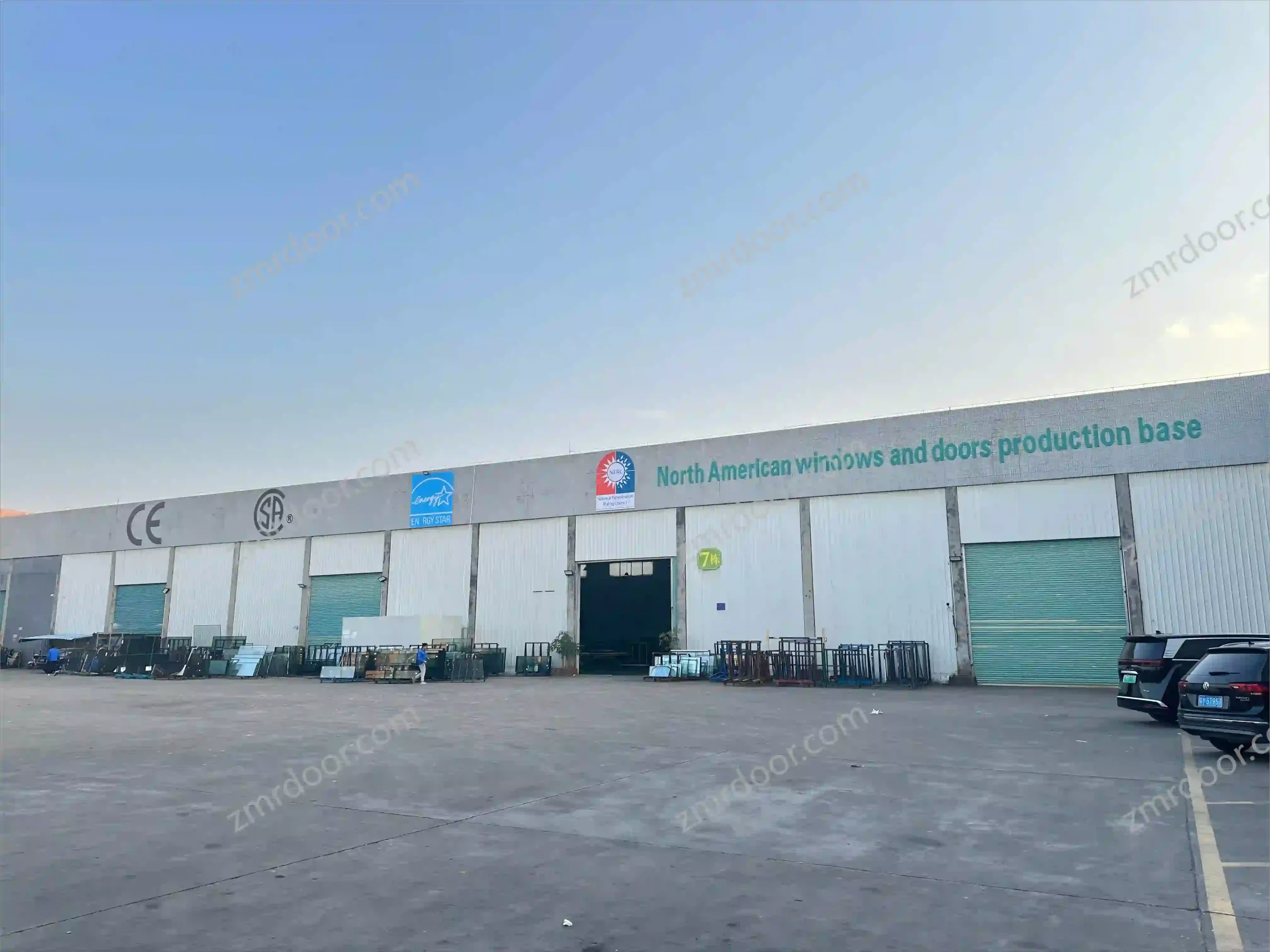
This industry intelligence benchmark evaluates the world's leading manufacturers, outlines future procurement shifts, breaks down structural design metrics, and details why specialized fabrication hubs like Foshan, China—led by enterprise partners like VELTOR Window & Door Co., Ltd.—have become the preferred OEM/ODM engines for global real estate procurement.
Extrusion Alloy & Temper
Ensure structural profiles utilize prime-grade 6063-T5 or 6063-T6 aluminum billet with wall thicknesses exceeding 1.4mm for windows and 2.0mm for heavy-duty doors, resisting deflection under structural wind loads.
PA66 Thermal Barriers
Premium manufacturers incorporate techno-polymer Polyamide 66 reinforced with 25% glass fiber (PA66-GF25), effectively interrupting conductive heat flow and eliminating internal condensation.
Advanced Glass Coating
Insulated Glass Units (IGUs) must feature soft-coat double or triple Low-E silver layers, warm-edge spacers, and inert Argon gas fills to achieve low Solar Heat Gain Coefficients (SHGC).
2. Top 10 Aluminium House Windows Manufacturers Worldwide
The following evaluation highlights the top 10 global manufacturers shaping the high-performance architectural aluminum window landscape in 2025. This ranking considers technological innovation, custom fabrication capability, international certification, and supply-chain scalability.
Core Specialization: High-end architectural aluminum window systems, passive house certified profiles, integrated building automation, and high-security fenestration.
Technical Benchmark: Recognized globally for ultra-low U-values ($U_f \le 0.8 \text{ W/m}^2\text{K}$) and system modularity. Schüco sets the benchmark for European engineering specifications.
Core Specialization: Slim-line aluminum casements, panoramic sliding doors, curtain walls, and sustainable building envelope solutions.
Technical Benchmark: Exceptional surface finish durability and digital BIM modeling support, favoring ultra-modern residential developments across Europe and North America.
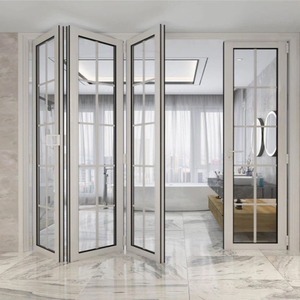
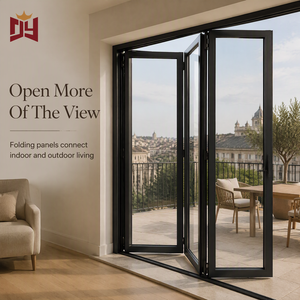
Core Specialization: Direct-from-factory thermal-break aluminum windows, slim bifold systems, heavy-duty lift-and-slide doors, and custom project-tailored fenestration.
Technical Benchmark: Located in Nanhai District, Foshan, VELTOR integrates prime extrusion sourcing, automated multi-axis CNC machining, PA66-GF25 thermal breaks, and 100% pre-shipment assembly testing. VELTOR delivers European-grade performance ($U_w \le 1.1 \text{ W/m}^2\text{K}$) at factory-direct wholesale economies, making it the preferred OEM/ODM manufacturer for importers, regional window brands, and international project builders.
Core Specialization: Commercial storefronts, hurricane-impact aluminum windows, and standardized high-durability residential vinyl/aluminum series.
Technical Benchmark: Advanced automated mass production with tight metallurgical tolerances and exceptional quality control across Asian and North American markets.
Core Specialization: Ultra-narrow sightline sliding systems, concealed sash casement windows, and acoustic isolation profiles.
Technical Benchmark: Leading European design trends with sightlines down to 20mm visible aluminum profile widths while retaining high wind-load ratings.
Core Specialization: Commercial aluminum curtain walls, ribbon windows, heavy-duty entrance doors, and blast/impact-resistant fenestration.
Technical Benchmark: High structural performance certified under NAFS standards, designed for large commercial complexes and high-density multi-family housing.
Core Specialization: Eco-designed aluminum window frames, recycled aluminum extrusions (Circal 75R), and modular building systems.
Technical Benchmark: Focuses heavily on decarbonized material supply chains, utilizing post-consumer recycled aluminum to minimize embodied carbon in modern construction.
Core Specialization: Large-format multi-slide moving glass walls, pocketing patio doors, and warm-climate modern residential window packages.
Technical Benchmark: Smooth operational hardware for expansive glass panels designed specifically for modern luxury residential estates.
Core Specialization: Thermally improved aluminum window series, double-hung, sliding, and awning windows for home replacement and new builds.
Technical Benchmark: Clean visual aesthetics combined with durable thermal breaks meeting Energy Star regional standards in the US West Coast.
Core Specialization: Heavy-duty aluminum-clad exterior wood windows and engineered aluminum structural systems for modern architectural applications.
Technical Benchmark: Exceptional interior warmth combined with zero-maintenance exterior powder-coated aluminum shielding against harsh climate weathering.
3. Technical Benchmark: System Specifications Comparison
To assist procurement managers and structural engineers in selecting the correct system configuration, the table below compares core engineering parameters across standard window types available through premier manufacturing partners like VELTOR.
| Window / Door System | Thermal Break Tech | Max Glass Thickness | Air Tightness (EN 12207) | Water Resistance (EN 12208) | Target U-Value Range |
|---|---|---|---|---|---|
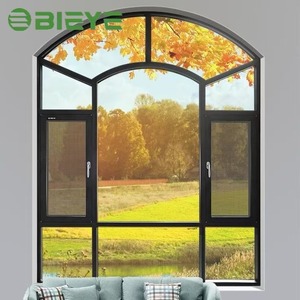
| Thermal Break Casement | PA66-GF25 Multi-cavity | up to 39mm (Triple IGU) | Class 4 (600 Pa) | Class E1050 (1050 Pa) | 1.0 - 1.4 W/m²K |
| Narrow Frame Bifold Door | 24mm Polyamide Strip | up to 32mm (Double IGU) | Class 3 (600 Pa) | Class 9A (600 Pa) | 1.3 - 1.7 W/m²K |
| Heavy Duty Lift & Slide | PA66 Isolator + Foam Core | up to 42mm (Heavy Triple) | Class 4 (600 Pa) | Class E900 (900 Pa) | 1.1 - 1.5 W/m²K |
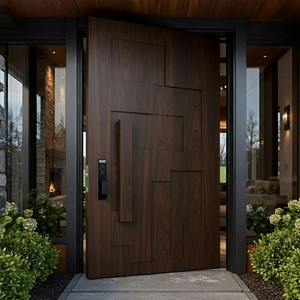
| Grand Hydraulic Pivot Door | Perimeter Thermal Strut | up to 28mm (Laminated IGU) | Class 3 (300 Pa) | Class 7A (300 Pa) | 1.5 - 1.9 W/m²K |
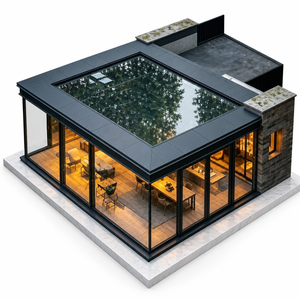
| Four Seasons Sunroom Framing | Reinforced Multi-Cavity | up to 36mm Low-E Glass | Class 4 (600 Pa) | Class E1200 (1200 Pa) | 1.2 - 1.6 W/m²K |
4. Future Sourcing & Architectural Procurement Trends (2025–2030)
As global construction demands higher efficiency, shorter project lead times, and lower carbon footprints, procurement directors must align with factories capable of supporting next-generation fenestration trends:
A. Micro-Slim Sightlines & Invisible Frame Integration
Modern architectural design prioritizes structural transparency. The market is shifting dramatically toward ultra-narrow profile sightlines (under 25mm visible frame width). Achieving this requires high-strength 6063-T6 aluminum alloys and structural silicone glazing (SSG) techniques capable of transferring wind pressure directly from the glass pane to hidden structural anchors.
B. Low-Embodied Carbon Aluminum (Green Metal Sourcing)
With ESG compliance becoming mandatory for institutional developers, leading factories are switching from coal-fired primary aluminum smelting to hydro-powered or recycled post-consumer aluminum billets. This shift reduces embodied carbon per kilogram of profile by up to 70%, helping projects qualify for LEED Gold/Platinum and BREEAM certifications.
C. High-Durability Fluoropolymer Finishes (PVDF vs. Powder Coating)
Coastal developments and extreme weather zones are dictating tougher surface performance. Traditional electro-static powder coatings are increasingly replaced by 3-coat Fluorocarbon PVDF coatings (such as Kynar 500), which offer superior resistance to salt spray, chalking, and intense UV degradation over 25+ years.
D. Automated Smart System Integration
Future-proof aluminum window systems now feature integrated hidden chain actuators, concealed magnetic lock sensors, and smart glass (electrochromic switchable glazing) ready to communicate with centralized Building Management Systems (BMS).
5. Why Sourcing Direct from Foshan (VELTOR) Yields Competitive Advantage
Foshan, Guangdong, represents the world’s most concentrated capital of aluminum profile extrusion, hardware fabrication, and advanced glass manufacturing. Direct collaboration with specialized Foshan manufacturers like VELTOR Window & Door Co., Ltd. offers overseas importers and developers significant strategic advantages:
- End-to-End Vertical Control: Sourcing directly eliminates intermediate trade markups, allowing access to top-tier thermal break systems at competitive factory-direct pricing.
- Strict CAD/BIM Shop Drawing Workflows: Every unit is custom engineered. Before cutting a single alloy profile, VELTOR issues detailed cross-sectional shop drawings detailing drainage paths, anchor points, glass bitings, and hardware clearances for customer engineering sign-off.
- Comprehensive Pre-Shipment Quality Control: Windows and doors undergo trial assembly on specialized factory test racks. Dimensions, squareness, gasket compression, diagonal tolerances, and lock actuation are verified and documented via high-resolution photos and video reports provided to the buyer prior to packing.
- Export-Ready Reinforced Wood Crating: Glass units and heavy aluminum frames are wrapped in protective anti-scratch film, corner-guarded, and secured inside fully enclosed ISPM-15 compliant heat-treated wooden crates labeled by opening numbers (e.g., W-01, D-04) for effortless installation sequencing on site.
Ready to Request Engineering Specifications & Wholesale Catalog?
Connect with VELTOR’s dedicated fenestration engineers to review your project window schedule, CAD elevation drawings, or dealer distribution terms.
Get Catalog