In modern subterranean and semi-subterranean architecture, basement windows serve a far more complex role than simple daylight apertures. They are critical building envelope components responsible for moisture isolation, structural hydro-head load resistance, energy efficiency, acoustic damping, and emergency egress safety compliance. As global building energy codes tighten—such as the International Energy Conservation Code (IECC) in North America and EPBD directives in Europe—the demand for high-performance OEM/ODM aluminum basement windows suppliers has grown exponentially.
Traditionally dominated by low-cost uPVC or rust-prone galvanized steel, the below-grade fenestration market is undergoing a structural transformation toward heavy-duty 6063-T5 architectural aluminum extrusion systems. Aluminum offers an unmatched structural strength-to-weight ratio, zero warp risk under subterranean hydrostatic humidity, and total dimensional stability across extreme thermal cycles. This document provides global B2B buyers, real estate developers, window wholesalers, and facade engineering firms with a technical breakdown of raw material selection, thermal-break engineering, OEM custom tooling capabilities, and future global procurement strategies.
Information Gain Insight: Thermal Dynamics of Sub-Grade Fenestration
Basements experience persistent relative humidity gradients and soil thermal mass coupling. Non-thermal break metal frames act as thermal bridges, creating dew-point moisture condensation on interior surfaces. Advanced OEM aluminum basement systems utilize structural Polyamide (PA66 GF25) thermal barriers to raise interior surface temperatures above the local dew point, eliminating toxic black mold risks (Stachybotrys chartarum) inside subterranean living spaces.
1. Structural Engineering & Operational Configurations
As a leading OEM/ODM aluminum basement window factory based in Foshan's premier architectural aluminum hub, our production lines manufacture a broad spectrum of sub-grade window typologies tailored to specific architectural blueprints and regional safety mandates:
Basement Hopper Windows
Inward-tilting bottom-hinged windows designed for high-sidewall basement installations. Hopper configurations direct incoming airflow toward the ceiling, avoiding ground-level dust intake while ensuring superior water shedding during rain events.
Ideal for High-Sill Wells
Egress Casement Systems
Engineered to meet stringent emergency exit building codes (such as IBC Section 1030). Outward-swinging casement hardware provides an unobstructed net clear opening area exceeding 5.7 sq. ft., coupled with multi-point stainless steel security locking mechanisms.
IBC Egress Compliant
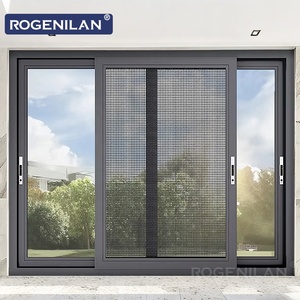
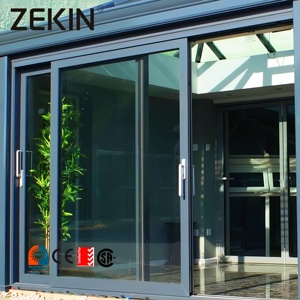
Horizontal Sliding Systems
Space-saving dual-sash or single-slider windows built on heavy-duty brass or stainless steel roller tracks. Designed with elevated drainage sills to handle subterranean window well runoff without water backflow.
Low-Maintenance Design
2. B2B Technical Comparison: Aluminum vs. Alternative Materials
When selecting basement fenestration systems for large-scale commercial or residential developments, procurement officers must evaluate lifecycle costs, structural integrity under earth pressure, and thermal degradation. The table below outlines how thermal break aluminum outranks conventional uPVC and painted steel options:
| Performance Parameter |
OEM Thermal Break Aluminum |
Standard uPVC (Vinyl) |
Galvanized Sheet Steel |
| Structural Modulus (Tensile Strength) |
High (200–240 MPa / 6063-T5) |
Low (40–50 MPa, flexes easily) |
Moderate to High (180–210 MPa) |
| Subterranean Humidity Resistance |
Immune to rot, rust, or swelling |
Prone to frame warp over time |
High risk of rust at weld seams |
| Sightline / Glass Ratio |
Ultra-slim profile (Max daylight) |
Thick, bulky frames |
Medium profile width |
| Thermal Transmittance (U-Value) |
1.2 – 1.8 W/m²K (Custom Double IGU) |
1.4 – 2.0 W/m²K |
3.5 – 5.0 W/m²K (High condensation) |
| Acoustic Isolation (STC Rating) |
STC 35 to STC 42 (Double/Laminated) |
STC 28 to STC 32 |
STC 25 to STC 30 |
| Expected Service Life |
40+ Years (Minimal maintenance) |
15–20 Years (Degrades under UV) |
10–15 Years (Rusting risk) |
3. Global Procurement & Engineering Trends (2025–2030)
As an international B2B buyer or building supply chain director, aligning your product portfolio with upcoming architectural trends ensures long-term market competitiveness. Our R&D engineering department identifies four core trends transforming the subterranean window sector:
3.1 Integration of Smart Micro-Ventilation & Sensor Actuators
Modern smart home automation systems now extend to lower-level window envelopes. OEM/ODM buyers are increasingly specifying basement windows integrated with motorized chain actuators and environmental CO2/radon sensors. When indoor radon or humidity thresholds spike, automated hopper windows micro-open to restore safe indoor air quality (IAQ) without compromising perimeter security.
3.2 Ultra-Low Thermal Transmittance (Passive House Standards)
Subterranean space conversion—transforming dark basements into luxury home theaters, gyms, or rental units—requires higher thermal comfort. Future procurement trends focus on triple-glazed warm-edge spacer IGUs combined with multi-chambered PA66 nylon insulating strips achieving U-factors below 0.8 W/m²K for cold-climate zones in North America, Northern Europe, and East Asia.
3.3 Low-Carbon Recycled Aluminum Extrusions
Environmental, Social, and Governance (ESG) criteria are altering global construction supply chains. Leading developers now prioritize aluminum window manufacturers utilizing green-hydropower-smelted aluminum billet containing over 75% recycled scrap (Post-Consumer Recycled Content). This reduces the embedded carbon footprint per frame by up to 65%.
3.4 Subterranean Flood Barrier Integration
With increasing extreme weather events, flash flooding presents a severe threat to subterranean window wells. Advanced ODM basement window profiles now feature dual-stage compression rubber gaskets and heavy-duty latching cams capable of resisting temporary water immersion up to 500 mm head height without leaking.
4. Why Partner with VELTOR: Enterprise OEM/ODM Capabilities
Veltor Window & Door Co., Ltd. operates state-of-the-art manufacturing facilities in Foshan, Guangdong—the world's capital for architectural aluminum extrusion. We provide complete end-to-end OEM and ODM support tailored for brand distributors, engineering contractors, and private-label wholesalers.
1. Custom Extrusion Tooling
Our in-house die development shop can transform your CAD/BIM profile designs into working extrusion dies within 14 business days, accommodating custom wall thicknesses (1.4mm to 3.0mm).
2. Surface Finishing Mastery
Choose from AkzoNobel powder coating, fluorocarbon (PVDF) spraying for extreme coastal salt-spray resistance, wood grain transfer printing, or 25-micron architectural anodizing.
3. Rigorous QC Testing
Every batch undergoes air permeability testing (ASTM E283), water penetration resistance under dynamic pressure (ASTM E331), and structural load testing (ASTM E330) prior to export crating.
Export-Grade Packaging & Project Logistics
We solve job-site installation headaches. All OEM/ODM aluminum basement windows are protected with anti-scratch film, edge-wrapped with EPE foam, and packed into reinforced ISPM-15 compliant sea-worthy wooden crates labeled with your exact opening schedules and building tags.