Engineering Fenestration & Door Solutions
Precision-engineered aluminum profiles designed for high-humidity residential, commercial, and hospitality applications.
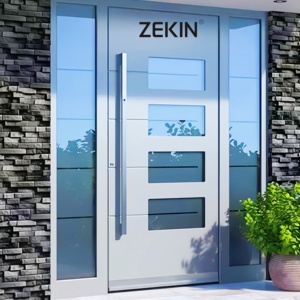
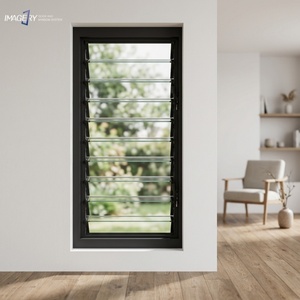
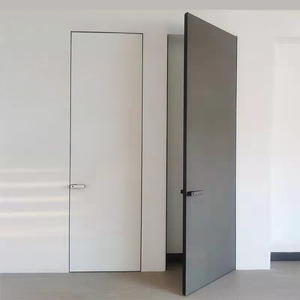
1. Technical Specification & Material Engineering of Aluminium Washroom Doors
In modern commercial architecture, hospital facility planning, luxury hotel development, and high-density residential construction, fenestration engineering for sanitary spaces demands rigorous material compliance. Washroom doors operate in micro-environments characterized by persistent high relative humidity (RH > 85%), exposure to chemical cleaning agents (surfactants, chlorine compounds, alkaline sanitizers), and frequent mechanical cycling. Traditional wood-composite (MDF/HDF) and standard hollow-core PVC doors suffer from swelling, delamination, microbial colonization, and structural degradation within 24 to 36 months of installation.
OEM/ODM aluminium washroom door assemblies engineered by Foshan-certified suppliers mitigate these systemic failure modes through advanced alloy selection and precise surface treatment chemistry. Utilizing primary extrusion grade 6063-T5 or 6061-T6 magnesium-silicon aluminium alloys, these systems provide exceptional tensile strength (≥160 MPa) and yield strength (≥110 MPa). Unlike ferrous metals or timber, aluminium forms a natural passive oxide layer that resists atmospheric corrosion. When augmented by anodization (15-25 microns) or Fluorocarbon (PVDF) electrostatic powder coating (Qualicoat Class 2 compliance), the surface becomes completely inert to moisture vapor intrusion and organic bacterial growth.
Hydrophobic Integrity
Zero moisture absorption rates prevent warping, rotting, or structural swelling under direct water contact and steam saturation.
Sanitary Hygiene
Non-porous extruded surfaces prevent mold spores (Aspergillus niger) and bacterial adherence, facilitating hospital-grade sanitization.
Structural Resilience
Heavy-duty corner crimping and mechanical cleat locking withstand operational door-slam forces up to 1,500 N without frame deflection.
2. OEM vs. ODM Sourcing Framework for B2B Importers
Navigating international procurement requires clarity on production modes. As a specialized B2B manufacturer in Foshan, China—the world’s premiere architectural aluminum hub—we structure our client partnerships into two distinct engineering models:
| Specification Parameter | OEM (Original Equipment Manufacturer) | ODM (Original Design Manufacturer) |
|---|---|---|
| CAD/BIM Customization | Client provides exact profile CAD drawings, die specs, and hardware schedules. | Factory supplies white-label designs tailored to client's market aesthetic and target pricing. |
| Extrusion Die Tooling | Custom die creation (7-12 days); Client holds exclusive structural IP rights. | Utilizes pre-engineered factory profiles; zero tooling initial cost. |
| Glass & Infill Panel Options | Specified tempered/laminated glass, custom privacy louvers, or composite panels. | Standard frosted double glass (5mm+9A+5mm) or textured fluted glass (Reeded/Moru). |
| Hardware Integration | Client-specified brands (Hoppe, Dormakaba, Titano) or custom CNC mortise lock routing. | Factory-standard stainless steel 304 silent-bearing hinges and magnetic locks. |
| Compliance Verification | Tested to client market codes (ASTM E330, EN 12207, AS 2047). | Pre-certified to international ISO 9001 and CE factory standards. |
3. Future Procurement & Product Evolution Trends in Washroom Fenestration
Global building energy codes and architectural preferences are transforming washroom door design. Procurement officers and commercial developers must account for three critical industry shifts over the next decade:
A. Ultra-Narrow Sightlines & Concealed Frameless Architecture
Modern architectural aesthetics favor minimalist interiors. The demand for invisible aluminium frame interior doors (concealed frame systems flush with drywall) has grown over 40% year-over-year. Engineering these systems requires high-precision 4-axis CNC routing of aluminum jams to embed 3D adjustable hidden hinges while preserving perimeter magnetic latching mechanism alignment.
B. Smart Lock Integration & Contactless Hygiene Controls
Post-pandemic commercial real estate development prioritizes contactless access. High-end residential villas and luxury hospitality properties are integrating AI-powered smart locks, facial recognition sensors, and automatic drop-down bottom seal mechanisms into washroom entrance doors. Factory customization must incorporate internal wiring channels within the extruded aluminium stile without compromising structural wall thickness (minimum 1.4mm to 2.0mm).
C. Acoustic Privacy Optimization (STC & Soundproofing)
Acoustic comfort is no longer limited to exterior facades. Modern interior washroom door specifications demand Sound Transmission Class (STC) ratings between 32 dB and 42 dB. OEM/ODM factories achieve this sound attenuation by pairing double-glazed laminated acoustic glass (PVB interlayer) with perimeter dual-durometer EPDM gaskets and automatic drop-down mechanical threshold seals that seal against the floor when the door closes.
4. Manufacturing Strengths & Foshan Supply Chain Superiority
Sourcing directly from our Foshan manufacturing facility provides international buyers with unmatched supply chain efficiency, vertical integration, and cost optimization:
- Vertical Extrusion to Finishing: In-house extrusion presses ranging from 800 to 3,600 tons, paired with automated vertical powder coating lines capable of processing profiles up to 7.2 meters in length.
- Micron-Level CNC Machining: German-engineered 4-axis CNC milling centers guarantee hardware cutout tolerances within ±0.1mm, ensuring seamless on-site installation of locksets and concealed hinges.
- Comprehensive QC Testing Protocols: Every batch undergoes rigorous pre-shipment testing, including salt spray testing (ASTM B117 > 1,000 hours), coating adhesion cross-hatch testing, and cyclic opening testing (>100,000 cycles).
- Export-Grade Protective Packaging: Fully wrapped protective film, impact-resistant foam corner guards, and heat-treated solid timber export crates labeled with floor and opening schedules for rapid jobsite distribution.
5. Frequently Asked Questions (FAQ) for Importers & Specifiers
Partner with a Leading OEM/ODM Aluminium Door Manufacturer
Contact our Foshan engineering team today to review your project shop drawings, request custom aluminum section samples, or receive factory-direct wholesale pricing.
Get Catalog