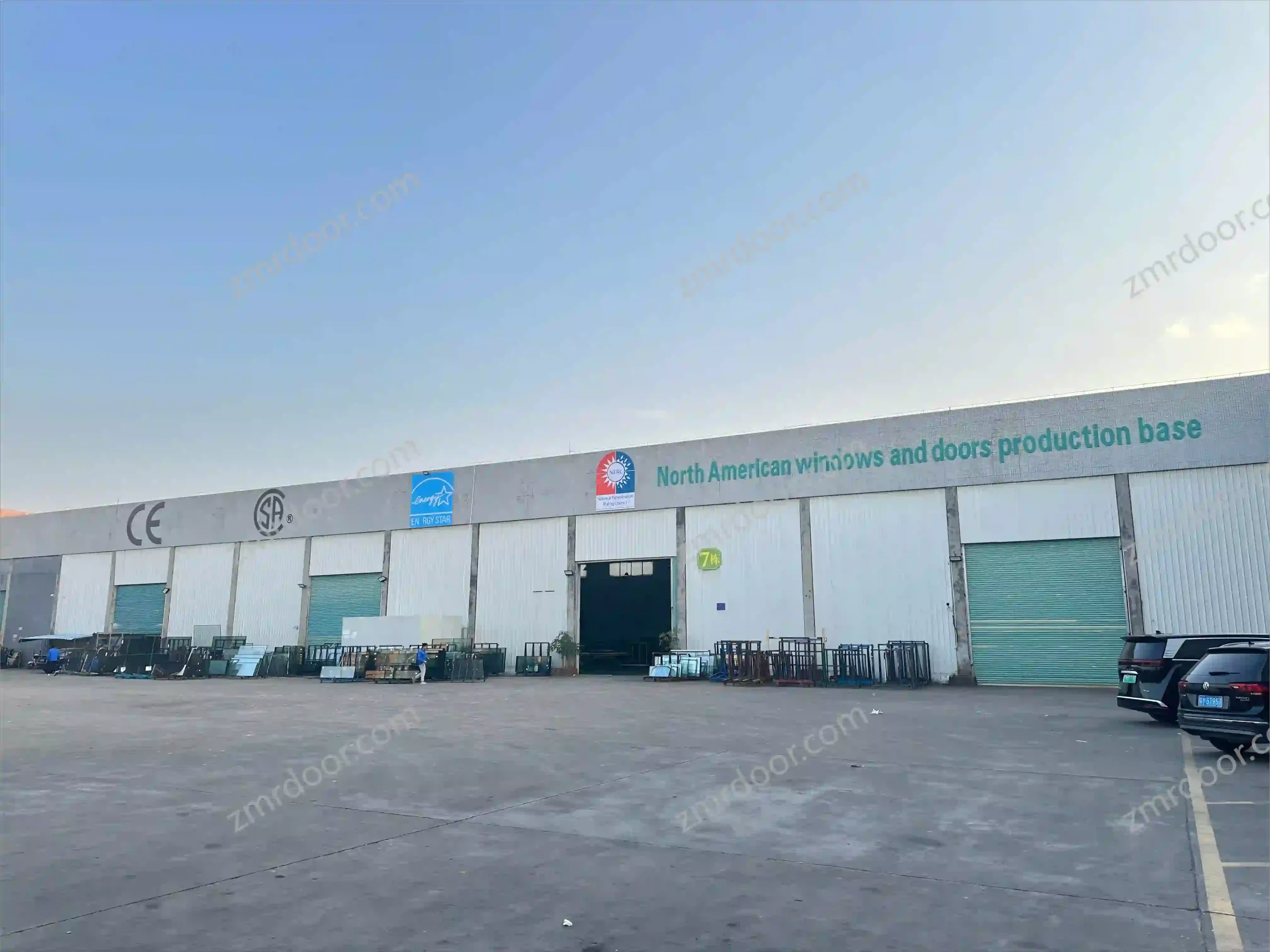
Featured Fenestration & Aluminium Architectural Solutions
Precision-engineered cottage pane windows, thermal break French doors, minimalist casements, and heavy-duty structural sliding systems manufactured for global project exports.
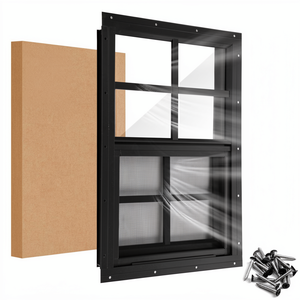
JONRIOX 12" W X 18" H Sliding Shed Window Aluminum Grey Flush Mount Tempered Glass Stainless Steel Screen Postmodern Design
Inquire Now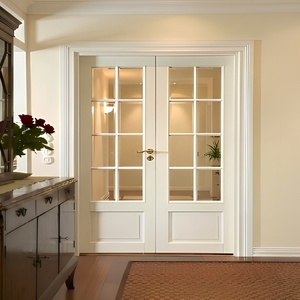
PDP Hurricane Impact Aluminum Alloy Waterproof Minimalist Exterior & Interior Casement French Doors High-Transparency Screen
Inquire Now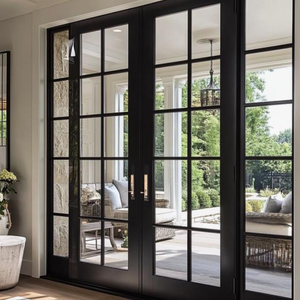
Thermal Break Aluminum French Double Swing Door, Crittall Style Grille Tempered Glass Patio Door With Smart Digital Lock
Inquire Now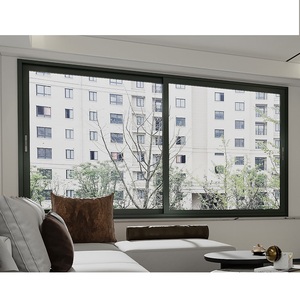
Aluminum Sliding windows and Door Aluminium Double Glass Sliding Window Sliding Aluminum Windows
Inquire Now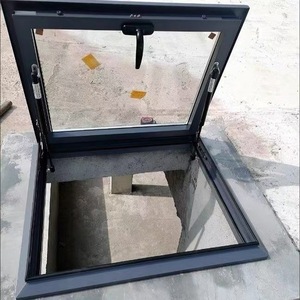
DBIAO Modern Aluminum Alloy Dormer Skylight Soundproof Waterproof & Leak-Proof for Roof Attics and Basements
Inquire Now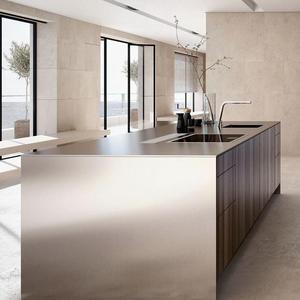
All Aluminum Furniture Complete Open Kitchen Household Modern Light Luxury Waterproof Aluminum Alloy Kitchen Cabinet Cupboard
Inquire Now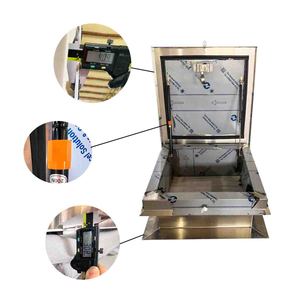
Aluminum Roof Hatches Doors 24x24inch/28x28/inch/30x30inch/Custom Size
Inquire Now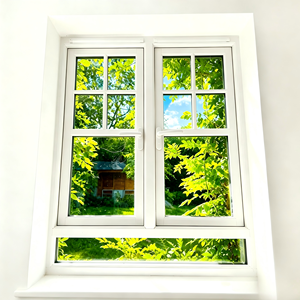
Tilt and Turn Aluminum System Window Thermal Triple Panel Fixed Center Ventilation Anthracite Custom Apartment Window
Inquire Now
1. Architectural Evolution: Traditional Steel Crittall vs. Extruded Thermal Break Aluminium Cottage Pane Systems
Cottage pane windows—historically recognized by their multi-lite geometric grid patterns—have undergone an engineering paradigm shift. Historically fabricated from rolled wrought iron or non-insulated steel profiles (commonly referred to as Crittall-style fenestration), classic cottage pane windows were notorious for severe thermal bridging, condensation accumulation, and susceptibility to atmospheric oxidation.
Modern commercial procurement demands that OEM/ODM manufacturers preserve the historic aesthetic of slim-profile sightlines while engineered to pass rigorous international energy code mandates (such as ASHRAE 90.1, Title 24, and European CE EN 14351-1 standards). By deploying high-precision 6063-T5 and T6 structural aluminium extrusions integrated with techno-polymer polyamide (PA66-GF25) thermal breaks, Chinese export manufacturing hubs like Foshan have revolutionized cottage pane window production.
Technical Insight: Polyamide strips (PA66 reinforced with 25% short glass fibers) mechanically join inner and outer aluminium extrusions. This structurally interrupts metallic thermal conduction, lowering the overall fenestration U-factor ($U_w$) from legacy steel values of $>4.5 \text{ W/m}^2\text{K}$ down to ultra-efficient values of $\le 1.2 \text{ W/m}^2\text{K}$.
2. OEM & ODM Customization Framework: Muntin Bar Architectures & Glazing Mechanics
Achieving the quintessential cottage pane lattice requires custom grid engineering tailored to structural wind load ratings and aesthetic budgets. Professional B2B importers, property developers, and façade contractors select among three primary glazing bar methodologies:
| Muntin Grid Classification | Engineering Construction | Structural & Thermal Impact | Target B2B Application |
|---|---|---|---|
| Authentic Divided Lites (ADL) | Individual insulated glass units (IGUs) set within structural aluminium T-mullions. | Maximum visual depth; requires individual glass perimeter sealing; higher labor cost. | Heritage restoration projects, high-end custom estate villas, luxury commercial storefronts. |
| Simulated Divided Lites (SDL) | External & internal aluminium profile grids bonded via 3M VHB tape over a single large IGU, matching internal spacer bars. | Optimal thermal performance ($U_w \le 0.9$); uninterrupted double/triple glazing pane; exceptional wind-load resistance. | Modern residential developments, luxury apartment complexes, hotel developments. |
| Grilles Between Glass (GBG) | Aluminium decorative grid bars sealed permanently inside the hermetic argon-filled IGU cavity. | Zero maintenance; smooth exterior glass surfaces for effortless cleaning; cost-effective export shipping weight. | High-density housing projects, modular prefabs, educational and institutional facilities. |
Glazing specifications further define system performance. Factory options include double-pane (6mm Tempered + 12Ar + 6mm Low-E) or triple-pane acoustic configurations featuring laminated PVB interlayers (e.g., 6mm + 1.52PVB + 6mm) to achieve Sound Transmission Class (STC) ratings exceeding 42 dB.
3. Metallurgy, Profile Extrusion & Surface Protection Standards
High-tier OEM/ODM factories strictly utilize primary aluminum ingot billets (A00 grade, >99.7% purity) extruded to primary temper states T5 or T6. The mechanical properties of extruded wall thickness (typically ranging from 1.4mm for windows up to 2.2mm-3.0mm for heavy-duty structural curtain walls and bi-fold doors) ensure resistance against high dynamic wind pressures ($P_3 \ge 4500 \text{ Pa}$).
Advanced Surface Finishing Technologies:
Extruded profiles undergo rigorous chemical pre-treatment (Chromate-free conversion coating) before surface finishing to satisfy international exterior durability norms:
- Electrostatic Fluorocarbon (PVDF / Kynar 500): 2-coat or 3-coat liquid spraying compliant with AAMA 2605 specifications. Ideal for coastal environments with high salt fog exposure. Offers 25-year non-chalking and color retention warranties.
- Architectural Powder Coating (Qualicoat Class 2 / AAMA 2604): Super-durable polyester coatings offering textured, matte, or satin finishes (e.g., Anthracite Grey RAL 7016, Jet Black RAL 9005). Resistance against UV degradation and impact scratches.
- Anodizing (Class 10 / Class 15): Electrochemical oxide film thickness ($\ge 15-25 \mu\text{m}$) yielding metallic champagne, bronze, and deep black hues with inherent scratch resistance.
Future Procurement Trends in Aluminium Fenestration (2025–2030)
Key technological shifts reshaping international procurement, architectural specifications, and factory export capabilities.
1. Decarbonized & Low-Carbon Billet Sourcing
Global developers are aggressively tracking Environmental Product Declarations (EPD) and embodied carbon metrics. Leading Chinese exporters are shifting to hydro-powered aluminium smelting and certified post-consumer recycled billet content, reducing carbon footprints from $18 \text{ kg CO}_2/\text{kg Al}$ down to $< 4.0 \text{ kg CO}_2/\text{kg Al}$.
2. Vacuum Insulated Glass (VIG) Integration
To eliminate bulky triple glazing while preserving ultra-thin cottage pane sightlines, VIG technology introduces a $0.3\text{mm}$ vacuum gap between glass sheets. This achieves center-of-glass U-values ($U_g = 0.4 \text{ W/m}^2\text{K}$) in profile depths of only $50\text{mm}$, matching historic steel frame dimensions effortlessly.
3. Automated CNC Precision & Smart Hardware
Factory automation via 5-axis CNC machining centers enables digital millimetric accuracy for complex cottage pane corner jointing, multipoint gear transmission locks (ES1/RC2 burglary protection), and hidden motorized actutators for high-altitude dormers and skylights.
4. Quality Assurance Protocol & Export Packaging Standards
Executing successful international fenestration contracts relies on rigorous pre-shipment quality control. A world-class OEM/ODM supplier executes a 4-tier inspection workflow:
Phase A: Spectrometer Alloy & Anodize Film Audit
Incoming profile batches are tested via X-ray fluorescence (XRF) spectroscopy to verify 6063 alloy chemical ratios. Dry film thickness (DFT) gauges verify powder coat thickness ($\ge 60 \mu\text{m}$).
Phase B: Pneumatic Corner Crimping & Water Rig Test
Corner joints are injected with two-component polyurethane corner adhesive before hydraulic crimping. Randomly sampled finished frames undergo static water pressure testing ($150 \text{ Pa}$ to $1050 \text{ Pa}$).
Phase C: Dimensional Tolerance & Hardware Pre-Assembly
100% of custom window units are test-assembled on factory floor rigs. Laser measures confirm frame squareness within $\pm 1.0\text{mm}$ diagonal variance across spans up to $3000\text{mm}$.
Phase D: Heavy-Duty Export Crating Logistics
Glass surfaces are wrapped in protective anti-scratch PE film and corner guards. Assemblies are secured inside IPPC ISPM-15 compliant fully closed plywood wooden cases with desiccant packs to withstand long ocean transits.
Frequently Asked Questions for B2B Window Procurement
Detailed answers addressing engineering validation, minimum order quantities, compliance documentation, and international shipping logistics.
Because every window and door system is custom-manufactured to architectural CAD drawings, our MOQ is flexible. We handle single luxury villa orders ($30 \text{ m}^2 - 100 \text{ m}^2$) as well as multi-container commercial project developments ($2000+ \text{ m}^2$). Shipping economics typically favor consolidating orders to at least a 20ft container (approx. $180-220 \text{ m}^2$ of glazed fenestration) to optimize ocean freight costs per unit.
Prior to extrusion and production, our structural engineering department reviews your localized wind loads ($V_{def}$ values), water penetration criteria, and thermal performance mandates. We engineer profile wall thicknesses, structural silicone depth, and glass specs accordingly, providing full shop drawings, structural calculation sheets, and third-party test reports (Intertek / SGS) for submission to local building authorities.
Standard lead time is 25 to 35 calendar days following shop drawing sign-off and deposit confirmation. For custom extruded dies (new ODM profile tooling), add 10 to 14 days for die fabrication and profile sample approval. Expedited production schedules are available for commercial project deadlines upon request.
Yes. As a full-service OEM/ODM manufacturer, we offer complete hardware customization. We maintain direct supply chain integration with top global hardware brands like Siegenia, Hoppe, Sobinco, Roto, and GU, as well as premium domestic Chinese hardware systems (Kinslong, HOPO). Multi-point locking mechanisms, smart biometric locks, motorized chain actuators, and hidden concealed hinges can be seamlessly integrated into shop drawings.
Our heavy-duty steel-reinforced plywood crates achieve a transit damage rate below 0.2%. However, for every container shipment, we include spare hardware components, rubber weather-stripping gaskets, and extra glass units for custom sizes. If transit damage occurs, replacement components are prioritized and shipped via air express (DHL/FedEx) at zero cost to maintain your installation schedule.
Ready to Request Engineering Shop Drawings & Factory Quotes?
Upload your project window schedule, architectural elevations, or custom specification requirements. Our technical sales engineering team will respond within 24 hours with budget estimates and profile recommendations.