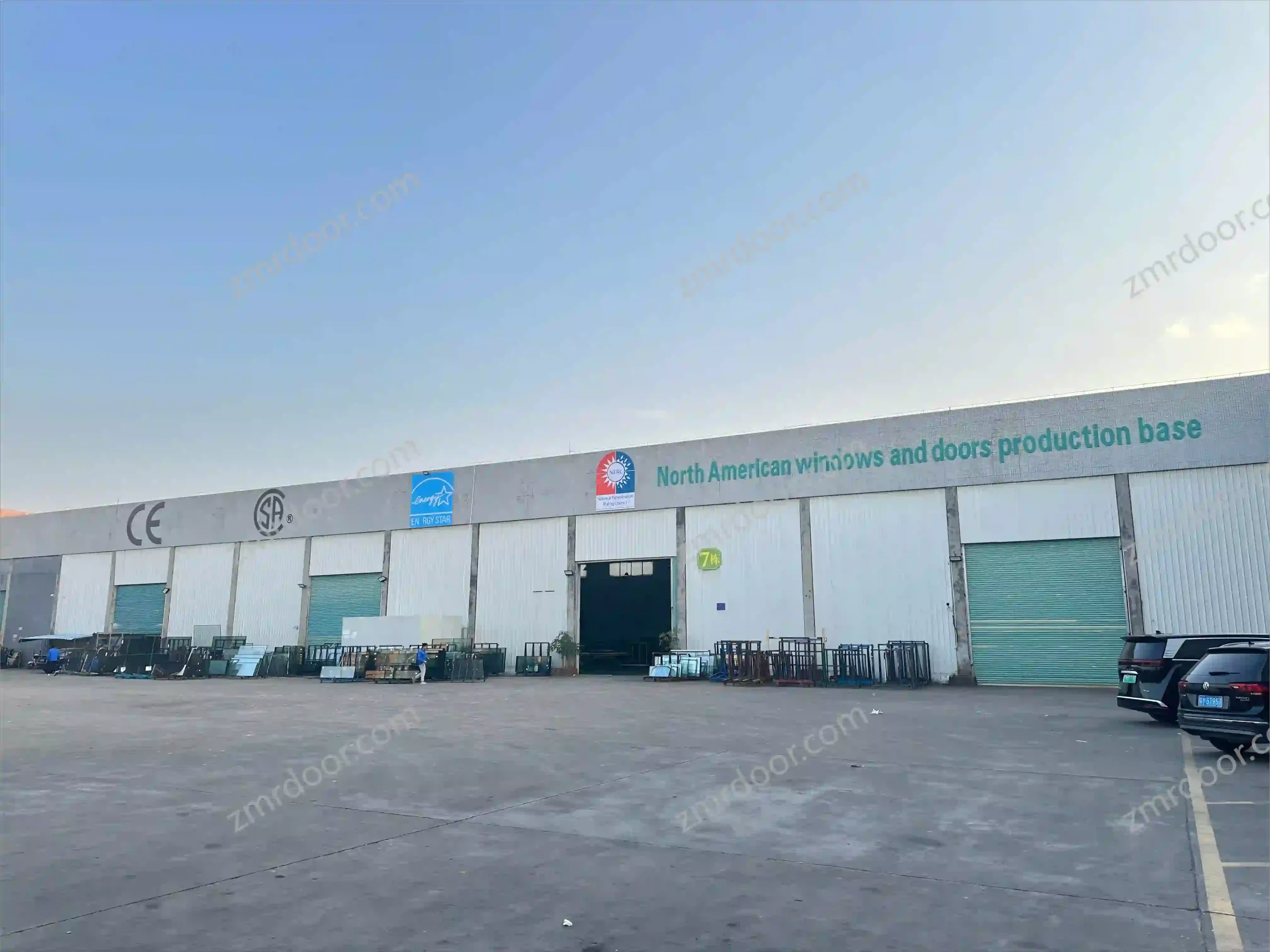
Featured Architectural Fenestration Systems
Factory-direct thermal break double pane solutions custom-engineered for international compliance.
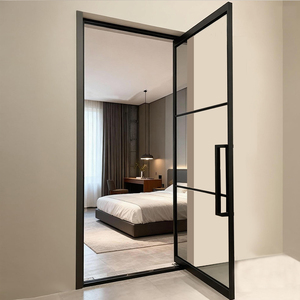
Apartment Building Project Glass Swing Door Aluminum Casement Door Interior Office Partition Wall Room Pivot Hinge Glass Door
Get a Quote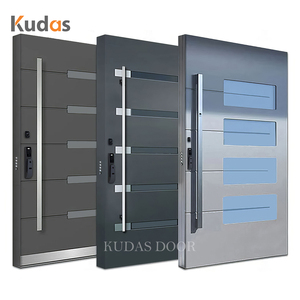
Modern Soundproof Windproof Seal Cast Aluminum Front Entry Pivot Door Villa Exterior Security Entrance Door with Glass
Get a Quote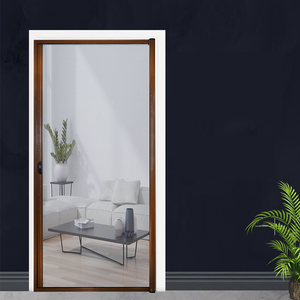
Fliegengitter Aluminium Alloy Custom Retractable Mosquito Net Bug Insect Sliding Screen Door Net Roller Fly Screen Door
Get a Quote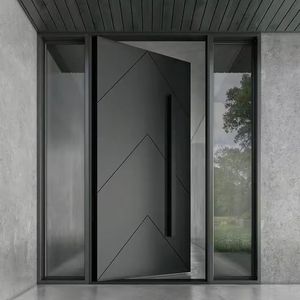
Modern Pivot Door Anti-Theft Minimalist Aluminum Finished Entry For Apartment And Villa Outdoor Use
Get a Quote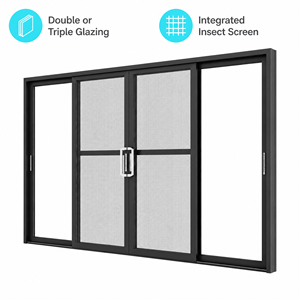
Custom Aluminum Sliding Partition Door With Built in Fly Screen Double Glazed for Balcony Bedroom Villa Residence
Get a Quote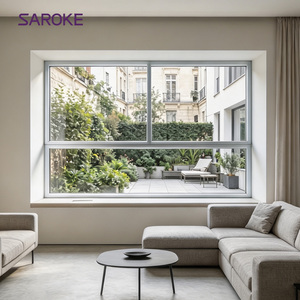
Thermal Insulated Simple Design White Aluminum Sliding windows for Living Room
Get a Quote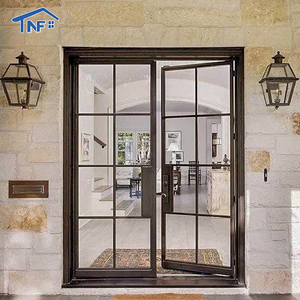
Customized Design Modern Thermal Insulation Villa Casement Glass Aluminum Door with French Door Style and SDL Grill Design
Get a Quote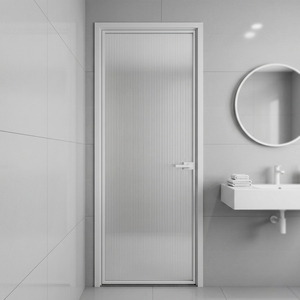
Factory Wholesale Minimalist Matte White Slim Aluminum Full Vertical Ribbed Frosted Glass Interior Bathroom Door
Get a QuoteChapter 1: The Physics of Thermal Insulation in OEM Double Pane Windows
In modern architectural fenestration, the window is no longer viewed merely as a transparent building envelope component; it is a highly engineered thermodynamic barrier. As global building energy codes tighten—driven by directives such as the European Union’s Energy Performance of Buildings Directive (EPBD) and North America's IECC standards—commercial importers and developers must look beyond baseline aesthetics. The true competitive advantage of sourcing custom OEM aluminum double pane windows lies in profile engineering, thermal barrier integration, and sealed insulating glass unit (IGU) physics.
Unreinforced solid aluminum possesses a high thermal conductivity rate of approximately 200 W/m·K. Without technical intervention, aluminum frames act as thermal bridges, transferring radiant heat into cooled interiors during summer and dissipating interior heat during winter. To mitigate this, advanced OEM manufacturing employs Polyamide PA66-GF25 structural thermal break strips. Composed of 66% nylon reinforced with 25% glass fiber, PA66-GF25 strips possess a thermal conductivity of just 0.30 W/m·K—matching the coefficient of thermal expansion of aluminum ($2.4 \times 10^{-5} K^{-1}$) to ensure zero structural shear failure during extreme freeze-thaw cycles.
Technical Insight for Project Sourcing: Specifying multi-cavity PA66-GF25 thermal breaks with thermal foam insulation inserts (such as expanded polyolefin) reduces frame U-factors ($U_f$) to as low as $1.2\text{ W/m}^2\text{K}$, enabling full compliance with Net-Zero Energy Building (NZEB) specifications.
Double Pane Insulated Glass Unit (IGU) Physics
The performance of custom double pane glass rests upon three fundamental thermodynamic principles: conductive isolation, convective suppression, and radiative selectivity.
- Conductive Isolation (Gas Fill Density): Replacing ambient atmospheric air within the 12mm to 18mm inter-pane cavity with 90%+ concentration Argon ($Ar$) gas reduces conductive heat transfer due to Argon’s lower thermal conductivity ($0.016 \text{ W/m}\cdot\text{K}$ compared to air's $0.026 \text{ W/m}\cdot\text{K}$). Krypton gas is utilized for ultra-slim profile depth projects.
- Radiative Selectivity (Vacuum Magnetron Sputtering Low-E): Dual or triple-silver Low-Emissivity (Low-E) coatings applied to Surface #2 or Surface #3 reflect long-wave infrared radiation (heat) while maintaining a high Visible Light Transmittance (VLT > 70%). This achieves a Solar Heat Gain Coefficient (SHGC) tailored specifically to hot tropical climates ($\text{SHGC} \le 0.25$) or cold northern climates ($\text{SHGC} \ge 0.45$).
- Edge Seal Integrity & Warm-Edge Spacers: Traditional aluminum IGU spacers create perimeter thermal bridges. OEM manufacturing utilizes stainless steel composite or thermoplastic warm-edge spacers (TPS) integrated with dual-seal primary butyl and secondary structural silicone or polysulfide sealants, guaranteeing moisture vapor transmission rates (MVTR) that prevent internal condensation for over 25 years.
Chapter 2: Custom OEM Engineering & Manufacturing Specification Matrix
Sourcing directly from a tier-1 OEM manufacturer like Veltor Window & Door Co., Ltd. in Foshan, China provides commercial contractors and project dealers with unmatched freedom of custom extrusion engineering. Below is the technical baseline specification matrix available for commercial OEM volume manufacturing:
| Engineering Parameter | Standard Commercial Grade | High-Performance OEM Option | Architectural Standard Compliance |
|---|---|---|---|
| Aluminum Alloy Profile | 6063-T5 Extrusion (1.4mm - 1.8mm) | 6063-T6 / 6061-T6 Heavy Structural (2.0mm - 3.0mm) | ASTM B221 / GB 5237.1-2017 |
| Thermal Break Strip | 14.8mm PA66-GF25 Flat Strip | 24mm - 39mm Multi-Cavity Strip with PE Foam | EN 14024 / ISO 9001 |
| Double Glazing Assembly | 5mm Clear + 12A + 5mm Tempered Glass | 6mm Low-E + 16Ar + 6mm Laminated Acoustic Glass | SGCC / IGCC / EN 12150 / AS/NZS 2208 |
| Surface Finishing | Powder Coating (AkzoNobel / PPG) 60μm | PVDF Fluorocarbon (3-Coat 25-Year Anti-UV Coating) | AAMA 2604 / AAMA 2605 / QUALICOAT Class 2 |
| Hardware Integration | Standard Multi-Point Lock Systems | German Siegenia / Roto Frank / HOPO Concealed Hinges | EN 13126 / PAS 24 Security Rated |
| Acoustic Performance | STC 32 dB / OITC 28 dB | STC 42 - 45 dB / OITC 36 dB (Acoustic PVB) | ASTM E90 / ASTM E413 |
| Air & Water Resistance | Water: 300 Pa | Air: Class 3 | Water: 700 Pa - 1050 Pa | Air: Class 4 (High Rise) | ASTM E283 / ASTM E331 / AS 2047 |
Advanced Metallurgy & Surface Finishing Precision
The structural integrity of a window system under extreme wind load (up to 4000 Pa or Hurricane Zone pressures) depends entirely on the metallurgical yield strength of the aluminum alloy frame. By utilizing prime-grade 6063-T6 aluminum extrusion billets, engineered profiles withstand massive deflection pressures without plastic deformation.
For coastal installations exposed to salt-spray corrosion, standard powder coatings deteriorate within years. OEM customized PVDF (Polyvinylidene Fluoride) coatings incorporate a minimum of 70% fluorocarbon resin. Applied via a continuous electrostatic liquid spray and baked at high temperatures, this multi-coat system passes the rigorous 4,000-hour Salt Spray Test under ASTM B117, guaranteeing color retention and chalking resistance even under intense tropical UV exposure.
Chapter 3: Global Architectural Trends & Future Sourcing Strategies
The international building materials industry is currently experiencing a structural pivot. Importers, dealers, and general contractors who anticipate these shifting market dynamics gain significant cost and regulatory advantages over their competitors.
1. Ultra-Slim Sightline Architecture
Modern minimalist architectural design demands maximum glass ratio with concealed structural frames. Modern OEM lines feature narrow sightline profiles (interlocks down to 20mm visible width) without sacrificing structural wind-load shear strength.
2. ESG & Low-Carbon Aluminum
Institutional developers increasingly demand Environmental Product Declarations (EPD). Modern production utilizes recycled green aluminum billets processed with renewable hydro-power, dramatically lowering the embodied carbon footprint of the project envelope.
3. Modular Pre-Glazed Export Units
On-site labor costs in North America, Europe, and Australia have surged. Sourcing factory pre-glazed aluminum window units—where glass, frames, gaskets, and hardware are fully assembled and tested prior to shipping—cuts site installation timelines by up to 60%.
4. Smart Glass & Automated Systems
Integration of electrochromic dynamic glass, integrated motorization for smart home automation (Tuya / KNX protocols), and hidden magnetic sensors for building security systems are rapidly becoming mandatory specs for high-end luxury developments.
5. Consolidated Supply Chain Sourcing
Buyers are consolidating window frames, door systems, curtain walls, and sunshades into single factory procurement orders. This ensures identical powder coat color matching across all fenestration elements while maximizing ocean freight container load density.
6. Stringent Acoustic Insulation Standard
Urban density growth has made acoustic comfort a primary residential selling point. Asymmetrical double glazing combinations (e.g., 6mm + 12A + 8mm) disrupt sound wave resonance, suppressing ambient traffic noise down to peaceful indoor decibel levels (< 30dB).
Chapter 4: Enterprise OEM Advantages & Foshan Manufacturing Excellence
Located in Nanhai District, Foshan, Guangdong—the heartland of China’s architectural aluminum industry—Veltor Window & Door Co., Ltd. provides international partners with an unprecedented manufacturing infrastructure. The Foshan industrial ecosystem integrates top-tier aluminum profile extruders, glass processing giants, and precision hardware designers within a 20-kilometer radius, providing ultimate flexibility, rapid prototyping, and unmatched cost-efficiency.
Our Core Factory Capabilities & OEM Workflow Integrity
When international buyers partner with Veltor for custom OEM aluminum double pane window projects, they tap into a rigorous 5-stage manufacturing and engineering framework:
- BIM & Shop Drawing Conversion: Our in-house technical engineering team converts client architectural elevations into detailed 2D/3D CAD shop drawings, analyzing wind-load calculations, structural mullion requirements, thermal bridge lines, and installation flashing details before single-billet cutting begins.
- CNC Precision Machining & Dual-Head Mitering: Automated double-head saws cut extrusions at precise 45° or 90° angles with sub-millimeter tolerances. High-speed 4-axis CNC machining centers route hardware lock slots, water drainage paths, and corner key insertion channels automatically to eliminate manual error.
- Corner Crimping & Structural Sealing: Corner joints are joined using solid aluminum corner cleats injected with two-component structural polyurethane sealant. Pneumatic crimping presses force the outer aluminum walls into the cleat notches, forming an unbreakable, completely airtight structural corner.
- 100% Pre-Shipment Pre-Assembly & QC Gate: Every completed order undergoes full shop floor pre-assembly. Quality control engineers verify structural dimensions, corner alignment, multi-point lock engagement smoothness, gasket compression tightness, and glass seal perfection before approval.
- Export-Grade Heavy Duty Crating: Windows are wrapped in protective PE anti-scratch film, corner-guarded with EPE foam, separated by non-adhesive rubber pads, and sealed inside fumigated, ISPM 15-compliant plywood crates designed specifically for overhead crane unloading and container shipping.
OEM Private Labeling Support: We offer custom laser engraving on aluminum profiles, custom logo printing on protective films, customized hardware branding, and private-label packaging to help distributors grow their regional brand equity seamlessly.
Chapter 5: Frequently Asked Questions (Sourcing & Procurement FAQ)
Answers to technical, commercial, and logistics questions commonly raised by project buyers, architectural specifiers, and OEM dealers:
What is the Minimum Order Quantity (MOQ) for custom OEM aluminum windows?
Because every window system is built to exact project drawings, we accommodate single-villa bespoke orders as well as full container-load commercial project orders. Sourcing economics optimize at 1x20GP container (approx. 200–300 sq.m), but we support mixed-product container consolidation for dealers.
How do thermal break aluminum double pane windows compare to uPVC or timber?
Aluminum offers vastly superior structural strength, allowing for larger glass panels, thinner sightlines, and zero frame warping over a 50+ year lifespan. With PA66 thermal breaks and double pane Low-E glass, aluminum matches uPVC energy efficiency while delivering far superior fire safety (Class A non-combustible) and architectural luxury.
Can you engineer windows to pass local wind load and building code inspections?
Yes. Our engineering team calculates structural mullion moment of inertia ($Ix$) based on your site wind load requirements (e.g., AS 2047, Florida Building Code HVHZ, CE EN 14351-1). We supply all technical documentation, shop drawings, glass stress analysis, and test reports required by local building authorities.
What thermal performance options are available for extreme freezing or desert climates?
For extreme cold zones, we recommend our 75mm+ frame depth thermal break series fitted with 39mm PA66-GF25 multi-cavity thermal strips, triple-pane Low-E insulated glass filled with Argon gas, and warm-edge spacers, achieving system U-values down to $0.8\text{ W/m}^2\text{K}$. For desert climates, high-reflectivity Low-E coatings reduce SHGC to 0.20 to eliminate indoor solar heat gain.
What is the typical production lead time for custom OEM orders?
Standard lead time is 25 to 35 days following shop drawing confirmation and deposit receipt. For specialized anodized or fluorocarbon PVDF surface finishes, or complex custom glass configurations, lead times range between 35 to 45 days. Rapid-ship schedules are available for time-sensitive commercial contracts.
How do you protect glass and frames against ocean transport damage?
Each unit is protected with heavy-duty anti-scratch film, thick corner protectors, and rubber isolation pads. Assembled windows are loaded vertically into fully enclosed, fumigated plywood wooden crates with internal steel strapping. Crates are engineered to withstand ocean container transit and site handling via forklift or crane.
Ready to Engineer Your Project Fenestration Package?
Submit your architectural drawings, window schedules, or custom OEM specifications. Our senior fenestration engineers will provide technical analysis, shop drawings, and competitive factory-direct pricing within 24 hours.
Get a Quote