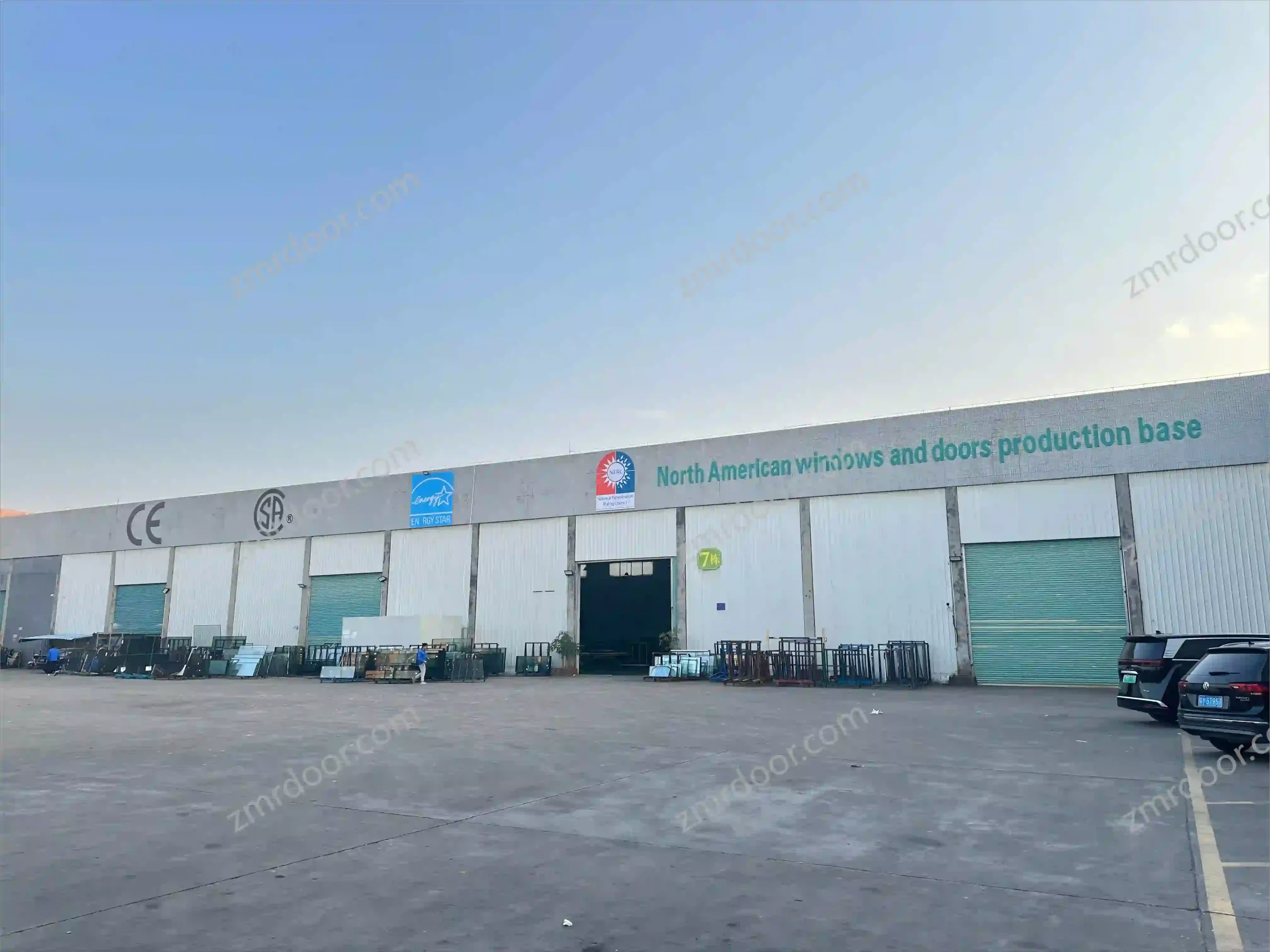
Featured OEM Aluminum Door & Window Engineering Solutions
Explore factory-direct architectural door systems engineered for strict global structural, thermal, and wind-load performance standards.
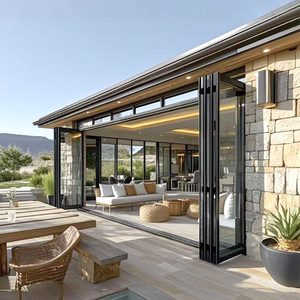
NFRC Thermal Break Aluminum Folding Door System
Large-span exterior patio accordion system featuring integrated retractable insect screens, multi-point heavy-duty hardware, and verified thermal break profiles.
Inquire Now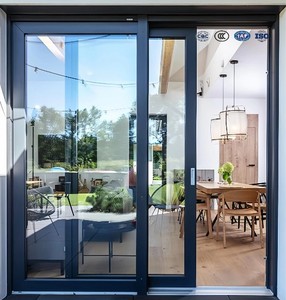
Modern Soundproof Aluminum Alloy Sliding Doors
Precision-engineered exterior sliding glass door system with heavy-duty acoustic tempered glass and weather-sealed dual-track extruded frames.
Inquire Now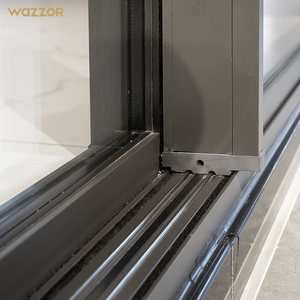
Wazzor Double Glazed Waterproof Sliding Glass Door
High-performance double-glazed sliding system for patio, garden, and garage openings. Reinforced frame with superior water-tightness rating.
Inquire Now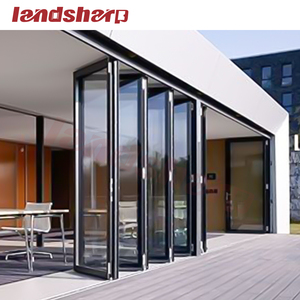
Landsharp Exterior Residential Entry Accordion Door
Double-glazed architectural front entry and balcony bi-fold system providing sleek visual sightlines and structural anti-burglary multi-point locking.
Inquire Now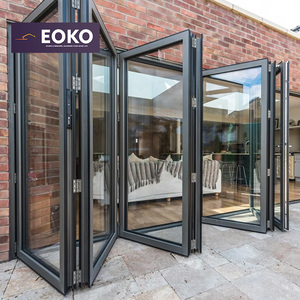
EOKO Commercial Grade Low-E Glass Bi-Folding Door
Tailored for construction contractors and commercial developers; features solar-reflective Low-E insulated glass and ultra-durable polyamide thermal strips.
Inquire Now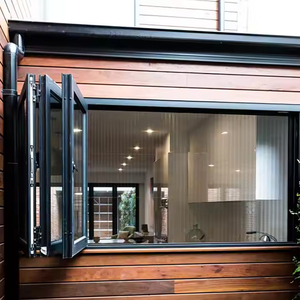
Heavy-Duty 2.0mm Frame Multi-Panel Folding System
Robust 2.0mm structural wall thickness aluminum profile designed for expansive villa patios, hotel storefronts, and commercial restaurant enclosures.
Inquire Now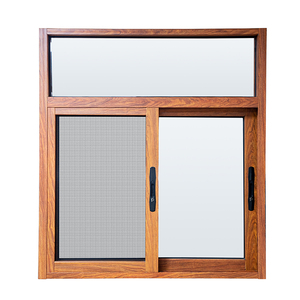
Sublimation Wood Grain Aluminum Casement & Sliding Series
Combines the natural aesthetic warmth of real timber with weather-proof, zero-maintenance architectural grade 6063-T5 aluminum extrusions.
Inquire Now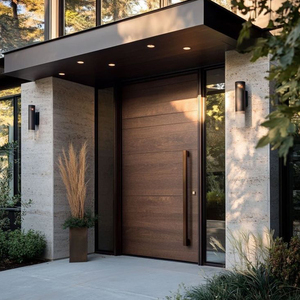
OUNA Solid Architectural Aluminum Exterior Entry Door
Fire-rated, solid composite aluminum residential front doors equipped with biometric smart locking systems and high-density security inner cores.
Inquire NowStrategic Sourcing Analysis: Sourcing OEM Custom Aluminum Doors
The global construction landscape is experiencing a paradigm shift toward high-performance fenestration systems. Real estate developers, general contractors, and facade consultants increasingly specify custom OEM aluminum door assemblies over standardized, off-the-shelf alternatives. Finding an experienced **custom OEM aluminum door factory** in manufacturing centers like Foshan, Guangdong, China—such as **Veltor Window & Door Co., Ltd.**—offers direct engineering access, cost optimization, and rigorous compliance with international building energy standards.
Information Gain Insight: Standardized off-the-shelf aluminum doors often suffer from structural flex, inadequate weather-sealing in extreme micro-climates, and thermal bridge losses. Custom OEM manufacturing guarantees that wall profiles, thermal barrier strips (polyamide PA66GF25), structural sealants, and glass infills are engineered to meet specific regional wind pressure (ASTM E330), water resistance (ASTM E331), and thermal performance (NFRC / CE EN 14351-1) requirements.
Future Procurement Trends in the OEM Aluminum Door Sector
Key architectural, metallurgical, and technological developments shaping global sourcing strategies over the next decade.
1. Ultra-Slim Sightline Architecture & Structural Load Optimization
Architectural demand is heavily skewing toward minimalist frame profiles with maximum glass surface area. Modern OEM factories leverage high-tensile 6063-T6 aluminum alloys and structural silicones to manufacture narrow interlock profiles (as thin as 18mm) capable of supporting large glass panels weighing upwards of 400kg per leaf without sagging or operational friction.
2. Carbon-Neutral Decarbonization Mandates & Low-E Triple Glazing
With Net-Zero Building codes rapidly taking effect in North America, Europe, and Australia, window schedules now mandate strict U-factors ($U \le 0.15 \text{ BTU/h}\cdot\text{ft}^2\cdot^\circ\text{F}$). Future OEM door procurement prioritizes deep thermal break profiles (up to 34mm PA66GF25 isolation strips) paired with warm-edge spacers, argon-gas insulated triple glazing, and vacuum-insulated glass (VIG) units.
3. Smart Access Controls & BMS Integration
OEM factories are increasingly embedding smart hardware infrastructure directly into door profiles. This includes concealed electromagnetic locking tracks, motorized lift-and-slide drives integrated into home automation systems, biometric scanners, and IoT-enabled climate sensors that automatically actuate folding wall systems based on indoor air quality.
4. Supply Chain Integration & Turnkey Pre-Assembly Packaging
Jobsite labor costs in Western markets have skyrocketed. B2B buyers now demand fully modular OEM pre-assembly. Leading factories test-assemble complete door panels, pre-drill frame corners, install gaskets, and pre-fit hardware in-house before packaging units into sequential opening-numbered, crane-ready export crates.
Technological Advancements in OEM Aluminum Door Fabrication
Precision manufacturing defines modern window and door production. When sourcing from direct Chinese factories such as Veltor Window & Door Co., Ltd. in Foshan, structural reliability depends on four fundamental engineering processes:
| Manufacturing Stage | Technical Specification Standard | Architectural & Engineering Impact |
|---|---|---|
| Profile Extrusion & Tempering | Primary 6063-T5 / T6 Aluminum Alloy; Wall thickness: 1.4mm to 3.0mm conforming to GB/T 5237 / ASTM B221. | Ensures high tensile yield strength, wind load resistance up to 5000 Pa, and absolute frame straightness over long spans. |
| Thermal Isolation Engineering | Polyamide PA66-GF25 (25% Glass Fiber reinforced) strips mechanically crimped into dual extrusions. | Interrupts conductive heat transfer, prevents interior frame condensation, and reduces HVAC building energy consumption. |
| Surface Finishing Technology | Kynar 500 PVDF Fluorocarbon coating (3-coat system) or AkzoNobel powder coating; anodizing ≥ 15 microns. | Resists UV degradation, salt spray corrosion (ASTM B117), color fading, and chalking in coastal or tropical micro-climates. |
| Corner Joint Assembly | Germany Henkel dual-component structural adhesive combined with pneumatic cast-aluminum corner crimping cleats. | Eliminates frame joint separation, prevents water penetration at corners, and enhances overall torsional rigidity. |
| Glazing & Acoustic Insulation | Double/Triple Tempered Safety Glass (SGCC / CE marked) with Argon gas fill and Low-E coatings. Acoustic PVB options. | Achieves Sound Transmission Class (STC) ratings up to 45 dB and Solar Heat Gain Coefficients (SHGC) tailored per climate zone. |
Enterprise Capabilities & OEM Advantage
Why premier contractors, project developers, and importers partner directly with our Foshan manufacturing facility.
Custom Shop Drawings
Dedicated CAD/BIM engineering team producing detailed shop drawings, elevation schedules, structural load calculations, and cross-section details prior to manufacturing.
Rigorous QC Protocols
100% pre-shipment dry-fit testing, dimensional checking, hardware operation validation, and water-spray pressure testing for guaranteed on-site fit.
Global Certifications
Manufactured to pass NFRC, CE, AS2047, CSA, and SGCC standards with verified thermal, acoustic, and wind-load performance documentation for local building control.
Export Logistics Support
Reinforced steel-pallet wooden crate packaging, container loading optimization, anti-scratch protective film wrapping, and seamless FOB, CIF, or DDP logistical clearance.
Frequently Asked Questions (FAQ) for OEM Buyers
Technical and logistical insights for window importers, project contractors, and commercial developers.
What is the practical Minimum Order Quantity (MOQ) for custom OEM aluminum doors?
Because every OEM unit is custom engineered to precise structural opening sizes and specific glass performance criteria, Veltor Window & Door Co., Ltd. does not enforce rigid container-only restrictions for project buyers. We accommodate single-project custom villa orders as well as full 20GP/40HQ container shipments for regional distributors. The practical minimum is primarily dictated by shipping freight economics, and we assist buyers by consolidating windows, folding doors, sliding doors, and hardware into one organized container shipment.
How do thermal break aluminum door systems perform in extreme cold or hurricane climates?
Thermal break aluminum systems utilize continuous polyamide insulating strips (such as Technoform or custom PA66GF25 extrusions) inserted between the interior and exterior aluminum profiles. This creates a mechanical thermal barrier that stops conductive temperature bridging. For cold climates, pairing thermal break frames with triple-pane Low-E argon glass yields ultra-low U-factors. For hurricane-prone regions, we engineer heavy-wall profiles (2.0mm–3.0mm thickness) equipped with SGP laminated impact glass, passed against extreme positive and negative wind pressures (DP50 to DP90 design pressure ratings).
Can your factory manufacture custom profile extrusions and match local building codes?
Yes. As an authentic OEM manufacturer located in Foshan, China, we offer custom aluminum profile extrusion tooling for proprietary door series, private label dealer brands, and distinct architectural requirements. Our engineering department verifies shop drawings against target international standards—including North American NFRC/ASTM, European CE/EN 14351-1, and Australian AS2047—ensuring that structural load capacity, water tightness, air permeability, and glass safety compliance are satisfied prior to mass production.
What export packaging protocols are used to prevent damage during long ocean transit?
To eliminate shipping transit damage, all door frames and assembled panels undergo a 4-layer protection protocol: (1) Protective anti-scratch film applied directly to metal surfaces; (2) Corner guard shock protectors on all 90° joints; (3) EPE foam wrapping around glass and profile frames; (4) Fumigated solid wood or non-fumigation plywood crates reinforced with internal steel banding. Every crate is labeled with opening tags corresponding directly to the buyer's architectural window schedule for rapid jobsite distribution.
What is the typical production lead time from drawing sign-off to container loading?
Once architectural shop drawings are formally approved and deposit confirmation is received, standard manufacturing lead time is approximately 25 to 35 business days. Complex custom powder-coating colors, specialized PVDF finishes, or custom laminated glass configurations may add 5 to 7 days. We provide a transparent, written production schedule with milestone photo/video inspection reports throughout profile cutting, CNC routing, assembly, glazing, and crate packing phases.