Featured Architectural Aluminium Systems
Direct factory portfolio engineered for residential, commercial, and structural global procurement.
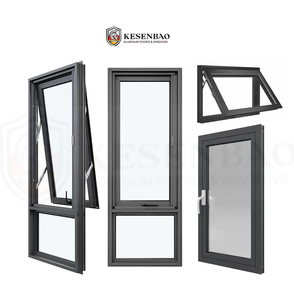
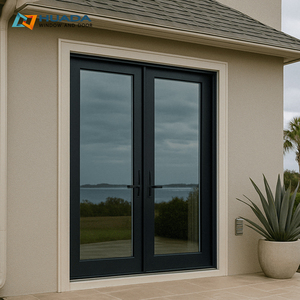
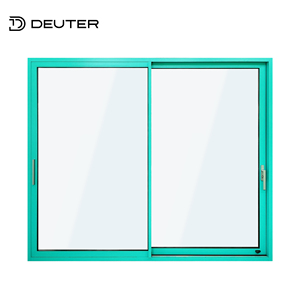
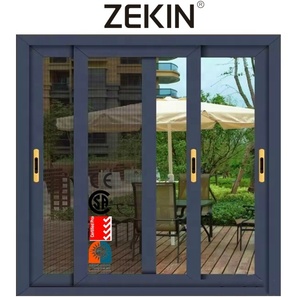
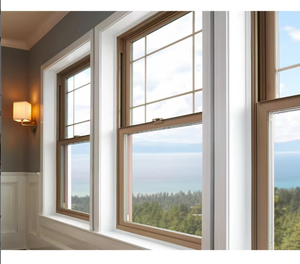
The Architecture of Inward-Tilting Micro-Ventilation: OEM Hopper Windows Defined
In modern commercial, multi-family residential, and industrial architecture, indoor air quality (IAQ), occupant safety, and thermal envelope integrity represent the core pillars of fenestration design. Custom OEM Aluminium Hopper Windows—defined by their bottom-hinged, inward-tilting sash operation—serve as an essential building component for environments requiring controlled, continuous micro-ventilation without compromising exterior structural security or weather-tightness.
Unlike conventional outward-projecting awning windows or side-hung casements, hopper windows open inward at the top sash edge. This kinematic geometry leverages the fundamental physical principles of thermal stack ventilation: cooler exterior air enters along the lateral sides, while warm interior air exhausts out through the top aperture. Consequently, architectural specifiers, general contractors, and project importers select custom aluminium hopper windows for basements, high-occupancy educational facilities, hospital corridors, high-rise utility spaces, and modern curtain wall transom integrations.
From an Original Equipment Manufacturer (OEM) perspective, producing export-grade aluminium hopper windows demands rigorous engineering controls over profile wall thickness, alloy temper, thermal barrier insertion, and friction-hinge tension. When sourced from tier-one Chinese fabrication hubs like Foshan, Guangdong, OEM manufacturing partners must balance strict cost efficiency with international compliance frameworks including NFRC (North American Fenestration Rating Council), AS2047 (Australian Standards), and European CE EN 14351-1 benchmarks.
Engineering Matrix: Technical Specification Benchmarks
Below is the baseline technical profile for export-oriented thermal break aluminium hopper windows manufactured under OEM multi-chamber extrusion guidelines.
| Performance Parameter | Standard Specification | High-Performance / Passivhaus Grade | Verification Test Standard |
|---|---|---|---|
| Aluminium Alloy & Temper | Architectural Grade 6063-T5 Profile | Structural High-Tensile 6063-T6 / 6005A-T6 | GB/T 5237.1 / ASTM B221 |
| Profile Wall Thickness | 1.4mm to 1.8mm (Residential/Commercial) | 2.0mm to 3.0mm (Heavy Duty Transom/Impact) | ISO 9001 Factory Quality Audit |
| Thermal Barrier Insulation | 14.8mm PA66GF25 Polyamide Strips | 24mm to 34mm Multi-Chamber PA66 + Aerogel Insert | EN 14024 / GB/T 23615.1 |
| Thermal Transmittance (U-Factor) | 1.8 – 2.2 W/m²K (0.32 – 0.38 BTU/h·ft²·°F) | 0.8 – 1.2 W/m²K (0.14 – 0.21 BTU/h·ft²·°F) | NFRC 100/200 / ISO 10077-2 |
| Acoustic Sound Insulation | STC 32 – 36 dB (Double Glazed IGU) | STC 42 – 48 dB (Triple Laminated Acoustic Glazing) | ASTM E90 / ISO 717-1 |
| Air Permeability | Class 4 (EN 12207) / 0.1 cfm/ft² (ASTM E283) | Class 4 High-Airtight Compression EPDM Gaskets | ASTM E283 / EN 12207 |
| Water Penetration Resistance | 450 Pa (ASTM E331) / Class 9A (EN 12208) | 750 Pa – 1000 Pa (Pressure Equalized Cavity) | ASTM E331 / EN 12208 |
| Hardware & Hinges | Concealed Friction Stay / Heavy-Duty Butt Hinges | Motorized Chain Actuators (24V DC BMS Integrated) | 100,000 Cycle Testing (EN 13126) |
*Note: Final thermal performance parameters vary based on selected glass buildup (Low-E coating, warm-edge space, argon fill percentage) and profile surface finish (Powder coating vs. PVDF vs. Anodized).*
OEM Customization Modules: Structural & Surface Technology
To meet global project specifications, factory production lines utilize modular extrusion systems that allow comprehensive customization across geometric, thermal, aesthetic, and mechanical variables.
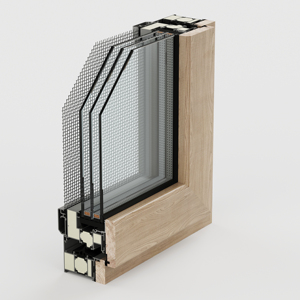
Multi-Chamber Thermal Isolation
Structural polyamide 66 reinforced with 25% fiberglass (PA66GF25) decouples the exterior aluminium profile from the interior frame, effectively preventing thermal bridges and condensation build-up in freezing climates.
Triple-Sealed EPDM Weatherstripping
Continuous synthetic rubber seals (EPDM) combined with corner-vulcanized joints ensure zero air infiltration. Dual and triple weatherboard gaskets maintain acoustic damping against airborne urban noise pollution.
Pressure-Equalized Drainage Sills
Engineered stepped sill profiles utilize atmospheric pressure differential technology to prevent wind-driven rainwater from penetrating back into the interior chamber, channeling water rapidly out through concealed weeping channels.
Architectural Surface Coatings
Options range from AkzoNobel Qualicoat Class 2 electrostatic powder coating (20-year color fastness guarantee) to 70% Kynar 500 PVDF fluorocarbon finishes and corrosion-resistant anodizing (up to 25 microns).
Insulated Safety Glazing Assemblies
Integration of dual or triple pane IGUs utilizing Low-E coatings (Solarban 60/70), warm-edge Technoform spacers, argon gas fill (90%+ purity), and PVB/SGP laminated security glass for hurricane-impact zones.
Precision Cast Corner Injection
Mitred aluminum profile joints are mechanically locked with heavy-duty cast aluminum corner keys and reinforced via dual-component epoxy resin injection, guaranteeing structural frame rigidity under high wind loads.
Future Procurement Trends in Aluminium Fenestration (2025–2030)
Sourcing strategies for commercial windows are undergoing a structural shift. Buyers, developers, and architectural firms are moving beyond simple per-square-meter pricing model toward total lifecycle assessment (LCA), supply-chain compliance, and digital integration. Key trends shaping future OEM procurement include:
1. Decarbonization & Low-Carbon Aluminium Billet Sourcing: Environmental Product Declarations (EPD) are becoming mandatory across North American and European procurement tenders. Future OEM production lines rely heavily on primary aluminium smelted using hydropower (reducing carbon footprints below 4.0 kg CO2/kg Al) or certified post-consumer recycled aluminum billets.
2. Automated & Smart Building Management System (BMS) Integration: The classic manual hopper latch is increasingly replaced by concealed electric chain actuators operating on 24V DC power. Integrated with IoT rain sensors, wind gauges, and centralized BMS automation, motorized hopper windows facilitate automated night-purge cooling, reducing HVAC energy consumption by up to 18%.
3. Micro-Climate Customized Performance (Zonal Engineering): Global building codes no longer permit "one-size-fits-all" window specs. OEM manufacturers must provide variable structural options—such as reinforced mullions for coastal hurricane regions or ultra-low U-factor triple IGUs for alpine climates—within the same overall architectural system aesthetic.
4. Pre-Assembled Unitized Kits (CKD vs. SKD Supply Models): To alleviate sky-rocketing jobsite labor costs in Western markets, procurement managers are demanding Completely Knocked Down (CKD) or Semi Knocked Down (SKD) pre-punched, pre-gasketed assembly kits that reduce installation hours by up to 40%.
Enterprise Capability: The Foshan OEM Manufacturing Advantage
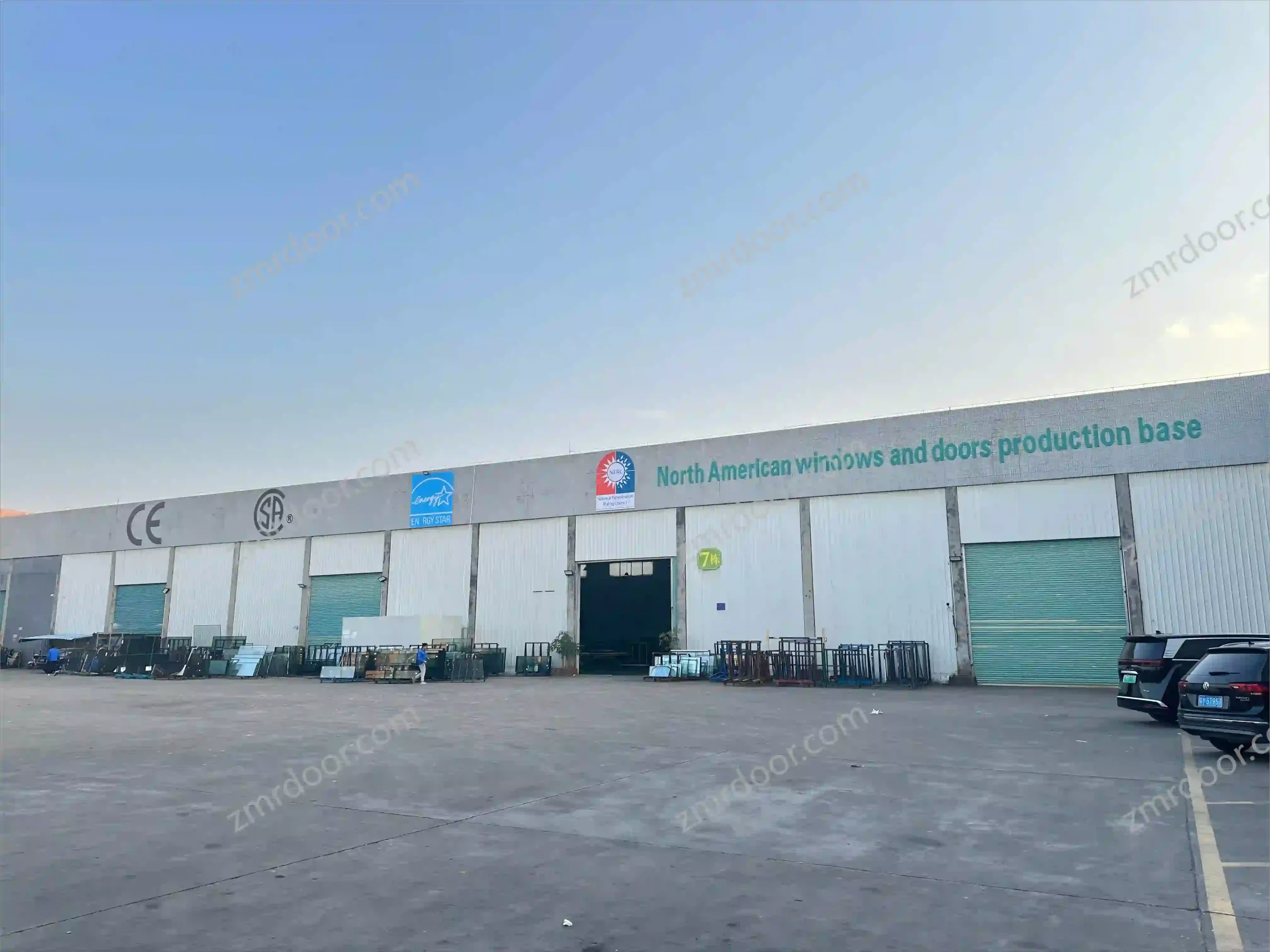
Located in the heart of China’s architectural aluminum hub—Nanhai District, Foshan—our manufacturing complex delivers complete end-to-end OEM and ODM services for global builders, dealers, and project managers. By controlling profile design, precision CNC fabrication, thermal strip insertion, glass unit assembly, and rigorous export packing under one centralized quality control protocol, we remove supply chain volatility.
Vertical Supply Chain Control
Direct proximity to world-class extrusion mills and anodizing plants allows rapid profile sampling, custom die creation within 10-14 days, and competitive raw material cost structures.
5-Axis CNC Milling Precision
Automated multi-axis CNC machining centers perform milling, lock housing routing, hinge mounting holes, and water drainage weeping slots with ±0.1mm dimensional tolerance.
Dedicated Engineering Desk
Our team of senior fenestration engineers generates comprehensive CAD shop drawings, BIM models, and wind-load calculations for architect approval prior to production release.
100% Pre-Shipment Mockup QC
Every order undergoes full physical assembly inspection. We verify squareness, glass clearance, hinge friction resistance, hardware latching, and weather seal continuity.
Export Sea-Worthy Crating
Products are wrapped in protective PE film, guarded with corner pads, vacuum sealed, and loaded in ISPM-15 heat-treated fumigated wooden crates labeled by window tag ID.
Global Compliance Support
Full technical documentation, material test reports, and physical sample testing support for AS2047, NFRC, CE, and local building authority compliance approval.
Procurement FAQ: Technical Insights for Buyers & Importers
Here are authoritative answers to key commercial and structural questions encountered by international buyers during the OEM window procurement process.
What is the practical Minimum Order Quantity (MOQ) for custom OEM hopper windows?
Because custom OEM manufacturing requires specific extrusion set-ups, CNC tooling configurations, and powder coating batch processing, our standard MOQ is typically 50 square meters or a minimum project package order. However, for established project dealers, commercial developers, or mixed container loads (combining casement, sliding, and hopper systems), single-project custom orders can be accommodated.
How do you guarantee air tightness and water proofing on bottom-hinged hopper windows?
Water tightness is guaranteed through a multi-tiered engineering approach: 1) Utilizing continuous multi-lip EPDM rubber gaskets around the perimeter, 2) Precision-crimped corners reinforced with epoxy sealant injection, and 3) A pressure-equalized outer frame design with internal baffle caps that allow water to drain outwards while preventing wind pressure from forcing rain back inside.
Which hardware brands can be integrated into your custom OEM profiles?
Our profile systems are engineered with standard European C-groove and K-groove hardware channels. We offer premium European hardware solutions (such as Siegenia, Roto Frank, Hoppe, and Savio) as well as top-tier domestic hardware brands (Kin Long, CMECH). For specialized applications, motorized 24V DC actuators with integrated limit switches are available.
What documentation and shop drawing verification steps are conducted prior to production?
Upon receipt of architectural plans or window schedules, our engineering team generates 2D CAD elevations, 3D joint connection details, and structural wind load calculations. Production does not begin until the buyer or project architect formally approves the signed shop drawings, profile finish swatches, and glass specification datasheets.
What is the standard production lead time for export orders?
Standard production lead time is 25 to 35 calendar days following shop drawing sign-off and deposit confirmation. For custom architectural extrusion dies (specialized profile shapes), add 10 to 14 days for die tooling fabrication and sample extrusions. Express production schedules are available for time-sensitive commercial projects.
Ready to Scale Your Fenestration Sourcing?
Connect directly with our Foshan engineering and OEM export team. Send your architectural drawings, window schedules, or custom profile specifications for an expedited quotation and technical review.