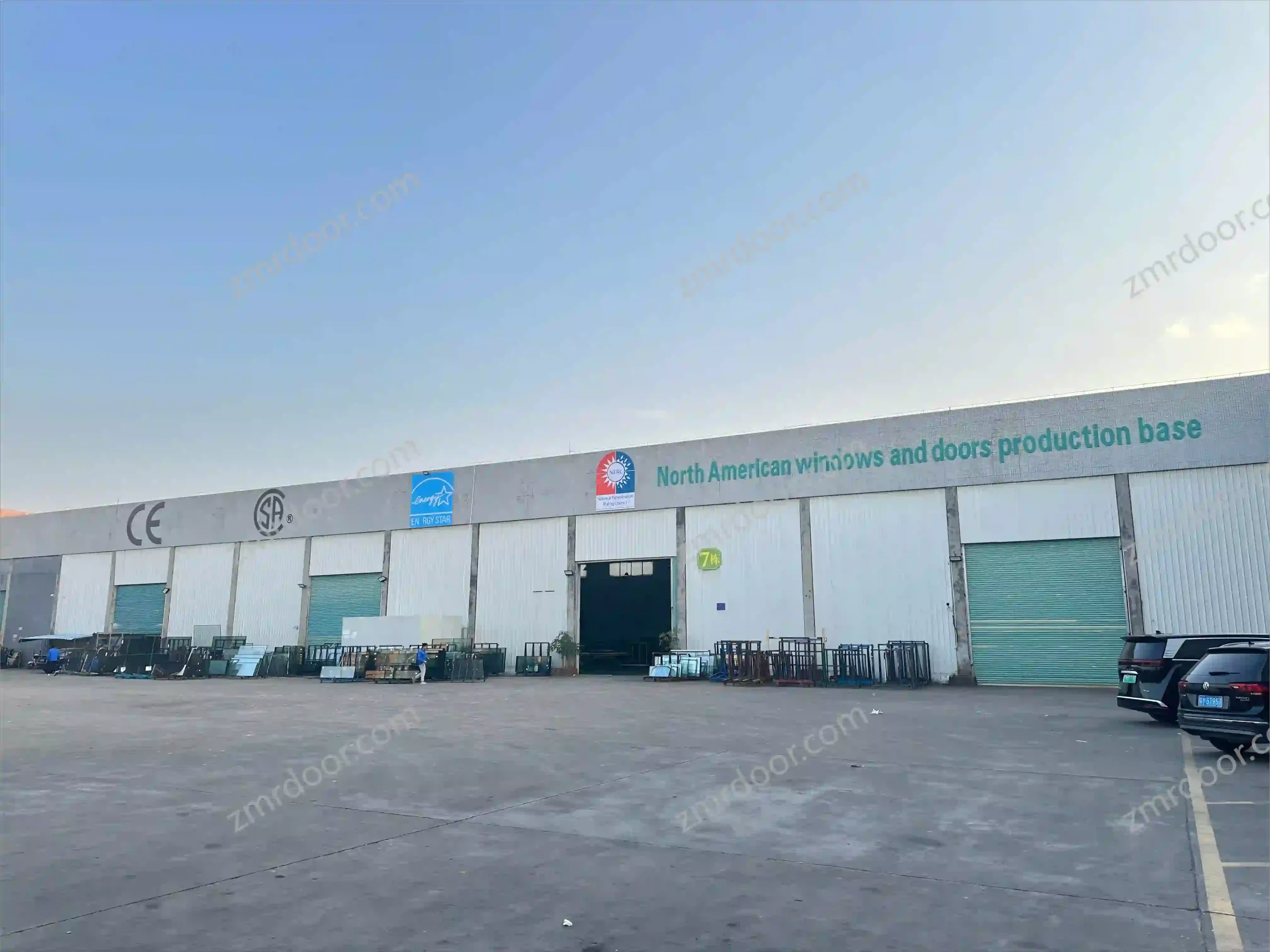
Featured Commercial & Residential Assemblies
Direct factory sourcing for high-performance architectural aluminum casement windows, hurricane impact doors, thermal-break sliding glass walls, and security entrance systems engineered to ISO, AS2047, and NFRC specifications.
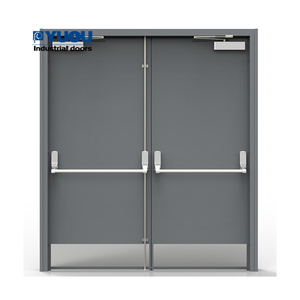
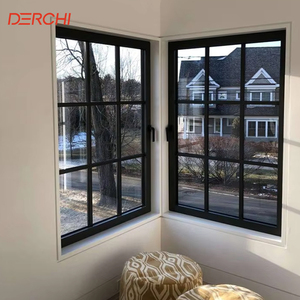
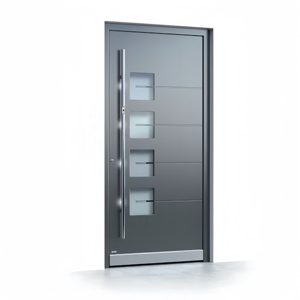
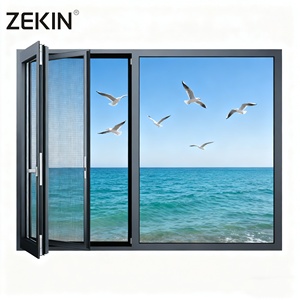
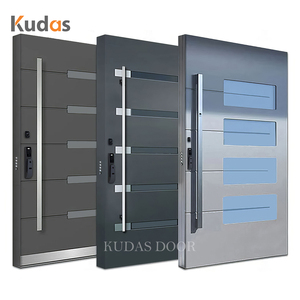
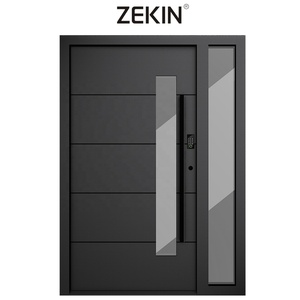
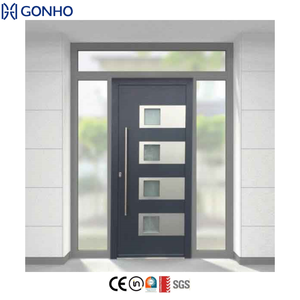
Architectural Aluminium Fabrication & Structural Glass Engineering
An in-depth analysis of aluminum alloy metallurgy, thermal break mechanics, structural wind-load pressure optimization, and advanced glazing stack configurations for B2B procurement professionals.
1. Metallurgical Excellence & Profile Extrusion Precision
The structural integrity of custom architectural doors and window frames relies entirely on precise alloy formulation and heat-treatment temper. As a premier Chinese wholesale manufacturer situated in Foshan’s industrial hub, our factory exclusively utilizes primary 6063-T5 and 6061-T6 aluminum alloys, strict upon raw billet purity standards. Unlike recycled aluminum scrap that introduces iron impurities and causes micro-fissures during bending or extrusion, primary 6063-T5 provides superior tensile strength (≥160 MPa) and yield strength (≥110 MPa).
Wall thickness across our heavy-duty sliding doors and curtain wall profiles ranges strictly between 1.4mm to 3.0mm+, complying directly with international structural load standards including North America’s AAMA/WDMA/CSA 101/I.S.2/A440 and Australia’s AS2047. This mechanical rigidity prevents frame deflection under extreme wind loads up to 4500 Pa during coastal hurricane conditions.
Technical Specification Benchmarks
| Parameters | Standard Profile | Veltor Thermal Break |
|---|---|---|
| Alloy Grade | 6063-T5 Recycled mix | Primary 6063-T5 / T6 Billet |
| Thermal Strip | PVC or Pour-in-Place | Polyamide PA66-GF25 (25% Glass Fiber) |
| U-Value (W/m²K) | 3.5 – 5.0 | 0.8 – 1.6 (Climate Zone Tailored) |
| Air Permeability | Class 3 (EN 12207) | Class 4 / A4 Standard (ASTM E283) |
| Water Tightness | 300 Pa | 600 Pa – 1000 Pa (ASTM E331) |
2. Thermal Isolation & Polyamide PA66-GF25 Strip Mechanics
Aluminum is inherently a highly conductive material ($K \approx 200\text{ W/m}\cdot\text{K}$). To meet modern zero-energy building (ZEB) energy codes and passive house parameters, our thermal break glass door and window systems incorporate structural poly-amide thermal barriers. We strictly employ PA66-GF25 (Polyamide 66 reinforced with 25% glass fiber) rather than inferior PVC substitutes.
PA66-GF25 exhibits a thermal expansion coefficient identical to aluminum extrusions ($2.3 \times 10^{-5}/\text{K}$), guaranteeing that during extreme temperature fluctuations—from $-30^\circ\text{C}$ winter freezes to $+80^\circ\text{C}$ direct sunlight exposure—the thermal break seal will not shear, delaminate, or buckle over decades of continuous expansion and contraction cycles.
3. Advanced Insulated Glass Unit (IGU) & Low-E Stacks
The glass accounts for over 80% of an elevation’s total surface area. Our direct factory export program integrates customizable IGU configurations engineered for thermal insulation, solar heat gain coefficient (SHGC) control, and acoustic damping ($STC \ge 42\text{ dB}$):
- Double & Triple Glazed IGUs: Featuring 5mm + 12Ar + 5mm up to 6mm Low-E + 16Ar + 6mm Low-E + 16Ar + 6mm double silver soft-coat stacks.
- Warm Edge Spacers: Technoform or Swisspacer composite spacers replacing traditional aluminum box spacers to eliminate perimeter cold bridges and condensation build-up.
- Laminated Safety & Impact Glass: Incorporating Solutia Vanceva PVB or DuPont SentryGlas (SGP) interlayers for hurricane impact zones (Miami-Dade TAS 201/202/203 compliant) and forced-entry security barriers.
Global Procurement Trends in Architectural Fenestration (2025–2030)
Navigating regulatory shifts, carbon compliance, minimalist aesthetic demands, and smart building integration for commercial real estate developers and wholesalers.
Decarbonization & Low-Carbon Aluminum
International buyers and European importers are subject to strict CBAM (Carbon Border Adjustment Mechanism) regulations. Future B2B procurement prioritizes aluminum extruded using renewable hydro-electric energy, minimizing embedded carbon footprints while retaining structural strength.
Ultra-Narrow Sightlines & Hidden Sashes
Modern architectural aesthetics demand maximal light transmission and visual transparency. Minimalist slim-frame glass sliding doors with interlocking vertical stile widths under 20mm, flush thresholds, and hidden drainage tracks represent the fastest-growing market segment in luxury residential design.
Electrochromic & BIPV Glass Integration
Smart building envelopes are shifting from passive protection to active energy generation and solar regulation. Sourcing dynamic smart tinting glass (PDLC/Electrochromic) and Building Integrated Photovoltaics (BIPV) inside double glass doors is quickly becoming a standard tender requirement.
Extreme Weather Resilience
With climate volatility causing intensified storm events globally, international building codes now strictly mandate elevated water-tightness thresholds and structural wind load certification. Sourcing pre-tested impact-resistant window assemblies is essential for risk mitigation.
Digital BIM & Pre-Assembly Modularization
Procurement directors prefer direct-from-factory suppliers who offer 3D Revit BIM modeling, shop drawing conversions, and unitized factory pre-assembly. This drastically eliminates costly on-site adjustment errors and cuts field installation labor by up to 40%.
Factory-Direct Consolidation Logistics
Bypassing trading intermediaries, major developers combine windows, entry pivot doors, and curtain wall elements into unified container shipments with standardized custom wooden crating, lowering overall freight overhead and damage claims.
Why Global Project Buyers Partner with Our Foshan Factory
Combining automated German CNC precision engineering with rigorous multi-stage quality control to guarantee flawless delivery on every custom architectural order.
5-Axis CNC Precision Processing
Our production line operates heavy-duty 5-axis CNC machining centers capable of milling, drilling, hardware notch routing, and corner cutting with tight tolerances under $\pm0.1\text{mm}$. Every hinge recess, lock cylinder pocket, and concealed drainage channel aligns perfectly prior to assembly.
Corner Crimping & German Weiss Glue
Framing joints are joined using heavy mechanical corner crimping machines coupled with dual-component German Weiss structural corner sealant. This creates a structurally rigid joint that eliminates frame racking during transit while guaranteeing zero corner water leakage.
Advanced Surface Finishing & Anodizing
We offer AkzoNobel architectural powder coatings, 25-micron anodizing, and 3-coat PVDF fluorocarbon finishes resistant to salt-spray corrosion (tested to ASTM B117 for 3000+ hours), making our doors ideal for harsh marine and coastal environments.
Full Hardware Ecosystem Flexibility
We maintain direct OEM partnerships with world-renowned hardware manufacturers including Siegenia, Hoppe, GU, Roto, and Sobinco, as well as premium domestic brand lines, providing multi-point locking mechanisms, concealed hinges, and heavy-duty rollers rated up to 400kg per panel.
Strict 100% Pre-Shipment Trial Assembly
Every order undergoes rigorous factory pre-assembly. Profiles are checked for squareness, hardware operation is verified, and IGUs are test-installed. Detailed photographic and video inspection records are delivered to client project managers prior to crating.
Heavy-Duty Export Wooden Crating
Finished products are wrapped with anti-scratch protective film, fitted with impact-absorbing corner protectors, and fully enclosed inside ISPM-15 certified fumigated plywood crates labeled clearly by window schedule reference numbers for seamless jobsite distribution.
Frequently Asked Questions for Sourcing & Imports
Detailed answers regarding technical specifications, minimum order quantities, factory audits, compliance standards, and international logistics.
Q: What is the minimum order quantity (MOQ) for custom aluminum doors and windows?
Because every window and door assembly is custom engineered to exact architectural dimensions, our factory flexible program accepts single-project orders (e.g., custom luxury villas requiring 50–100 sqm) as well as full container loads (20GP/40HQ) for commercial developments and regional distributors. Sourcing in container quantities optimizes ocean freight cost per unit.
Q: How do you guarantee compliance with our country’s building standards (e.g., AS2047, NFRC, CE)?
Our engineering department reviews your localized building energy and structural code requirements prior to drafting shop drawings. We utilize certified profile extrusions and IGUs tested to Australian AS2047/AS1288, North American NFRC/AAMA, and European CE EN 14351-1 standards. Official test reports, structural calculations, and glass certificates are supplied during contract review.
Q: What is the difference between PVC thermal breaks and Polyamide PA66-GF25 thermal breaks?
PVC thermal breaks are soft, have a low melting point, and expand at a vastly different rate than aluminum, leading to seal failure and frame warping over time. Polyamide PA66-GF25 is reinforced with 25% structural glass fiber, offering exceptional shear strength, structural stability under high wind pressure, thermal resistance up to 250°C, and a thermal expansion co-efficient perfectly matched to aluminum profiles.
Q: Can your factory produce customized shop drawings based on our architectural CAD/Revit files?
Yes. Our in-house technical engineering team converts your architectural CAD elevations, structural plans, or Revit BIM models into precise 2D/3D shop drawings. These drawings detail frame profiles, glass build-ups, anchoring details, drainage tracks, and opening directions, requiring your formal written approval before raw material extrusion cutting commences.
Q: What surface treatment option is recommended for coastal or high-salinity locations?
For seaside resorts, waterfront villas, or marine urban developments, we strictly recommend Fluorocarbon PVDF (2-coat or 3-coat spray system compliant with AAMA 2605) or a minimum 25-micron Anodized finish. These coatings prevent pitting, oxidation, and color fading under aggressive salt spray (ISO 9227 / ASTM B117 salt spray tested to 3000+ hours).
Q: What is your standard production lead time and freight handling process?
Standard manufacturing lead time is 25 to 35 business days following final shop drawing sign-off and deposit receipt. Special custom powder color matching or custom glass orders may add 5–7 days. We offer comprehensive Incoterms handling including EXW, FOB Foshan/Shenzhen/Guangzhou, CIF, DDP, and direct-to-site container offloading support.
Ready to Elevate Your Architectural Glazing Project?
Submit your window schedule, elevation drawings, or procurement specifications today. Our engineering team provides complimentary technical reviews, system recommendations, and factory-direct price quotes within 24 hours.