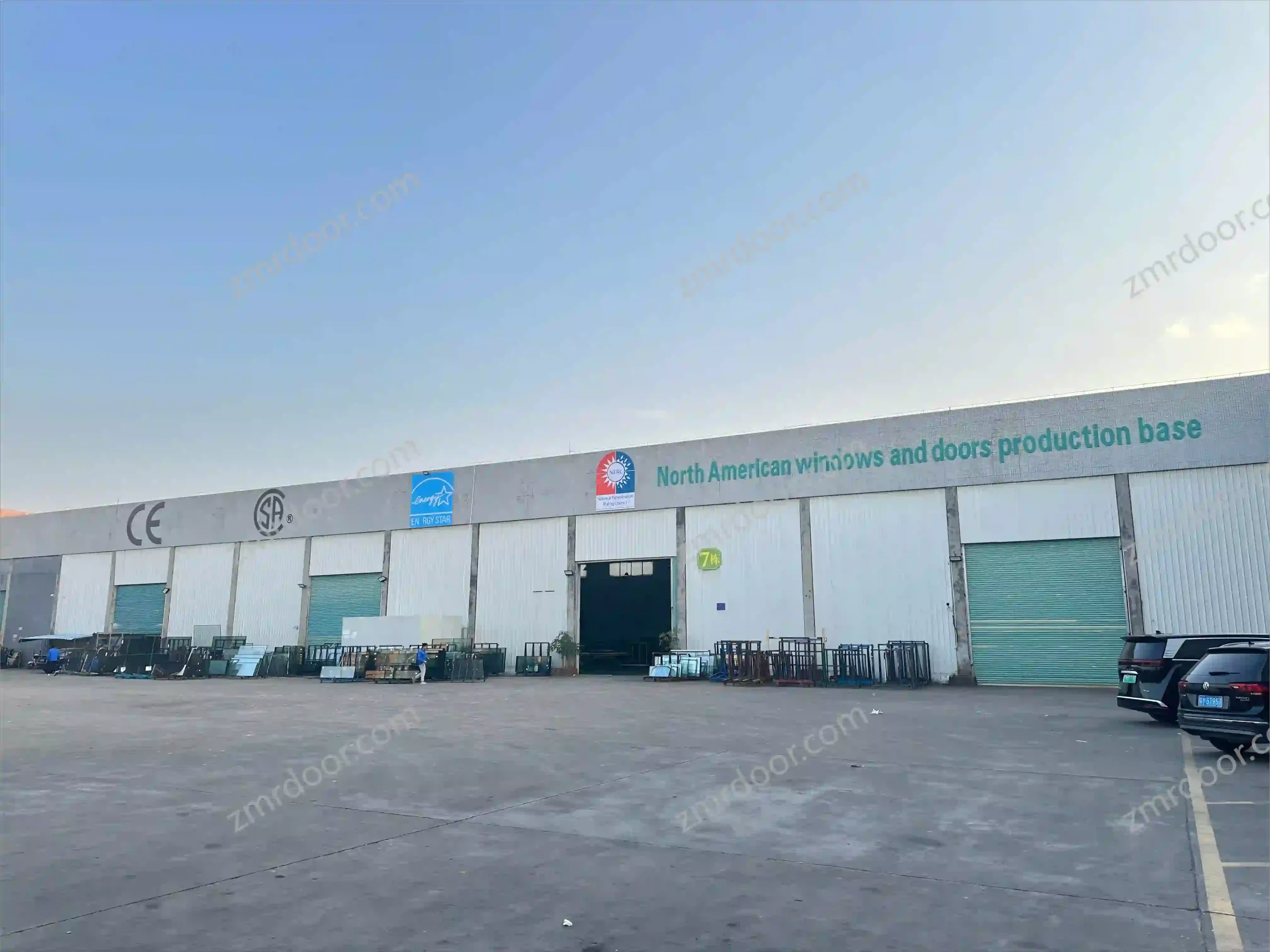
Featured Commercial Fenestration & Door Systems
Precision-engineered aluminum storefront doors, thermal break windows, and structural curtain wall systems manufactured directly in Foshan, China.
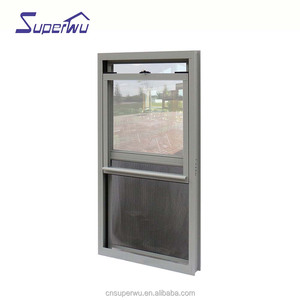
Aluminum Single Hung Windows Double Glazed Dust Proof Window With Flyscreen
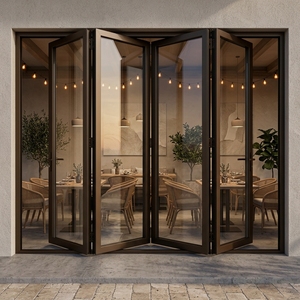
Clearview Bifold Doors Frameless Folding Glass Doors System Aluminium Glass Bi Fold Door for House
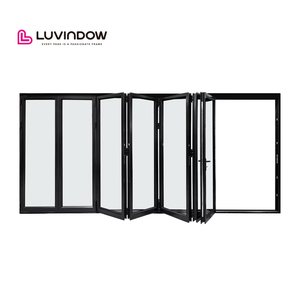
Panoramic Accordion Double Glazed Glass Doors Balcony Multi Panel Thermal Break Aluminum Heavy Duty Bi Fold Doors
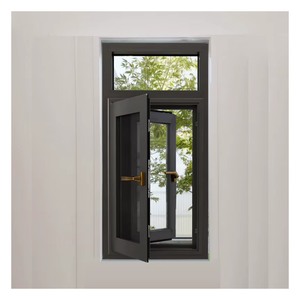
Hihaus Modern Aluminum Casement Window Thermally Insulated High Quality Windows 2 in 1 for House
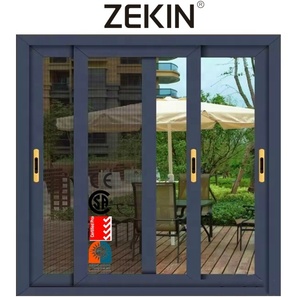
Sliding Window Hurricane Impact Proof Aluminum Energy Efficient NFRC AS2047 Glass Sliding windows Double Glass Aluminum Window
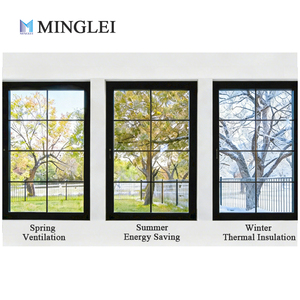
High Heat Insulation Energy Saving Black Aluminum Window Thin Profile Aluminium Windows and Doors Casement Windows for USA
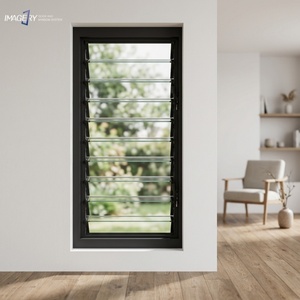
Custom Tempered Glass Windows Aluminum Shutter Adjustable Louver for Commercial House Project
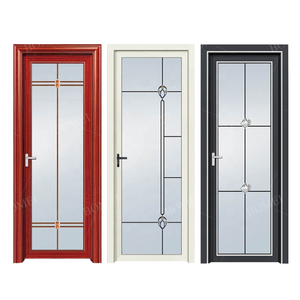
Modern Style 79x32 Aluminum Alloy Tempered Frosted Glass Door Waterproof for Interior Bathroom Use Finished Surface
Technical Whitepaper: Engineering Criteria for Commercial Storefront Systems
Modern commercial architecture demands unprecedented structural integrity, thermal efficiency, and design flexibility. As global project developers, general contractors, and facade consultants turn to China for premium architectural fenestration, evaluating China Top Aluminum Storefront Door Manufacturers & Suppliers requires a deep understanding of metallurgy, structural loading engineering, thermal break technology, and manufacturing compliance.
Information Gain Insight: The performance of an aluminum storefront door system relies heavily on alloy temper specification, polyamide thermal strut insertion techniques, double EPDM corner vulcanization, and exact structural silicon adhesion compliance under ASTM E330 wind load testing.
1. Aluminum Metallurgy & Extrusion Precision (6063-T5 vs. 6063-T6)
Architectural aluminum profiles utilized in commercial storefront entry doors and heavy-duty entrance systems must maintain rigorous physical properties. Leading Chinese extrusion manufacturers in Foshan utilize prime primary aluminum ingots rather than recycled scrap, processed via precision extrusion presses ranging from 1,400 to 10,000 metric tons.
- 6063-T5 Alloy: Standard for intricate window extrusions, offering excellent surface finish for anodizing and electrostatic powder coating, with an ultimate tensile strength of ≥ 185 MPa and yield strength of ≥ 145 MPa.
- 6063-T6 Tempering: Artificially aged for elevated strength, mandatory for high-traffic commercial storefront doors, heavy-duty swing pivots, and high-rise curtain wall mullions, reaching ultimate tensile strengths exceeding 225 MPa.
- Wall Thickness Tolerances: Compliance with EN 755-9 and ASTM B221 standards dictates structural storefront frame profiles retain minimum nominal wall thicknesses of 2.0mm to 3.0mm to withstand sustained cycles of foot traffic and severe wind pressure.
2. Thermal Break Technology: Polyamide Strip Insertion vs. Pour-and-Debridge
To overcome aluminum's inherently high thermal conductivity ($K \approx 200 \text{ W/m}\cdot\text{K}$), top-tier Chinese manufacturers integrate advanced thermal barriers. The industry gold standard for energy-efficient commercial entry doors and heavy-duty bi-fold systems is mechanical crimping with PA66-GF25 (Polyamide 66 reinforced with 25% glass fiber) struts.
PA66-GF25 exhibits a coefficient of thermal expansion ($2.5 \times 10^{-5}/\text{K}$) remarkably similar to aluminum alloys ($2.3 \times 10^{-5}/\text{K}$), preventing delamination or shear failure across extreme seasonal temperature differentials ranging from $-30^\circ\text{C}$ to $+80^\circ\text{C}$. This ensures systems effortlessly achieve low system thermal transmittance ($U_w$) values under $1.4 \text{ W/m}^2\text{K}$, aligning with North American NFRC and European CE/EN 14351 thermal efficiency mandates.
Foshan Manufacturing Supply Chain Competencies
Why Tier-1 global developers source high-performance fenestration systems from specialized Foshan manufacturing centers.
5-Axis CNC Machining Accuracy
Automated CNC milling centers execute hardware lock prep, hinge mortising, and drainage slots with tolerances within ±0.1mm, ensuring flawless on-site assembly.
AAMA 2605 Powder Coating
Advanced fluoropolymer (PVDF) surface treatments offering superior resistance to UV degradation, salt spray corrosion, chalking, and color fading for coastal installations.
Multi-Point Locking Integration
Engineered hardware partnerships with German brands (ROTO, SIEGENIA, HOPPE) and premium domestic hardware ensures high security anti-burglary compliance.
Pre-Shipment Dry-Fit Assembly
Every custom commercial storefront door set and large-panel accordion sliding wall undergoes 100% pre-assembly quality control inspection before export packing.
Architectural Systems Performance Matrix & Selection Benchmark
Selecting the optimal fenestration product requires comparing structural load limits, acoustic isolation parameters (STC ratings), water tightness levels, and thermal performance values across application scenarios.
| Product Category | Profile Wall Thickness | Thermal Break Type | Glazing Specification | Water Tightness (Pa) | Target Application |
|---|---|---|---|---|---|
| Commercial Storefront Entry Doors | 2.0mm – 3.0mm | PA66-GF25 Polyamide 24mm | 6mm+12Ar+6mm Low-E Tempered | 450 Pa (ASTM E331) | Retail Centers, Office Entrances, Banks |
| Narrow Frame Lift & Slide Doors | 2.0mm – 2.5mm | PA66-GF25 Polyamide 30mm | 8mm+16Ar+8mm Toughened Glass | 600 Pa | Luxury Villas, Resort Patios, Penthouses |
| Heavy-Duty Bifold Door Walls | 2.0mm – 2.2mm | PA66-GF25 Polyamide 20mm | 6mm+12Ar+6mm Double Insulated | 350 Pa | Restaurants, Balconies, Event Spaces |
| Impact Casement Windows | 1.6mm – 2.0mm | Multi-Cavity PA66 Struts | 6mm+1.52PVB+6mm Laminated IGU | 700 Pa (AS2047 High Wind) | Hurricane Zones, High-Rise Residential |
| Acoustic Office Partition Doors | 1.4mm – 1.8mm | Non-Thermal / Slim Profile | 10mm / 12mm Monolithic Frosted | Indoor Use | Corporate Offices, Bathrooms, Hotels |
Future Global Sourcing & Fenestration Engineering Trends (2025–2030)
As international energy efficiency standards tighten and architectural design aesthetics lean toward minimalist ultra-slim sightlines, top Chinese manufacturers are leading technological shifts in aluminum storefront and facade manufacturing.
1. Net-Zero Energy Buildings (NZEB) & Vacuum Insulated Glass (VIG)
The industry is transitioning rapidly toward hybrid glazing technology that merges traditional Low-E insulated glass units (IGU) with Vacuum Insulated Glass (VIG). VIG eliminates convective heat transfer inside the glazing cavity, driving whole-window $U$-factors down to an unprecedented $0.60 \text{ W/m}^2\text{K}$ ($U \approx 0.10 \text{ Btu/h}\cdot\text{ft}^2\cdot^\circ\text{F}$). Leading manufacturers in Foshan are redesigning storefront profile profiles to accommodate these ultra-dense, thin glass configurations while maintaining structural strength.
2. Electrochromic Smart Storefront Glass Integration
Commercial storefront doors and curtain walls are increasingly specified with dynamic tinting electrochromic glass. Powered by low-voltage signals integrated directly through hidden wiring channels within the aluminum door frames, smart glass adjusts Solar Heat Gain Coefficients (SHGC) dynamically from 0.41 down to 0.09. This reduces peak cooling loads in modern commercial towers while preserving natural lighting aesthetics.
3. Circular Metallurgy & Carbon Footprint Auditing (EPD)
Environmental Product Declarations (EPD) are becoming mandatory procurement requirements for commercial developers targeting LEED v4.1 and BREEAM certifications. Leading Chinese aluminum storefront manufacturers are adopting low-carbon hydro-powered primary aluminum smelting processes and certifying product lifecycle footprints. Recycled aluminum scrap management within factories ensures clean, high-grade extrusion billets with reduced embodied carbon.
Frequently Asked Procurement Questions (FAQ)
Crucial answers for architects, trade importers, general contractors, and fenestration distributors looking to import directly from China.
Partner with China's Premier Fenestration Engineering Factory
Streamline your project procurement with direct factory pricing, certified thermal performance, structural drawing assistance, and export-ready architectural storefront door systems.
Get a Quote