Factory Direct Catalog
Architectural Aluminum Window & Door Solutions
Engineered for extreme structural loads, superior thermal efficiency, and precision architectural integration. Exported globally with certified compliance.
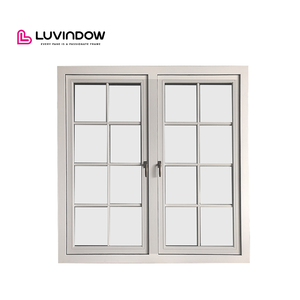
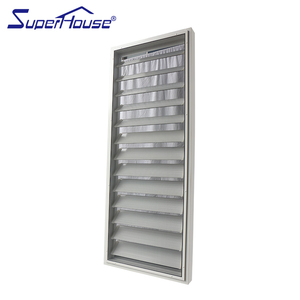
Custom Color French Aluminium Windows Ready-Made Office Inserts Horizontal Opening Pattern Swing Style Wooden Frames for Sale
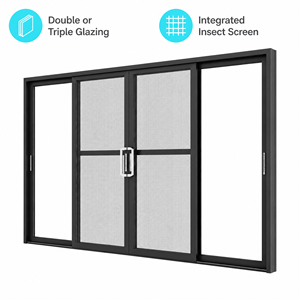
Custom Aluminum Sliding Partition Door With Built in Fly Screen Double Glazed for Balcony Bedroom Villa Residence
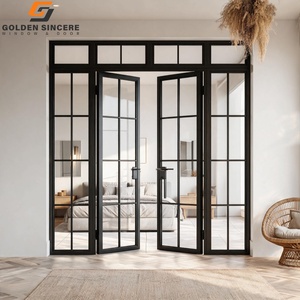
GS Thermal Break Crittall Style Aluminium Glass Doors Soundproof Exterior Double Swing Casement Door
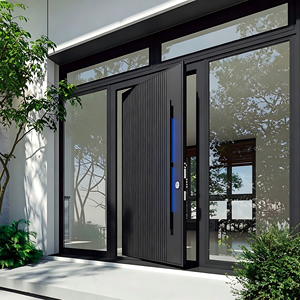
Aluminum Pivot Door Oversized Offset Exterior CNC Design Tempered Glass Smart Lock Waterproof Modern Villa China Total Solution
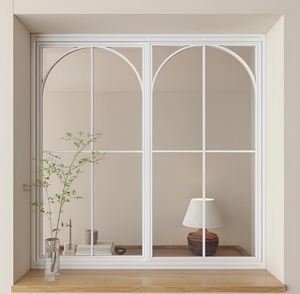
White French Grid Window Modern Style Aluminum Fixed Window Custom Color Exterior for Home Hotel Project
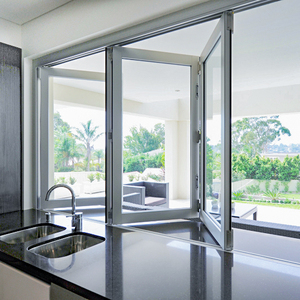
Hurricane Impact High Quality Corner Aluminium Profile Glass Bi Folding windows
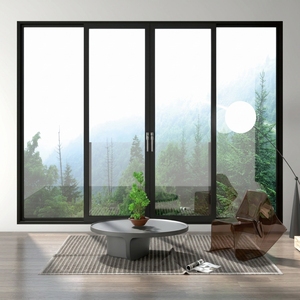
Modern American Style Waterproof Sliding Tempered Glass Doors with Aluminum Alloy Frame for Villa and Living Room Partition
6063-T6
Architectural Aluminum Alloy
PA66-GF25
Polyamide Thermal Barrier
±9000 Pa
Design Pressure Rating
100%
Pre-Shipment Structural Audit
Industry Whitepaper
Engineering Architecture of High-Performance Exterior Aluminum Storm Windows
A rigorous examination of metallurgy, thermal dynamics, structural deflection, and weatherproofing standards for global commercial and residential procurement.
In modern architectural fenestration, the specifying of exterior aluminum storm windows has evolved far beyond secondary seasonal retrofits. Today’s commercial developers, general contractors, and facade engineers treat heavy-duty aluminum storm systems as primary structural envelopes designed to withstand extreme atmospheric pressure, coastal salt spray corrosion, thermal bridging, and high-velocity projectile impacts. As China's premier manufacturer and global exporter based in Foshan—the world's capital of structural aluminum extrusion—VELTOR delivers engineered aluminum storm window assemblies tailored for demanding global climates.
1. Metallurgical Standardizations & Frame Structural Rigidity
The structural foundation of any hurricane-impact or storm-resistant window resides in its extrusion profile chemistry. We utilize high-tensile 6063-T6 and 6005-T6 architectural aluminum alloys, precision-extruded to tight tolerances under GB/T 5237 standards. Unlike standard commercial window profiles with wall thicknesses hovering around 1.2mm, our exterior storm window frames utilize heavy-gauge wall profiles ranging from 2.0mm to 3.0mm in load-bearing zones.
This structural mass is critical for resisting dynamic wind pressure without suffering permanent frame deformation. When tested under ASTM E330 / TAS 202 standards for structural performance, our reinforced mullion and frame profiles achieve Ultimate Limit State (ULS) resistance ratings exceeding ±9000 Pascals (equivalent to Category 5 hurricane wind vectors).
2. Thermal Barrier Integration: PA66-GF25 Polyamide Technyl Strips
Aluminum is inherently a highly conductive material ($k \approx 200 \text{ W/m}\cdot\text{K}$). To meet modern zero-energy building codes (such as ASHRAE 90.1, Title 24, and European EN ISO 10077 standards), thermal conductivity must be interrupted. Our factory integrates imported Polyamide 66 reinforced with 25% glass fiber (PA66-GF25) thermal break bars.
By mechanically crimping PA66-GF25 strips between the exterior and interior extruded aluminum profiles, we create a composite structural barrier that dramatically reduces thermal transmittance (U-factor). The coefficient of thermal expansion of PA66-GF25 ($2.5 \times 10^{-5}/^\text{K}$) matches aluminum precisely, preventing shear stress failure, frame warping, or seal degradation over decades of severe seasonal expansion and contraction.
3. Laminated & Insulated Glazing Architecture for Extreme Weather
Glazing units selected for exterior storm windows serve as the frontline defense against wind-borne debris, cyclic wind pressure fatigue, and acoustic pollution. Our export configurations incorporate dual and triple-pane Insulated Glass Units (IGU) bonded with structural silicone (Dow Corning / Sika 995):
- Impact-Resistant Laminated Glass: Featuring PVB (Polyvinyl Butyral) or SGP (SentryGlas® Interlayer by Kuraray) laminated layers sandwiched between heat-strengthened or fully tempered glass panes. Passing ASTM E1886/E1996 Large Missile Impact (Level D, 9-lb 2x4 lumber fired at 50 ft/s).
- Thermal Low-E Coatings: Double-silver and triple-silver magnetron sputter vacuum deposition (MSVD) Low-E coatings applied to Surface #2 or #3, yielding Solar Heat Gain Coefficients (SHGC) down to 0.21 and U-values down to 0.14 BTU/h·ft²·°F (0.80 W/m²K).
- Desiccated Warm-Edge Spacers: Technoform or Swiss-spacer warm-edge spacer technology filled with 95% Argon gas purity, eliminating edge condensation and interior thermal loss.
Performance Metrics
Storm Window Engineering Specification Matrix
A comparative structural overview across different glass configurations and frame thermal breaks engineered by VELTOR.
| Performance Standard | Standard Aluminum Window | VELTOR Heavy-Duty Thermal Storm Window | VELTOR Extreme HVHZ Impact Storm Window |
|---|---|---|---|
| Structural Wind Load (ASTM E330) | 1500 - 2500 Pa (DP 30) | 4500 - 6000 Pa (DP 75-90) | 7500 - 9000+ Pa (DP 100-120+) |
| Thermal Transmittance (U-Value) | > 3.5 W/m²K (0.61 BTU/h·ft²·°F) | 1.2 - 1.6 W/m²K (0.21-0.28 BTU) | 0.8 - 1.2 W/m²K (0.14-0.21 BTU) |
| Air Infiltration (ASTM E283) | < 0.30 cfm/ft² @ 1.57 psf | < 0.05 cfm/ft² @ 6.24 psf | < 0.01 cfm/ft² @ 6.24 psf (Airtight) |
| Water Penetration (ASTM E331) | 200 Pa (4.18 psf) | 600 Pa (12.5 psf) | 900 - 1200 Pa (18.8 - 25.0 psf) |
| Acoustic Rating (STC / OITC) | STC 26 - 30 | STC 38 - 42 | STC 45 - 52 (Hospitality Grade) |
| Impact Resistance (TAS 201/203) | None | Small Missile Impact (Level A/B) | Large Missile Impact (Level D / SGP) |
Why Partner With Us
Enterprise Strengths & Foshan Manufacturing Supremacy
Why leading global project developers, architects, and window importers choose VELTOR as their OEM/ODM manufacturing partner in China.
Foshan Industrial Cluster Synergies
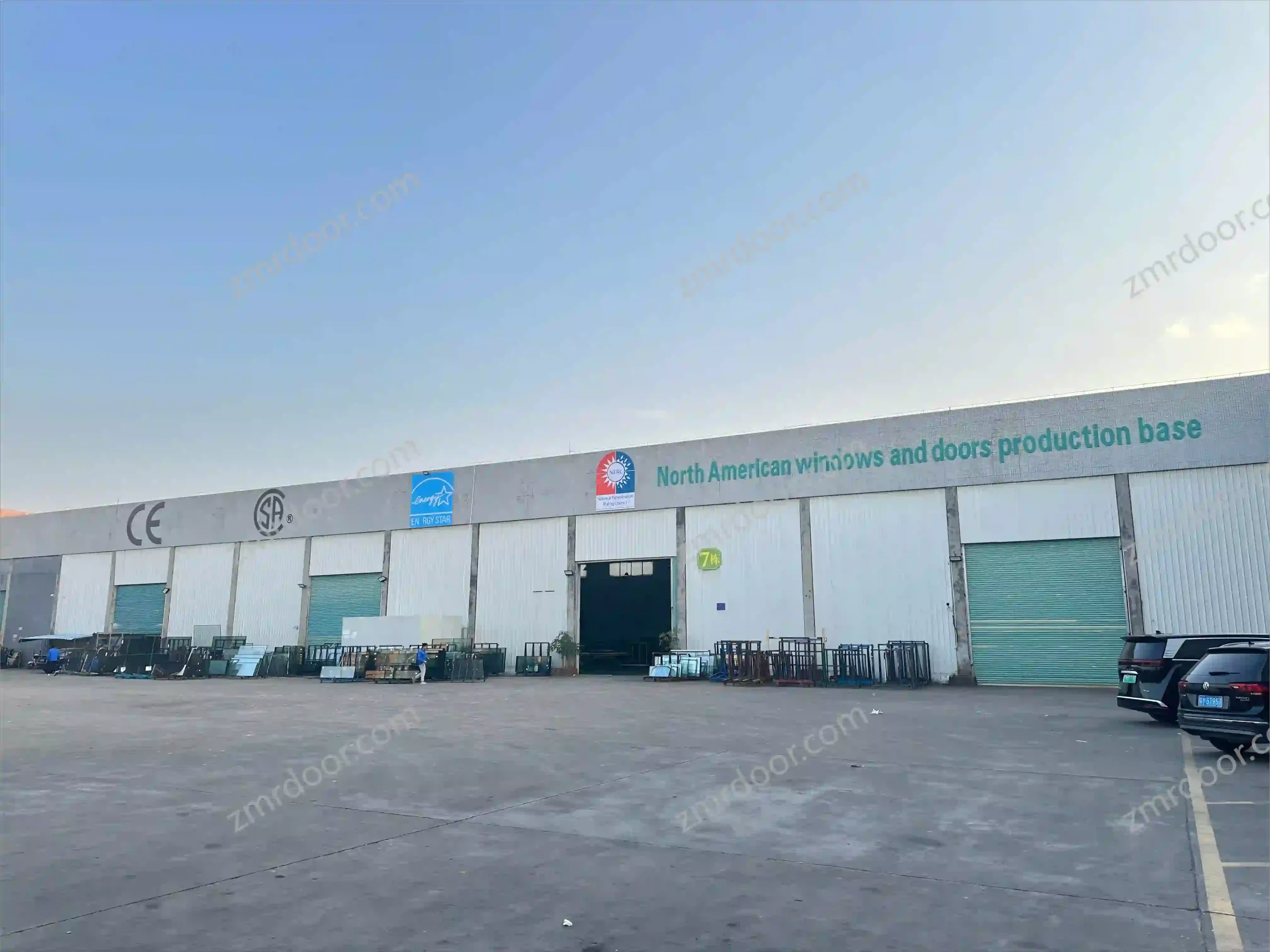
Situated in Shishan Town, Nanhai District, Foshan, our factory directly leverages the world's most dense ecosystem for primary aluminum billet smelting, custom extrusion die matrix fabrication, PVDF fluorocarbon spraying, and hardware supply chains. This provides unmatched cost-efficiency, rapid prototyping, and material purity control.
Rigorous Quality Management (ISO & NFRC)
Our production workflow is audited under ISO 9001 quality management systems. Every project fenestration profile undergoes 100% pre-shipment dimensional checks, hardware torque verification, corner crimp pull testing, and air/water pressure chamber testing. Products carry CE mark, AS2047, and SGCC glass safety certifications.
Precision CNC Machining & Surface Finishes
Equipped with 5-axis automated CNC double-head cutting saws and profile machining centers, we achieve sub-millimeter precision on all mitre joints and drainage slots. Finishes include Qualicoat Class 2 Fluorocarbon PVDF coating (resisting 30 years of UV degradation and coastal salt fog), anodizing, and hyper-durable timber woodgrain transfers.
BIM / CAD Shop Drawing Engineering
Our in-house facade structural engineers don't just take orders; we validate shop drawings against local wind loading codes, seismic zone displacement parameters, and wall opening anchor details. We provide complete CAD detailing, 3D BIM models (Revit), and thermal modeling reports before client sign-off.
Export-Grade Heavy Duty Wooden Crating
International shipping damage is a primary risk for overseas window buyers. We eliminate this with fully enclosed, fumigated solid-plywood crates reinforced with steel corner straps. Each window frame is shrink-wrapped with protective film, foam corner cushions, and labeled by opening tag numbers matching site floor plans.
Acoustic Attenuation Technology
Beyond weather protection, our high-density EPDM triple-sealing gaskets and asymmetric glass thicknesses (e.g., 6mm exterior + 12mm Argon + 8.76mm laminated interior) cancel low-frequency urban noise and airport traffic roar, reducing interior decibel levels by up to 45 dB.
Strategic Outlook
Future Procurement Trends in B2B Aluminum Storm Windows (2025–2030)
Key shift vectors shaping international architectural specification, supply chain logistics, and sustainability compliance for developers and importers.
1. Carbon Accounting & Low-Embodied Aluminum Mandates
International building regulations (such as the EU's Carbon Border Adjustment Mechanism - CBAM, and US LEED v4.1 credits) are increasingly scrutinizing the embodied carbon of building envelope materials. Traditional aluminum smelting relies heavily on coal power, generating ~16kg CO₂ per kg of metal.
The Procurement Shift: Leading international procurement teams now require Environmental Product Declarations (EPD) verifying the use of hydro-powered low-carbon aluminum billets or high-content recycled scrap aluminum (>75% post-consumer scrap). At VELTOR, we offer certified low-carbon extrusion options yielding under 4.0kg CO₂ per kg of finished profile, empowering global partners to win green building tenders.
2. Direct Factory BIM Integration & Digital Twin Ordering
The era of buying standard catalog sizes via basic paper purchase orders is ending. Large-scale residential and commercial developments utilize Building Information Modeling (BIM) platforms to manage component metadata across the asset lifecycle.
The Procurement Shift: Importers and project dealers demand early-stage digital collaboration where the Chinese manufacturer provides native Revit (.rfa) parametric families containing exact glass thermal coefficients, frame profiles, weight data, and anchorage locations. This enables clash detection during design, shortening lead times and eliminating field modification costs.
3. Consolidation of Multi-Hazard Window Envelopes
Historically, developers specified separate window units for thermal insulation, security, fire resistance, and storm impact. Recent extreme climate volatility (simultaneous heatwaves, freezing polar vortexes, and Category 5 coastal storms) has forced a convergence of multi-hazard engineering.
The Procurement Shift: Procurement specifiers now demand single-frame solutions that combine blast mitigation, Florida HVHZ hurricane missile protection, thermal insulation ($U \le 1.0$), and forced-entry RC3 security ratings into one unified slimline profile system.
4. Supply Chain Transparency & Pre-Factory Audit Assurance
Global economic fluctuations have heightened buyer risk sensitivity regarding manufacturing delays, material substitution, and quality fraud. B2B buyers no longer rely on intermediary trading firms.
The Procurement Shift: Direct factory partnerships with verified original manufacturers (OEMs) in Foshan. Modern procurement protocols require real-time digital factory tracking, HD video quality inspections during assembly, raw material mill test certificates (MTC), and third-party laboratory verification prior to container sealing.
R&D Roadmap
Future Technology & Product Development Trends
Next-generation engineering innovations entering the architectural aluminum storm window manufacturing sector.
Aerogel-Infused Ultra Thermal Profiles
Traditional polyamide breaks are reaching their physical thermal insulation limits. The next decade will see the widespread adoption of silica aerogel insulation injected directly into the internal cavities of thermal break aluminum profiles. Aerogel's microscopic porous structure lowers profile thermal conductivity to under 0.015 W/m·K, allowing ultra-slim aluminum profiles to easily achieve Passive House (Passivhaus) certification standard ($U_w \le 0.80 \text{ W/m}²\text{K}$).
Vacuum Insulated Glass (VIG) Integration
Replacing bulky triple-glazed IGUs with thin Vacuum Insulated Glass (VIG). VIG features a 0.2mm high-vacuum gap between two glass sheets, achieving the thermal resistance of a solid masonry wall ($U_g \approx 0.40 \text{ W/m}²\text{K}$) within a ultra-thin 8.3mm profile thickness. This dramatically reduces window dead-weight load on aluminum hinges and structural anchors while offering sleeker sightlines.
Smart Electrochromic & Automated Micro-Ventilation
Storm windows are transitioning from static structural barriers into dynamic intelligent building components. Embedded electrochromic smart glass tints automatically via light and heat sensors to eliminate solar glare and cooling loads. Furthermore, motorized concealed micro-ventilation channels automatically close upon sensing atmospheric pressure drops indicative of incoming storm fronts.
Purchasing Intelligence
Frequently Asked Questions for Global B2B Buyers
Clear, definitive technical answers regarding MOQs, local code compliance, thermal performance, and export logistics.
What is the Minimum Order Quantity (MOQ) for custom exterior aluminum storm windows?
Because every architectural opening is manufactured to custom shop drawing dimensions, VELTOR accommodates full container loads (FCL 20GP/40HQ) for project dealers and distributors, as well as consolidated single-project orders (LCL) for luxury private villa developments. The practical minimum is generally determined by shipping cost optimization rather than factory limit; our sales engineering team helps clients combine windows, sliding doors, and bi-folds into consolidated shipments to lower landing costs per square meter.
Do your thermal break aluminum storm windows comply with cold climate thermal codes?
Yes. Our thermal break systems utilize PA66-GF25 polyamide structural insulation strips combined with customized double or triple-glazed Low-E insulated glass units (IGU), warm-edge spacers, and pure Argon gas filling. We engineer frame depth (ranging from 65mm to 120mm series) specifically to meet target thermal transmittance values ($U\text{-value}$ as low as $0.8 \text{ W/m}^2\text{K}$ or $0.14 \text{ BTU/h}\cdot\text{ft}^2\cdot^\circ\text{F}$) required by North American Energy Star, Canadian NAFS, and Northern European building regulations.
Can VELTOR manufacture to specific regional engineering & hurricane building codes?
Absolutely. We pre-engineer each order against the destination country's structural wind pressure (ASTM E330), water tightness (ASTM E331), air infiltration (ASTM E283), and impact resistance (TAS 201/202/203 HVHZ for Florida/Caribbean zones, or AS2047 for Australia). We provide comprehensive CAD calculations, material mill test certifications, and third-party lab test documentation for review by local municipal building officials before mass manufacturing begins.
How are heavy architectural windows packaged to prevent damage during ocean transport?
We utilize an export packaging protocol engineered for rough ocean freight and site handling. Extruded aluminum frames are covered with protective anti-scratch film and fitted with high-density EPDM corner guards. Finished window units are packed inside custom-built, fully enclosed solid plywood crates (fumigation-free) reinforced with internal foam spacers and external steel strapping. Crates are clearly labeled with opening tags (e.g., W-01, D-02) matching site floor plans for fast on-site sorting.
What is the typical manufacturing lead time for custom export orders?
Standard production lead time is approximately 25 to 35 business days following final approval of CAD shop drawings and receipt of the deposit payment. For specialized finishes (such as custom PVDF color matching, anodizing, or high-performance SGP laminated glass), lead times range from 30 to 40 days. We issue a binding production schedule upon drawing confirmation, accompanied by weekly photo and video progress reports from our QC supervisors.
What warranty coverage is provided on your aluminum storm window systems?
VELTOR provides a 10-year structural warranty on extruded 6063-T6 aluminum frames, a 10-year warranty against PVDF coating peeling/fading (Qualicoat standard), a 5-year seal failure warranty on insulated glass units, and a 5-year replacement warranty on stainless steel hardware (such as Siegenia, Hoppe, or CMECH multi-point locking systems).
Ready to Engineer & Procure Your Architectural Fenestration?
Connect directly with our Foshan engineering team for shop drawing reviews, structural calculations, and competitive factory-direct pricing for your project.