Featured Fenestration & Door Product Lines
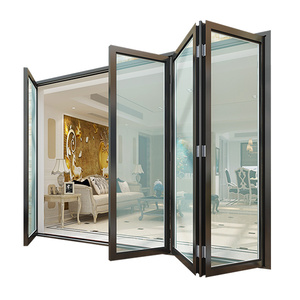
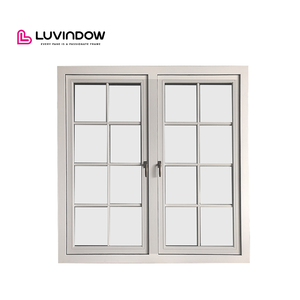
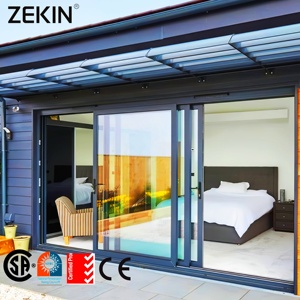
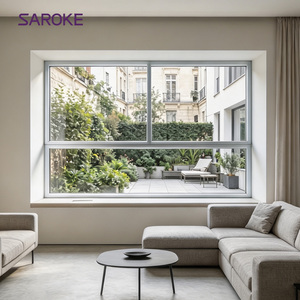
Direct factory supply of heavy-duty aluminum swing doors, sliding systems, bi-folds, and high-performance architectural windows.
6063-T6
Architectural Alloy Grade
U ≤ 1.1
Thermal Value (W/m²K)
300 KG
Hinge Load Capacity
STC 45dB
Acoustic Attenuation
Structural Metallurgy & Engineering Mechanics of Aluminium Swing Doors
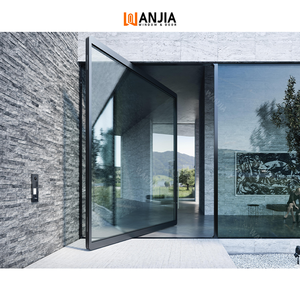
In modern commercial and high-end residential architecture, the Aluminium Glass Swing Door represents the intersection of structural physics, thermal containment, and architectural aesthetics. Unlike sliding or folding doors, swing doors place concentrated mechanical stress on vertical jambs, corner cleats, and single-point or continuous pivot hinges. Sourcing high-performance swing doors from a leading supplier in China requires a granular understanding of profile extrusion metallurgy, thermal break integration, multi-layer glass matrix design, and mechanical locking assemblies.
1. Extrusion Alloys: 6063-T5 vs. 6063-T6 Tempering
The foundation of standard-setting aluminium swing door manufacturing lies in selecting standard-grade aluminum alloys. Leading export manufacturers employ primary-grade 6063-T5 or 6063-T6 magnesium-silicon aluminum alloys. The T6 temper treatment undergoes solution heat treatment followed by artificial aging, yielding an ultimate tensile strength exceeding 205 MPa and yield strength beyond 170 MPa, compared to T5's 145 MPa. This structural rigidity allows narrow-frame swing doors to accommodate glass panel weights up to 300 kg without frame deflection or panel sag over long operational lifecycles.
Structural profile wall thickness is engineered strictly according to international fenestration codes. Commercial heavy-duty swing doors feature primary frame profile wall thicknesses ranging from 2.0mm to 3.0mm, easily exceeding the minimum NAFS/AAMA standard of 1.4mm for residential applications. This structural depth prevents wind load failure under hurricane-force pressures up to 5000 Pa (equivalent to Category 5 conditions).
2. Polyamide Thermal Break Technology (PA66-GF25)
Aluminum exhibits high thermal conductivity (approx. 200 W/m·K). To satisfy stringent zero-carbon building standards and international energy performance requirements (such as NFRC and EU Energy Directives), high-end swing doors incorporate a polyamide thermal break strip. Superior manufacturers utilize Polyamide 66 reinforced with 25% fiberglass (PA66-GF25).
The coefficient of thermal expansion of PA66-GF25 ($2.5 \times 10^{-5}/K$) closely mirrors that of aluminum alloys ($2.3 \times 10^{-5}/K$). This equal expansion prevents structural shear failure, strip popping, or thermal stress cracking under extreme ambient temperature shifts ranging from -40°C in Northern Europe/Canada to +60°C in the Middle East. Thermal break depth ranges from 24mm to 39mm multi-cavity designs filled with expanded polyolefin (PE) insulation foam, driving frame U-factors down to below 1.3 W/m²K.
- Corner Crimping Mechanics: Precision 45-degree corner joints secured with cast-aluminum corner keys and injected two-component polyurethane corner adhesive (e.g., Weiss Cosmopur) ensuring airtight and water-tight joints.
- Triple Weatherstripping Gaskets: Continuous EPDM (Ethylene Propylene Diene Monomer) or TPV co-extruded gaskets provide superior weather resilience against ozone, UV radiation, and sound transmission.
- Drainage Dynamics: Concealed pressure-equalized cascade drainage channels prevent rainwater backflow even under 700 Pa dynamic water penetration testing.
Architectural Glass & Fenestration Performance Benchmark Matrix
When specifying aluminium swing doors for global commercial developments, luxury residential villas, or public infrastructure, procurement officers must compare core performance metrics across configuration classes:
| Performance Parameter | Standard Single-Glazed Swing | Thermal Break Double-Glazed | Hurricane-Impact Heavy Duty | Ultra-Slim Architectural Swing |
|---|---|---|---|---|
| Frame Profile Depth | 45mm - 50mm | 65mm - 75mm | 90mm - 120mm | 38mm - 50mm (Minimalist) |
| Aluminum Alloy / Wall Thickness | 6063-T5 / 1.4mm - 1.6mm | 6063-T6 / 2.0mm - 2.2mm | 6063-T6 / 2.5mm - 3.0mm | 6063-T6 / 2.0mm - 2.5mm |
| Thermal Transmittance (U-Value) | 4.5 - 5.8 W/m²K | 1.2 - 1.8 W/m²K | 1.5 - 2.0 W/m²K | 1.6 - 2.2 W/m²K |
| Acoustic Isolation (STC Rating) | 25 dB - 28 dB | 38 dB - 42 dB | 42 dB - 48 dB | 35 dB - 40 dB |
| Wind Load Resistance (Pa) | 1500 Pa - 2200 Pa | 3500 Pa - 4500 Pa | > 5000 Pa (TAS 201/202/203) | 3000 Pa - 4000 Pa |
| Glazing Matrix Configuration | 6mm - 8mm Toughened | 6 Low-E + 12Ar + 6 Toughened | 6mm + 1.52PVB + 6mm Laminated | 8 Low-E + 16Ar + 8 Toughened |
| Hardware & Locking System | Single latch / Mortise Lock | 3-Point / 5-Point Multi-Lock | Multi-Point Steel Shoot-Bolts | Concealed Magnetic Locks |
Glass Glazing Technology & Multi-Point Hardware Mechanics
Insulated Glass Units (IGU) and Coatings
A swing door's surface area is composed of over 80% glass. Thus, thermal gain, daylight transmission, and safety depend heavily on the double or triple Insulated Glass Unit (IGU). Export doors manufactured in Foshan utilize certified safety glass conforming to global standards (SGCC ANSI Z97.1, AS/NZS 2208, EN 12150).
High-performance setups feature Double or Triple Silver Magnetron Sputtered Low-E glass (such as Saint-Gobain Planitherm or PPG Solarban). Low-E coatings selectively reflect far-infrared thermal radiation while permitting maximum visible light penetration. The inter-pane cavities are filled with 95% concentration Argon gas sealed via warm-edge composite spacers (e.g., Technoform or Swisspacer), mitigating edge-seal condensation and thermal bridging.
Hardware Mechanics: Multi-Point Security & Heavy-Duty Hinges
The mechanical failure of swing doors typically occurs at the hinge pivot or latching assembly due to sagging or latch misalignment. Quality-driven factories resolve this through top-tier hardware integrations:
- 3D Adjustable Stainless Steel Hinges: Fabricated from grade 304 or 316 stainless steel, allowing precise on-site ±3mm vertical, horizontal, and compression tuning without dismounting the door sash.
- Concealed Heavy-Duty Pivot Hinges: Engineered for oversized grand entry glass doors up to 400 kg, utilizing floor springs with soft-close hydraulic dampers and 90-degree hold-open positioning.
- European Groove Multi-Point Lock Gears: Partnering with premier hardware manufacturers (German SIEGENIA, HOPPE, GU, or top-tier domestic brands like HOPO/KIN LONG), gearboxes drive mushroom-head lock pins into frame keepers across 3 to 5 locking points, offering resistance against forced entry (RC2/RC3 anti-burglary standards).
Global Procurement & Sourcing Trends (2025–2030)
As global building regulations mandate stricter decarbonization, procurement managers, distributors, and real estate developers are shifting their sourcing criteria from China. Key market evolutions include:
1. Ultra-Slim Minimalist Sightlines
Demand is surging for concealed-frame swing doors with visible profile widths under 20mm, providing uninterrupted panoramic views while retaining structural load capacities.
2. Smart Biometric & IoT Access
Integration of motorized multi-point locks compatible with facial recognition, fingerprint access, smart home automation, and automatic drop-down bottom weather seals.
3. Circular & EPD Certified Materials
International buyers mandate Environmental Product Declarations (EPD) verifying recycled aluminum content, low-VOC fluoropolymer powder coatings (AAMA 2605), and LEED point contributions.
Foshan Manufacturing Infrastructure & Export Mastery
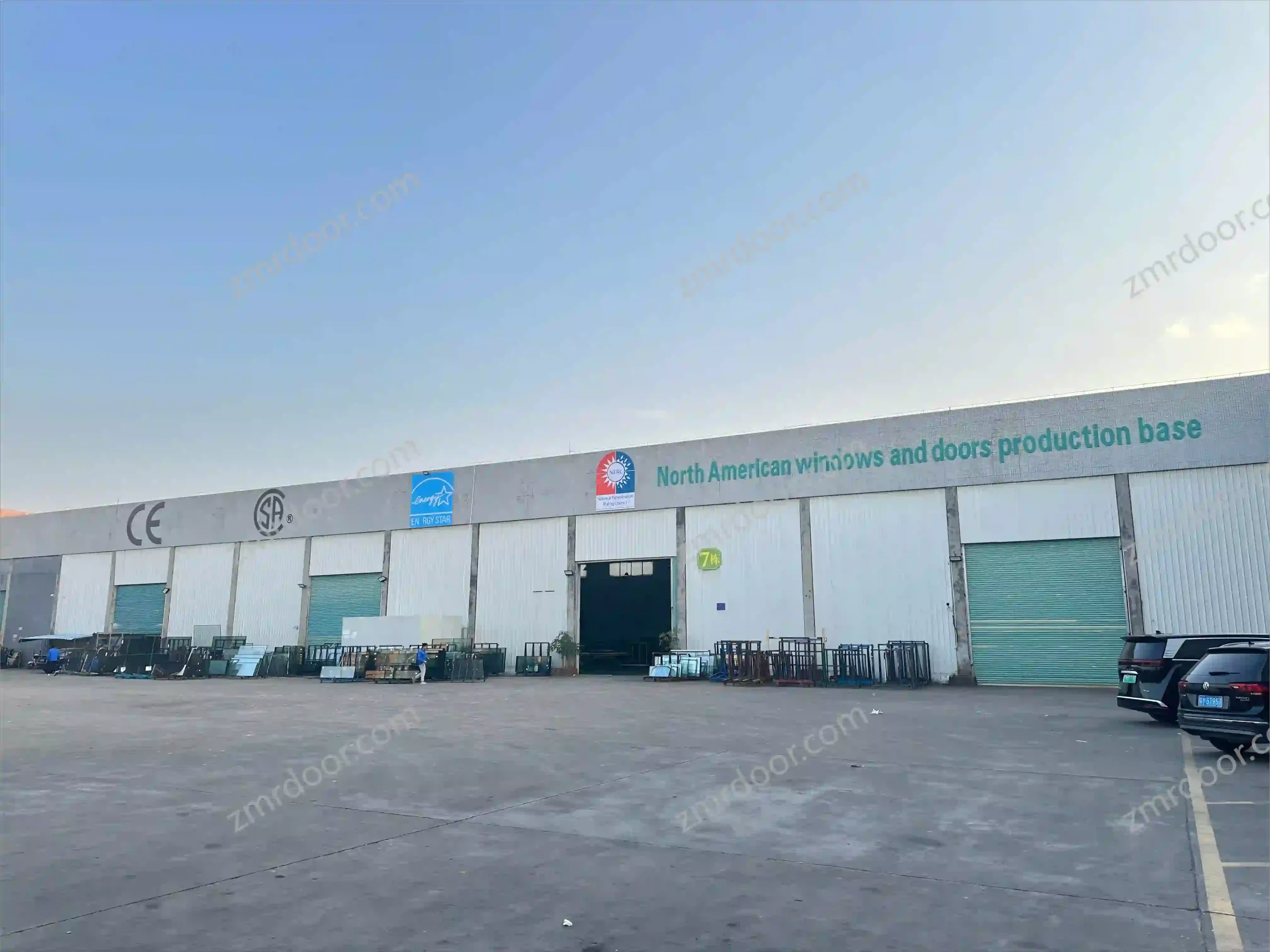
Located in Nanhai District, Foshan—the epicenter of China's architectural aluminum industrial cluster—our manufacturing facility combines cutting-edge European automated machinery with rigorous quality control standards to deliver superior fenestration systems globally.
CNC Precision Machining
Equipped with 4-axis German CNC milling centers and double-head precision cutting saws executing profile cuts within 0.1mm tolerances for flawless 45-degree miter joints.
In-House Surface Finishing
Automated vertical powder coating lines certified for AkzoNobel and PPG fluorocarbon (PVDF) spray coatings, ensuring 30+ year color retention and salt-spray resistance over 3000 hours (AAMA 2605).
Export Packaging & Logistics
Every door frame is wrapped in protective film, corner-guarded, and secured in fully closed fumigated wooden crates labeled with BIM window opening numbers for fast site assembly.
Comprehensive Procurement FAQ & Engineering Insights
Q1: What structural compliance standards do your aluminium swing doors meet for North American & Australian markets?
Our thermal-break swing door systems are custom engineered to meet and exceed local codes. For Australia, our products are certified under AS2047 (Windows and doors in buildings) and AS1288 (Glass in buildings) with structural deflection testing up to N6/C4 wind ratings. For North America, profiles are engineered to NAFS-17 standards and NFRC thermal metrics, offering certified U-factors down to 0.24 Btu/h·ft²·°F.
Q2: How do you guarantee zero dimensional errors for custom architectural project orders?
Prior to fabrication, our technical engineering team converts client CAD drawings into 3D BIM models and generates precise Shop Drawings specifying opening dimensions, wall thickness, glass build-up, threshold details, and hardware placement. Production only commences after written customer approval of shop drawings. Furthermore, 100% pre-assembly inspection is conducted on the factory floor before packaging.
Q3: What threshold configuration options are available for weatherproofing versus barrier-free access?
We supply three primary threshold configurations: (1) High-performance step-down thermal break thresholds with rubber seals for maximum wind/water tightness (up to 700 Pa rating); (2) Flush ADA-compliant zero-step thresholds utilizing automatic drop-down bottom weather seals for interior/office transitions; and (3) Drain-channel integrated sub-sills designed for outdoor patio applications.
Q4: What is the minimum order quantity (MOQ) and production lead time for export shipments?
Because every unit is manufactured to bespoke project dimensions, we support project orders starting at a practical minimum of 20 square meters (or consolidated container loads for distributors). standard manufacturing lead time is 25 to 35 calendar days following drawing sign-off and deposit receipt. Express production schedules can be arranged for time-sensitive commercial projects.
Q5: How are surface finishes tested against corrosion in harsh coastal environments?
All coastal-grade aluminum profiles undergo anodizing (up to 25 microns) or Fluorocarbon PVDF coating (AkzoNobel/Interpon). Our surface finishes pass rigorous AAMA 2605 testing, including 3,000-hour continuous salt spray exposure, humidity resistance, and accelerated weatherometer UV exposure without chalking, blistering, or film erosion.
Request Architectural Shop Drawings & Technical Specifications
Partner directly with Foshan's premier aluminium window and door engineering factory. Contact our technical team today for immediate factory-direct quotes and full product catalogs.