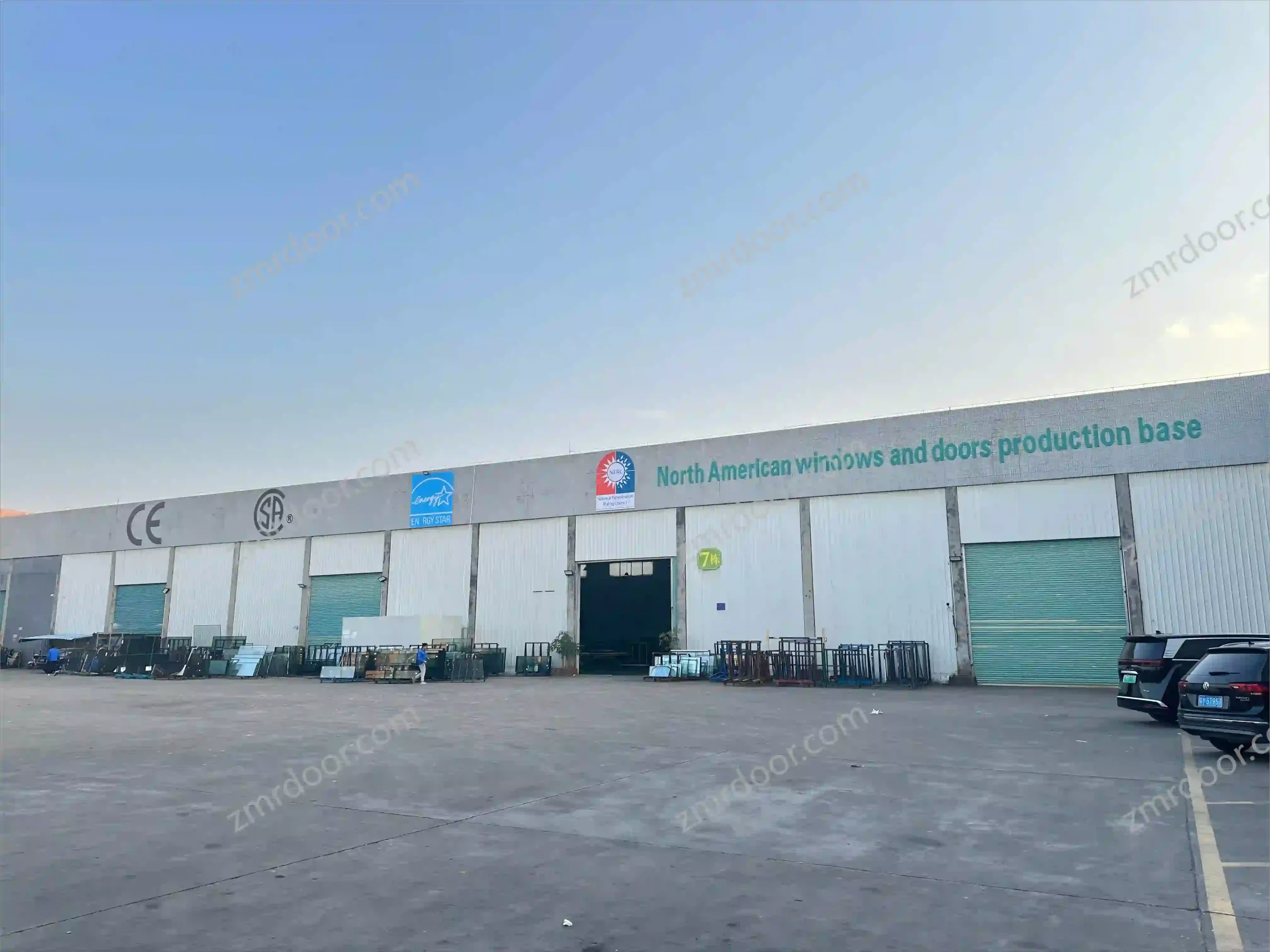
Factory Direct Aluminum Storm Windows & Fenestration Systems
Examine our engineering-grade architectural profiles, impact-resistant window assemblies, and heavy-duty storm doors produced directly in Foshan, China. Built to withstand hurricane-force wind pressure, atmospheric corrosion, and intense thermal transfers.
Future Procurement Trends in Global Aluminum Storm Window Sourcing
The international fenestration industry is undergoing a paradigm shift. Driven by climate volatility, stricter regional building codes, and aggressive net-zero carbon mandates, commercial developers, hardware wholesalers, and residential contractors are overhauling their procurement criteria when partnering with Chinese aluminum storm window manufacturers.
Extreme Weather & DP Rating Mandates
Global buyers no longer request standard aluminum profiles for hurricane-prone coastal regions like Florida, the Caribbean, or Southeast Asia. Sourcing protocols now mandate explicit Design Pressure (DP50 to DP90) ratings and rigorous missile-impact compliance (TAS 201/202/203 & ASTM E1886/E1996 standards).
Low-Carbon & Recycled Profile Mandates
Environmental certifications (EPD declarations) are transforming procurement. Chinese factories with direct access to primary hydro-powered or scrap-recycled 6063-T5/T6 billet extrusions are capturing major market shares in Europe and North America by minimizing embodied carbon metrics.
Digital Pre-Assembly & BIM Integration
Procurement teams require seamless Building Information Modeling (BIM) data and 3D shop drawing approvals prior to extrusion tooling. Chinese factories offering digitally verified mock-ups and complete modular pre-assembly significantly shorten on-site installation timelines for overseas project contractors.
Engineering & Manufacturing Innovations in Aluminum Storm Windows
Modern aluminum storm windows are sophisticated structural barriers designed to balance transparency, thermal insulation, and extreme physical protection. Leading manufacturers in the Foshan industrial cluster are investing heavily in advanced extrusion, structural glazing, and metallurgy innovations.
1. Structural Multi-Cavity Extrusions & Polyamide Breaks
To resist hurricane wind loads without excessive weight, manufacturers utilize multi-cavity structural profiles with internal reinforcement ribs. By embedding 24mm to 34mm Polyamide (PA66 GF25) thermal barrier strips, factories achieve ultra-low U-factors while isolating external storm temperatures from interior living zones.
Furthermore, precision crimping machines ensure shear tension tolerance, maintaining structural integrity under alternating negative and positive wind pressures exceeding 4,500 Pascals.
2. Advanced Laminated Security & Storm Glazing
The glass build-up defines storm window performance. Leading Chinese factories pair heavy-duty aluminum frames with double-pane insulated impact glass. This typically consists of an outer tempered glass panel, an argon gas cavity with warm-edge spacers, and an inner laminated safety panel bonded by heavy-gauge PVB or SentryGlas® (SGP) interlayers.
Even under direct projectile impact from airborne storm debris, the SGP interlayer prevents panel puncture, preserving the architectural envelope and interior pressure dynamics.
3. Marine-Grade Surface Finishes (PVDF & Anodizing)
Coastal storm environments introduce aggressive salt spray and high atmospheric moisture. Modern factories employ multi-coat PVDF (Fluorocarbon) liquid spraying compliant with AAMA 2605 specifications, alongside Qualicoat Class 2 architectural powder coatings.
These surface treatments guarantee 20+ years of resistance against chalking, color fading, micro-cracking, and galvanic corrosion, preserving visual aesthetics in high-humidity tropical microclimates.
4. EPDM Co-Extruded Gaskets & Multi-Point Hardware
Water infiltration during severe storms is mitigated through continuous, seamless EPDM (Ethylene Propylene Diene Monomer) gasket seals co-extruded onto profile frame tracks. Paired with German or Italian engineered multi-point locking gear, sashes are drawn tight against the frame upon closure, achieving superior air impermeability (Class 4) and high water tightness (Class 9A/E1050).
Aluminum Storm Window & Door System Specifications Matrix
Compare performance parameters across primary architectural storm window systems manufactured in China to select the precise specification for your regional building code requirements.
| System Type | Recommended Application | Structural Alloy & Wall | Impact & Glass Build-Up | Acoustic & Thermal Rating |
|---|---|---|---|---|
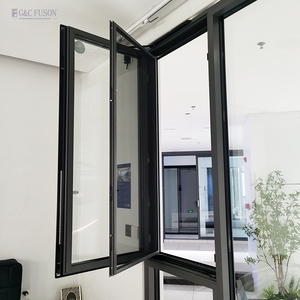
| Thermal Break Storm Casement | High-rise coastal towers, extreme climate villas | 6063-T6 / 1.8mm - 2.2mm wall / PA66 GF25 | 6mm Tempered + 12A + 6mm/1.52PVB/6mm Laminated | U-Factor ≤ 1.6 W/m²K STC: 42-45 dB |
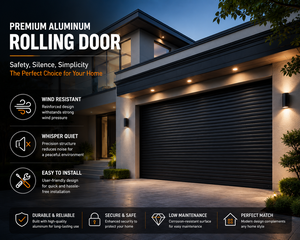
| Heavy-Duty Impact Roller Shutter | Commercial storefronts, mall entries, factory bays | Extruded Double-Wall Hollow Slats / 1.2mm - 1.5mm | N/A (Solid Aluminum Extrusions with PU Foam Core) | Wind Load: ≥ Class 5 Security: High Anti-Intrusion |
| Storm-Resistant Skylight / Roof | Commercial atrium roofs, pitched residential attics | 6063-T5 / 2.0mm - 3.0mm Heavy Structural Frame | 8mm Low-E Tempered + 16A + 6mm/1.52SGP/6mm Laminated | Water Tightness: 1050 Pa SHGC ≤ 0.23 |
| Louvered Architectural Shutter | Coastal hotels, tropical villas, generator rooms | Extruded Airfoil Aluminum Louvers / 1.5mm - 2.0mm | Option for integrated stainless steel insect mesh | Airflow: Adjustable Corrosion: AAMA 2605 PVDF |
Why Source Aluminum Windows & Doors from Foshan, China?
Foshan, located in Guangdong Province, stands as the global epicenter of architectural aluminum manufacturing. Leveraging a fully integrated industrial ecosystem, local factories offer unmatched cost efficiencies, raw material quality, and custom fabrication capabilities.
Direct Alloy Extrusion Access
Proximity to primary aluminum smelters and profile extrusion plants ensures raw alloy standard compliance (GB/T 5237 / ASTM B221), minimizing raw material transport overheads and lead times.
End-to-End OEM/ODM Flexibility
From custom die extrusion design and hardware slot milling to custom wood-grain powder coating and private-label packaging, Foshan factories cater precisely to specialized dealer specifications.
Rigorous Pre-Shipment Quality Control
Export-focused manufacturers implement strict QA protocols: 100% pre-assembly of window frames, corner seam seal checks, hardware cycle testing, and heavy-duty ISPM-15 wooden crate packaging.
Frequently Asked Questions for Sourcing Aluminum Storm Windows
Essential technical insights for project developers, importers, and procurement managers evaluating factory capabilities in China.
Standard aluminum windows utilize thinner profile wall thicknesses (typically 1.2mm to 1.4mm) and single or standard double-tempered glass designed primarily for basic gravity and mild wind loads. In contrast, storm-rated impact windows utilize heavy-gauge architectural alloy (6063-T6 with 1.8mm to 3.0mm wall thickness), reinforced internal steel or aluminum structural ribs, continuous heavy-duty EPDM gaskets, and laminated impact glass featuring SGP or thick PVB interlayers. They are engineered to survive cyclic wind pressure (up to DP90) and resist direct impact from windborne missiles during severe hurricanes without structural collapse or seal failure.
Reputable factories operate in-house testing chambers certified according to ISO/IEC 17025 standards or partner with third-party testing agencies (such as Intertek, SGS, or TUV). Windows undergo mock-up testing following ASTM E330 (structural performance), ASTM E547/E331 (water penetration under static/cyclic air pressure), and ASTM E1996/E1886 (large missile impact and cyclic pressure loading). Before placing container orders, buyers should request certified test reports matching their project's required Design Pressure (DP) and U-factor ratings.
For cold or tropical severe-weather climates requiring low solar heat gain and maximum impact strength, the industry-standard specification is a Double-Glazed Insulated Laminated Glass Assembly: 6mm Outer Low-E Tempered Glass + 12mm Argon Gas Filled Space (with warm-edge spacer) + 6mm Inner + 1.52mm SGP/PVB + 6mm Inner Laminated Glass. This configuration achieves exceptional thermal performance (U-factor < 1.5 W/m²K), high acoustic attenuation (STC > 40 dB), and complete storm safety protection.
Because fenestration products are custom manufactured to project shop drawings, MOQs depend on profile customization. For standard architectural profile series in stock colors (Black, Dark Gray, White), minimum orders typically start at 50 to 100 square meters (or full project lot consolidation). For custom profile die extrusions, profile die tooling timelines require 10-15 days. Standard production lead time following CAD drawing approval and deposit confirmation ranges between 25 to 35 calendar days.
Export packaging protocols mandate multi-layer protection: profile surfaces are wrapped with protective anti-scratch film, corners are fitted with reinforced blue plastic guards, and complete window sashes are encased in heavy-duty shrink wrap. Units are then loaded upright into fully enclosed, fumigated ISPM-15 compliant plywood crates or steel-frame A-frames equipped with rubber shock absorbers. Every crate is clearly labeled with window tags corresponding to floor plan shop drawings to facilitate seamless site sorting.
Yes. Experienced export manufacturers engineer custom profiles engineered to conform with regional standards: AS2047 / AS1288 for Australia, NFRC / AAMA / Florida Product Approval for North America, and CE (EN 14351-1) for the European Union. Factories provide detailed material test certificates, mill test reports for 6063-T6 aluminum alloys, and glass safety certificates (SGCC / AS/NZS 2208) prior to dispatch.
Request Factory Direct B2B Quotations & CAD Engineering Support
Partner directly with Foshan's premier architectural aluminum window manufacturer. Submit your window schedules, architectural elevations, or structural specification requirements to our engineering team for immediate review.