AS2047 Certified
Factory-direct, custom-fabricated aluminum door and window systems engineered for international residential, commercial, and hurricane-impact specifications.
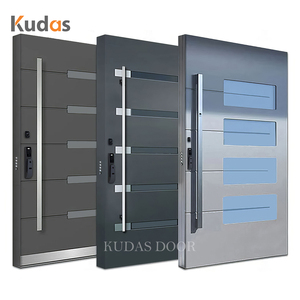
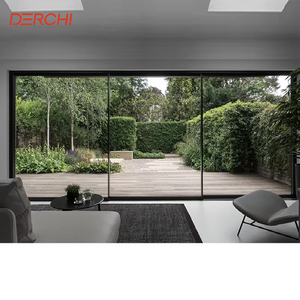
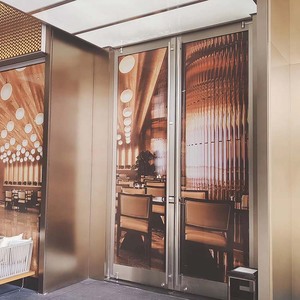
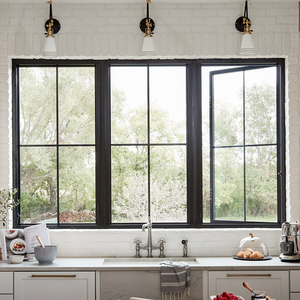
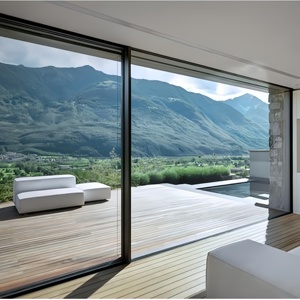
The global construction sector is undergoing a massive paradigm shift toward decarbonization, extreme weather resilience, and stringent fenestration energy performance standards. Within this evolving landscape, identifying premier China aluminum door manufacturers is no longer merely an exercise in direct unit cost optimization; it is a strategic technical alignment. Modern architectural aluminum doors operate as high-performance building envelope components required to deliver exceptional structural integrity under extreme wind pressures, maintain strict thermal envelope performance (minimizing thermal bridging), and provide superior acoustic attenuation in dense urban environments.
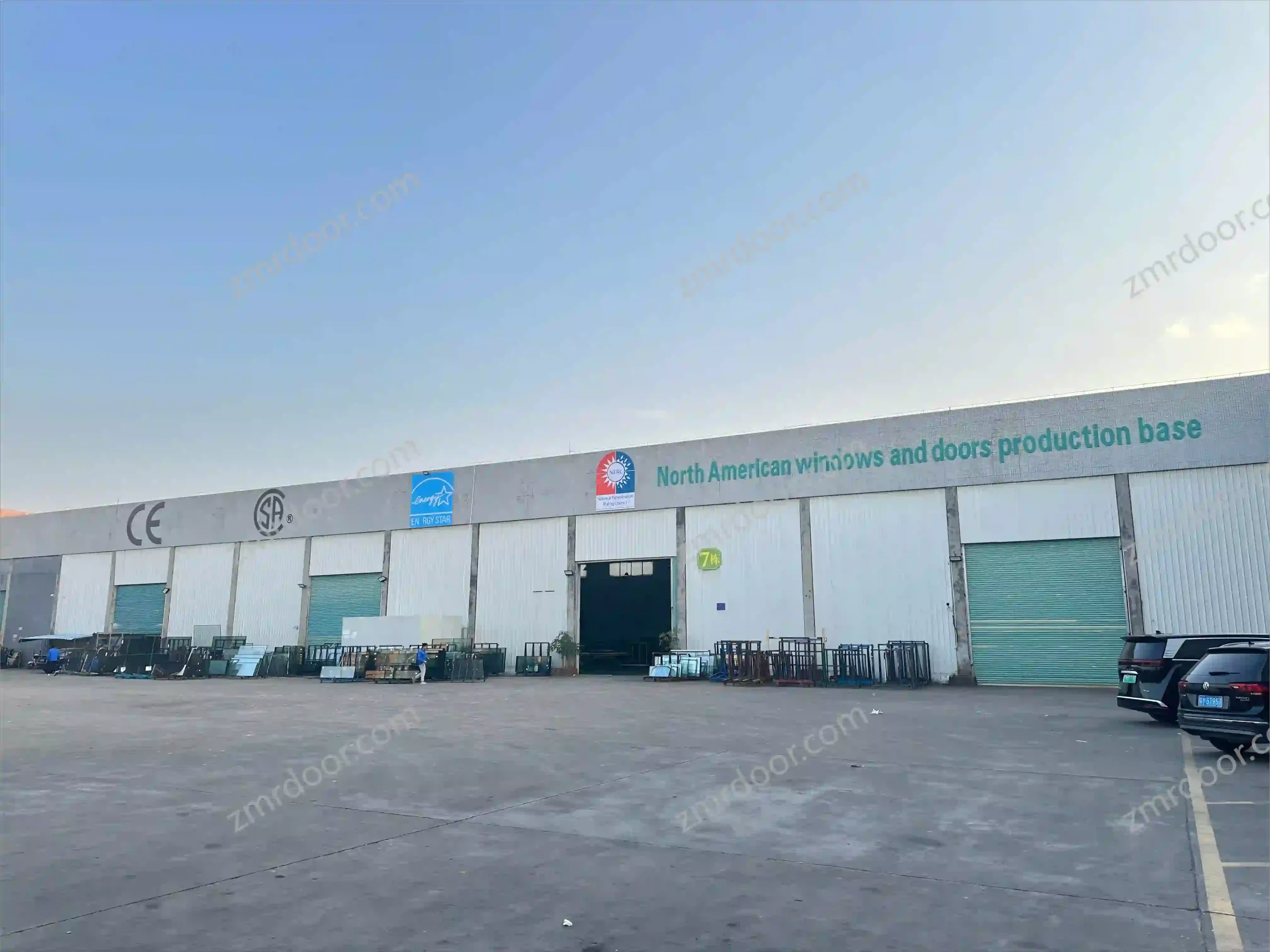
China’s architectural aluminum fabrication sector—anchored in industrial hubs such as Shishan Town in Nanhai District, Foshan—represents the pinnacle of global integrated extrusion, surface treatment, and thermal-break assembly capabilities. Leading manufacturers utilize primary 6063-T5 and 6063-T6 architectural-grade aluminum alloys, precision CNC profile machining centers, automated corner crimping technology, and advanced polyamide structural thermal barriers (PA66-GF25) to satisfy international building codes, including North American NFRC/AAMA protocols, European CE (EN 14351-1) directives, and Australian AS2047 fenestration benchmarks.
When evaluating architectural aluminum suppliers in China, verify profile wall thickness ratings against international load-bearing criteria. While standard residential profiles use 1.4mm to 1.6mm wall thicknesses, structural entrance systems, heavy-duty lift-and-slide doors, and high-rise storefronts require minimum profile wall thicknesses of 2.0mm to 3.0mm in accordance with ASTM B221 and GB/T 5237 structural standards.
Dissecting the critical sub-components that define structural durability, thermal efficiency, and long-term operating life.
Un-insulated aluminum profiles act as direct heat conductors. High-end Chinese manufacturers integrate PA66-GF25 (25% Glass Fiber Reinforced Polyamide) insulating strips. This creates an impermeable structural thermal barrier, dropping whole-door U-factors down to 1.2 - 1.4 W/m²·K, preventing condensation and reducing thermal energy loss by up to 60% compared to non-thermal break profiles.
Procurement specifications must detail glazing technology. Premium manufacturers utilize double or triple toughened safety glass (SGCC/CE certified) with 12mm to 18mm argon gas-filled air gaps. Combining double-silver or triple-silver Low-E coatings with warm-edge composite spacers provides optimal Solar Heat Gain Coefficients (SHGC) tailored for tropical cooling efficiency or cold-climate heat retention.
Weatherproofing and operating smooth torque rely on precision hardware hardware integration. Premier factories partner with global suppliers (Siegenia, Hoppe, G-U, CMECH, Kin Long) to integrate multi-point locking gear, heavy-duty stainless steel rollers, concealed 3D-adjustable hinges, and multi-channel continuous EPDM synthetic rubber gaskets for Class 4 air permeability and 900 Pa water resistance.
A side-by-side engineering comparison of primary aluminum door typologies manufactured in China for overseas commercial and residential deployment.
| Door Typology | Profile Wall Thickness | Thermal U-Factor | Acoustic Rating (STC/Rw) | Max Panel Dimensions | Primary Target Compliance |
|---|---|---|---|---|---|
| Heavy-Duty Lift & Slide | 2.0mm - 3.0mm | 1.3 - 1.6 W/m²·K | Rw 38 - 42 dB | 3300mm (H) x 2800mm (W) | AS2047 / CE EN 14351-1 |
| Thermal Break Bi-Fold Door | 2.0mm - 2.2mm | 1.4 - 1.8 W/m²·K | Rw 35 - 38 dB | 3000mm (H) x 1100mm (W) | NFRC / CSA A440 |
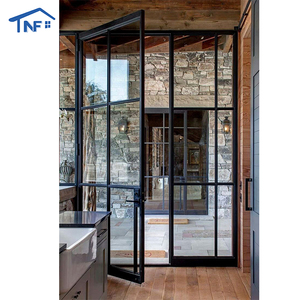
| Luxury Cast Aluminum Pivot Entry | 2.5mm - 4.0mm | 1.6 - 2.0 W/m²·K | Rw 40 - 45 dB | 4000mm (H) x 2000mm (W) | AAMA / High Security ASTM |
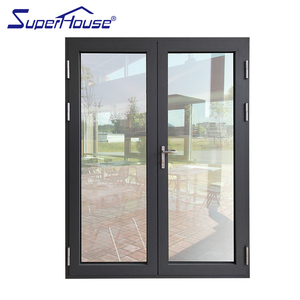
| Architectural French Double Entry | 1.8mm - 2.0mm | 1.4 - 1.7 W/m²·K | Rw 36 - 40 dB | 2700mm (H) x 1000mm (W) | AS2047 / CE / Florida Building Code |
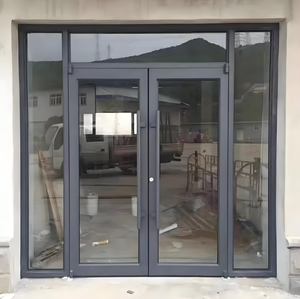
| Hurricane Impact Storefront | 2.5mm - 3.2mm | 1.8 - 2.2 W/m²·K | Rw 38 - 44 dB | 3800mm (H) x 1500mm (W) | TAS 201/202/203 (Miami-Dade) |
Partnering directly with established aluminum window and door manufacturers in Foshan provides overseas buyers with a vertically integrated production ecosystem. Manufacturers like VELTOR Window & Door Co., Ltd. (operating from Shishan Town, Nanhai District) demonstrate how localized raw material access combined with specialized engineering talent optimizes project timelines and eliminates intermediary markups.
In-house engineering teams convert architectural CAD plans and architectural elevations into precise shop drawings, calculating wind load deflection, glazing weight distribution, and anchor point locations prior to production release.
Utilization of double-head precision cutting saws, 5-axis CNC machining centers for hardware recessing, pneumatic corner crimping machines, and automated silicone structural sealant dispensing ensures sub-millimeter tolerances across massive production batches.
Every production unit undergoes strict pre-assembly tests, dimensional verification, hardware operation checks, water spray testing, and surface finish inspection (Qualicoat standard powder coating or anodizing grade checks) before packing.
Finished units are sealed with protective PE film, reinforced with corner guards, separated by foam blocks, and securely packed into fully enclosed fumigated wooden crates tagged by elevation code to simplify site installation.
Strategic insights for procurement directors, project developers, and importers looking to future-proof their supply chains.
Architectural preference is heavily leaning toward concealed frame designs, flush sill transitions, and ultra-narrow interlocking stiles (as slim as 20mm to 25mm). Leading Chinese manufacturers are combining ultra-slim profiles with structurally bonded glass technology to maintain structural stability while maximizing natural daylight harvest.
Commercial storefronts and high-end residential doors increasingly incorporate smart glass technologies, including switchable PDLC privacy glass, integrated motorization with smart-home automation protocols, and embedded photovoltaic (BIPV) glass units designed for zero-energy building compliance.
In response to European CBAM (Carbon Border Adjustment Mechanism) and global ESG imperatives, top-tier Chinese manufacturers are shifting toward low-carbon primary aluminum smelted via hydropower, alongside incorporating certified post-consumer recycled aluminum content without compromising tensile strength.
Detailed technical answers to common engineering, logistics, and compliance inquiries encountered during procurement.
Because all structural aluminum door systems are fabricated to exact project dimensions and shop drawings, MOQs are flexible. While standard factory orders favor full container loads (20GP or 40HQ) to maximize freight economics, leading manufacturers accept single-villa or custom commercial project orders. Typical fabrication lead times range between 25 to 35 business days following final shop drawing approval and color sample sign-off, depending on glass specification and surface finish complexity.
Energy code compliance is achieved through structural thermal separation. Profile systems utilize multi-chambered polyamide (PA66-GF25) thermal breaks ranging from 24mm to 39mm in width, preventing linear thermal bridging. Combined with triple-glazed IGUs featuring dual Low-E coatings, warm-edge silicone composite spacers, and 95% pure argon gas fill, systems achieve whole-unit thermal values (U-factors) well under 1.4 W/m²·K (0.25 BTU/h·ft²·°F), satisfying strict energy codes across North America and Northern Europe.
Yes. Specialized export manufacturers design heavy-duty storefront, pivot, and sliding doors engineered for hurricane zones (such as Florida’s High-Velocity Hurricane Zone - HVHZ or Australian Cyclone Region C/D). These systems feature heavy-gauge 6063-T6 aluminum profiles (2.5mm to 3.0mm wall thickness), structural silicone glazing tape, and laminated impact glass utilizing SentryGlas (SGP) or PVB interlayers capable of passing large missile impact tests (TAS 201/203) and high cyclic wind pressure testing exceeding +70/-70 PSF.
For coastal applications located within 1 kilometer of ocean water, standard architectural powder coatings are insufficient. Sourcing specifications should demand Fluorocarbon PVDF coating (complying with AAMA 2605 specifications with 70% resin content) or minimum 25-micron class-1 anodized finishes. Additionally, hardware must be upgraded to SUS316 stainless steel or specialized anti-corrosion marine hardware to prevent pitting and galvanic corrosion over extended salt-spray exposure.
Top-tier manufacturers provide comprehensive Quality Assurance documentation packages. This includes raw aluminum mill test certificates (MTC), glass tempering certificates (SGCC/IGCC), powder coating thickness test reports, shop drawing sign-offs, dynamic water penetration test videos, and full high-resolution photo/video inspection logs of the assembled items and crate packing list matching the project schedule.
Connect directly with our engineering and project quotation specialists in Foshan, China. Submit your architectural elevations or project schedules for rapid shop drawing review and factory-direct pricing.
Inquire Now