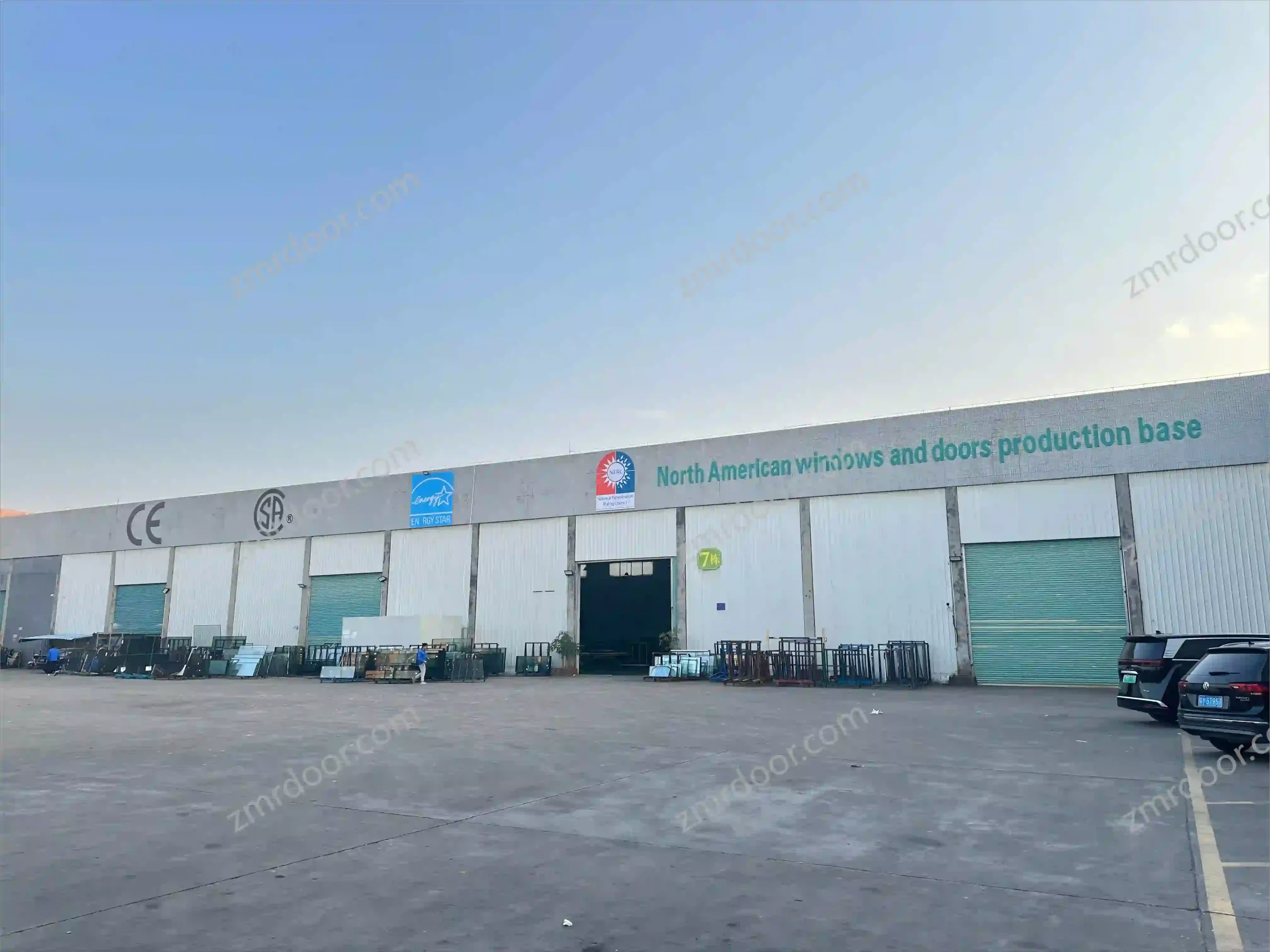
Export-Grade Aluminium & Composite Door Systems
Engineered for high-end architectural developments, luxury villas, and commercial real estate projects worldwide. Below are our flagship customizable fenestration products.
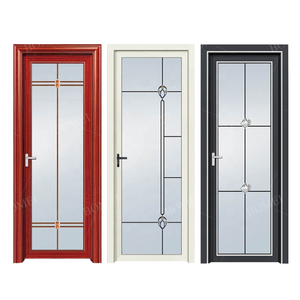
Modern Style 79x32 Aluminum Alloy Tempered Frosted Glass Door Waterproof for Interior Bathroom Use
Send an Inquiry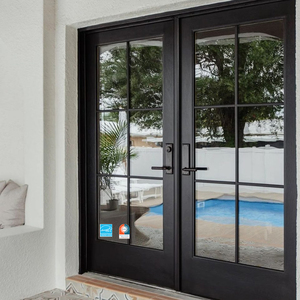
AMJ NFRC Certified High-Performance Double Glazed USA Swing Aluminium French Casement Door
Send an Inquiry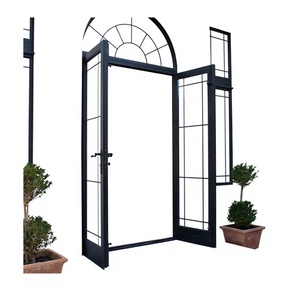
Modern Villa Entrance French Swing Aluminium Door with Integrated High-Density Fiberglass Mesh
Send an Inquiry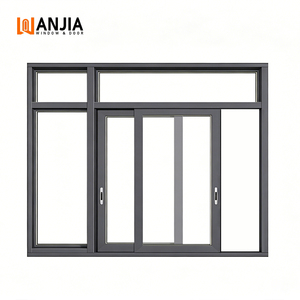
WANJIA Heavy-Duty Hurricane Impact-Resistant Architectural Aluminium Sliding System
Send an Inquiry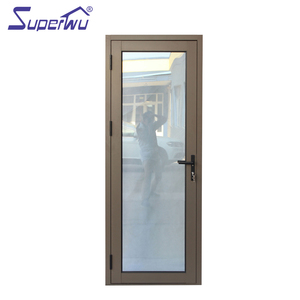
NOA Code Compliant Unbreakable Glass Security Hinge Door with Structural Security Grill
Send an Inquiry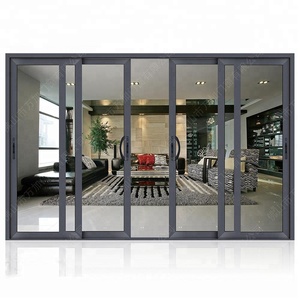
WANJIA Ultra-Slim Frame Luxury Interior Glass Partition & Acoustic Sliding Door System
Send an Inquiry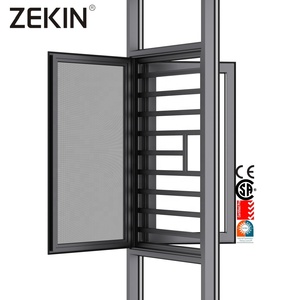
Florida HVHZ Hurricane Certified Thermal Break Aluminium Casement Project System
Send an Inquiry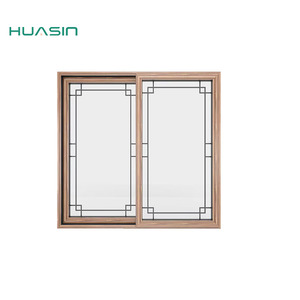
Huasin NFRC & CE Approved Thermal Aluminium-Clad Wood Double-Track Patio Sliding Door
Send an InquiryExecutive Whitepaper: The Evolution of China's Aluminium Composite Fenestration Ecosystem
In the contemporary landscape of global facade engineering and residential architecture, the global demand for high-performance fenestration has elevated China—specifically the Nanhai District of Foshan—into the undisputed epicenter of architectural extrusion, surface treatment, and composite door manufacturing. Sourcing fenestration products from leading Chinese exporters requires an in-depth understanding of material science, structural load dynamics, and international building codes. This technical guide synthesizes structural engineering parameters, thermal barrier physics, and procurement strategies to assist project developers, general contractors, and facade consultants in optimizing their supply chain decisions.
1. Metallurgical Profiles & Composite Material Engineering
At the core of top-tier composite door systems lies the structural aluminum profile framework. Leading Chinese exporters utilize primary aluminum billet 6063-T5 or 6063-T6 alloy, engineered to precise tolerances under ASTM B221 standards. Unlike recycled aluminum scraps that introduce micro-inclusions and brittle phase points, primary 6063-T6 offers superior yield strength (≥210 MPa) and tensile strength (≥240 MPa), providing the necessary rigidity for massive, full-height patio doors and high-wind load entrance systems.
Composite doors seamlessly merge distinct materials to achieve multi-functional thermal, structural, and aesthetic characteristics:
- Aluminium-Wood Composites (Alu-Clad): Integrates external weather-resistant extruded aluminum profiles with internal solid furniture-grade timber (such as Red Oak, Larch, or Teak). The aluminum exterior handles solar radiation, precipitation, and thermal expansion, while the interior timber provides natural insulation and high-end aesthetic warmth.
- Thermal Break Polyamide Integration: High-performance composite systems feature multi-cavity structural breaks powered by PA66GF25 (Polyamide 66 reinforced with 25% glass fiber). This material matches the coefficient of thermal expansion of aluminum (2.3 × 10⁻⁵/K), ensuring structural integrity under radical ambient temperature fluctuations from -30°C to +80°C without delamination or shear failure.
- Composite Security Cores: Security-focused composite doors utilize high-density polyurethane (PU) foam cores enclosed by dual aluminum skins and internal stainless-steel anti-burglary plates, yielding acoustic attenuation up to STC 45 dB and superior impact damping.
2. Thermal Insulation Physics & Glazing Technologies
Building energy codes (such as IECC in the United States, Title 24 in California, and Eurocode EN 10077) mandate rigorous Thermal Transmittance metrics (U-factors). Leading Chinese composite door factories meet these standards by integrating advanced Insulated Glass Units (IGU) into thermal-break frames.
| Glazing Configuration | U-Factor (W/m²·K) | SHGC Range | Sound Transmission (STC) | Target Climate Zone |
|---|---|---|---|---|
| Double Glaze (5mm + 12Ar + 5mm) Low-E | 1.6 - 1.8 | 0.30 - 0.45 | 32 - 35 dB | Moderate / Temperate Zones |
| Triple Glaze (5mm + 12Ar + 5mm + 12Ar + 5mm) Dual Low-E | 0.8 - 1.1 | 0.22 - 0.35 | 38 - 42 dB | Severe Cold / Sub-Zero Regions |
| Laminated Acoustic IGU (6mm + 1.52PVB + 6mm + 14Ar + 6mm) | 1.3 - 1.5 | 0.28 - 0.38 | 42 - 48 dB | Urban Centers / Airport Noise Belts |
| Hurricane Impact IGU (6mm Temp + 12Ar + 6mm + 2.28SGP + 6mm) | 1.4 - 1.6 | 0.25 - 0.32 | 40 - 45 dB | Coastal HVHZ / Typhoon Zones |
Thermal efficiency is enhanced through warm-edge spacers (such as Technoform or Swisspacer) containing desiccant matrix beads, replacing traditional aluminum spacers that create thermal bridges around the glass perimeter. Argon gas filling (≥90% concentration) reduces convective heat transfer across glass cavities.
3. Surface Finishing Engineering & Anti-Corrosion Longevity
Exporters serving coastal environments (e.g., Florida, Caribbean, Gulf Region, Australia) must employ advanced surface treatment technologies to prevent filiform corrosion and salt spray degradation:
Fluorocarbon PVDF Coating
Formulated with 70% Kynar 500 / Hylar 5000 resin. Passes AAMA 2605 testing, guaranteeing resistance to chalking, color fading, and chemical erosion for up to 30 years in harsh marine climates.
Architectural Powder Coating
Compliant with Qualicoat Class 2 and AAMA 2604 standards. Utilizes electrostatic application of TGIC-free polyester resins to create scratch-resistant finishes available in full RAL color spectra.
Anodizing & Electro-Coating
Electrolytic anodization producing oxide layer thicknesses ≥25 microns (Class I). Provides metallic luster with extreme resistance to abrasive physical wear.
Global Procurement & Architectural Design Trends (2025–2030)
The architectural fenestration sector is experiencing key paradigm shifts driven by stringent environmental policies, smart home infrastructure, and minimalist architectural styles.
1. Ultra-Slim Sightline Minimalist Systems
Architectural demand is moving rapidly away from bulky frame profiles toward ultra-narrow visible mullions (15mm to 25mm interlocks). High-end Chinese manufacturers leverage high-modulus structural silicones (such as Dow Corning 995) to create structural glass-wall systems that maximize day-lighting while maintaining structural load integrity under high wind pressures.
2. Smart Home & Biometric Access Integration
Next-generation composite doors directly integrate motorized multi-point locking gear, 3D facial recognition, hidden fingerprint sensors, and home automation protocols (Zigbee, Matter, Z-Wave). European multi-point hardware brands (e.g., Siegenia, Roto, HOPPE) are integrated into Chinese manufacturing lines to combine luxury tactile ergonomics with automated security access control.
3. Net-Zero Energy & Passivhaus Standard Compliance
With stringent global building regulations aimed at carbon neutrality, composite door profiles incorporate specialized low-density insulating foam infills (e.g., Aerogel insulation or expanded polyurethane) within internal profile cavities. This allows composite doors to achieve Passivhaus-certified thermal transmittance thresholds (Uw ≤ 0.8 W/m²·K).
4. Circular Economy & Low-Carbon Primary Aluminium
Global procurement teams prioritize vendors adhering to Environmental Product Declarations (EPD) and ASI (Aluminium Stewardship Initiative) certifications. Forward-thinking Chinese factories run on hydroelectric power profiles with low embodied carbon emissions (<4.0 kg CO2/kg Al), assisting developers in meeting LEED Platinum and BREEAM certifications.
Why Partner with Leading Chinese Manufacturers & Exporters
Navigating direct-factory sourcing requires understanding vendor capabilities, quality management frameworks, and international compliance protocols. Reputable Chinese exporters leverage complete industrial supply chains to deliver uncompromised architectural solutions at scale.
Precision CNC & Automated Assembly
Equipped with 5-axis German-made CNC machining centers (e.g., Elumatec), leading factories achieve corner mitering tolerances within ±0.2mm. Automated corner crimping with dual-component structural epoxy glue ensures zero joint water leakage and high frame corner shear strength.
Rigorous International Certifications
Export-ready products carry verified test documentation including NFRC (Thermal energy performance), Florida NOA / TAS 201, 202, 203 (Large Missile Impact testing for HVHZ zones), CE Mark (EN 14351-1), and AS2047 / AS1288 (Australian standard for acoustic, water penetration, and deflection performance).
Export Logistics & Protection Packaging
To ensure 100% damage-free overseas transit, items are prepared using a 5-layer protective protocol: protective peel-off surface film, corner edge guards, shock-absorbing EPE foam wrapping, vacuum plastic sealing, and fully enclosed IPPC-stamped fumigated steel-reinforced plywood crates.
Frequently Asked Questions by Global Buyers & Engineers
Q: What is the standard minimum order quantity (MOQ) for custom project orders?
Because every fenestration unit is custom-manufactured based on architect CAD/BIM shop drawings, our factory supports project-based orders starting at 10 square meters for prototype samples or luxury single-villas. For distributors and dealers, full container loads (20GP / 40HQ) offer optimal ocean freight cost efficiency.
Q: How do thermal break aluminium composite doors prevent condensation?
Condensation occurs when warm interior air contacts a cold thermal surface. By embedding a PA66GF25 polyamide thermal barrier strip between the interior and exterior aluminum extrusion profiles, the interior frame temperature stays close to room temperature, raising the dew point threshold and eliminating frame sweating and interior mold growth.
Q: Can Chinese exporters supply hurricane impact-rated doors matching Florida NOA codes?
Yes. Our impact-resistant series utilizes heavy-gauge aluminum profiles (wall thickness ≥ 2.5mm to 3.0mm) paired with SGP (SentryGlas Interlayer by Kuraray) laminated glass. These units successfully pass ASTM E1886/E1996 and TAS 201/203 missile impact tests, withstanding 9-lb 2x4 timber cannon impacts at 50 ft/s and cyclic wind pressures up to ±100 PSF.
Q: What is the expected manufacturing lead time after CAD drawing sign-off?
Standard production lead times range between 25 to 35 calendar days following technical drawing confirmation and deposit receipt. Specialized architectural finishes (such as custom PVDF colors or specialized anodizing) or custom glass imports (such as Smart Electrochromic glass) may adjust lead times to 40 days.
Q: How are structural shop drawings and BIM models handled prior to production?
Our dedicated in-house facade engineering team prepares comprehensive AutoDesk CAD elevations, cross-sectional connection details, anchor bolt structural calculations, and 3D Revit BIM models. Production does not start until the client's project architect, structural engineer, or general contractor provides written approval on shop drawings.
Q: What hardware brands are configured with your composite door systems?
We offer flexibility in hardware sourcing. Options include premier European hardware systems (such as German Roto, Siegenia, GU, HOPPE and Italian Giesse) for premium projects, alongside high-grade top-tier domestic hardware (CMECH, Kin Long) backed by 10-year mechanical operational warranties.
Ready to Engineer Your Next Project's Fenestration Solution?
Connect directly with our senior structural engineers and global export managers. Receive customized shop drawings, thermal energy calculations, and competitive factory-direct wholesale pricing within 24 hours.
Send an Inquiry