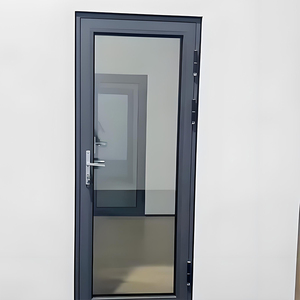
Engineering Authority: Selecting Top China Aluminium Clad Door Manufacturers
An Industry White Paper for Architects, General Contractors, Importers, and Commercial Fenestration Specifiers
In modern architectural engineering, the exterior envelope must reconcile two historically conflicting imperatives: structural weather resistance against extreme thermal cycling and refined interior aesthetic luxury. Standard uninsulated aluminum fenestration systems often fail to satisfy stringent energy conservation codes due to high thermal conductivity ($\lambda \approx 200 \text{ W/m}\cdot\text{K}$). Conversely, solid timber frames demand persistent maintenance and present structural vulnerabilities when directly exposed to ambient humidity, UV radiation, and driving rain.
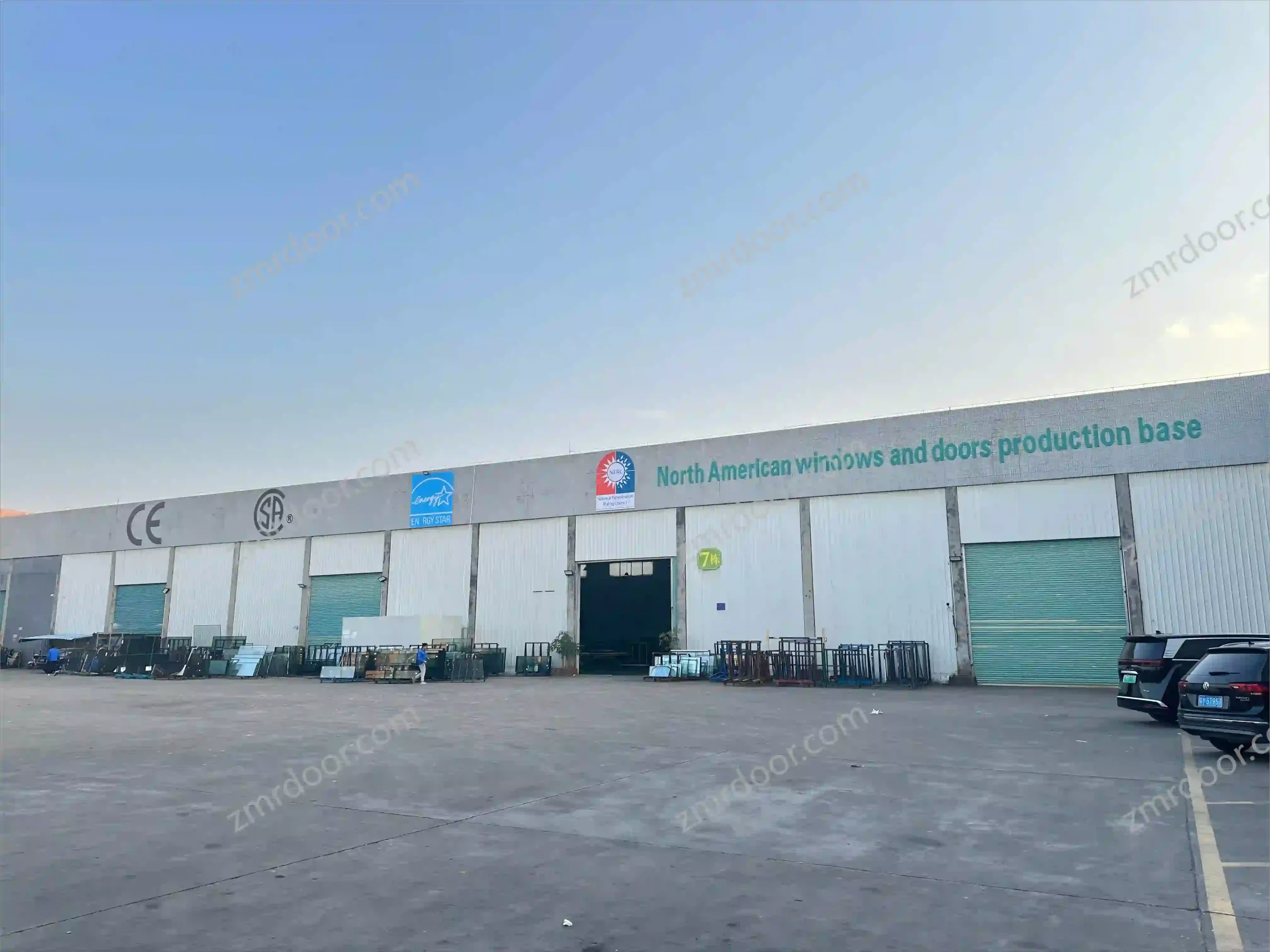
The solution lies in Aluminium Clad Doors (and wood-aluminum hybrid systems). By pairing structural, powder-coated exterior aluminum extrusions with natural, precision-crafted solid wood interior profiles—separated by high-density polyamide thermal breaks—manufacturers create a composite fenestration barrier capable of exceptional thermodynamic performance, acoustic dampening, and structural longevity. China, and specifically the Foshan Shishan Nanhai industrial cluster, has emerged as the global epicenter for precision aluminum clad door engineering, extrusion technology, and export-grade fabrication.
"Information Gain Insight: True architectural-grade aluminium clad doors rely on independent floating-clip connection systems rather than rigid structural bonding. This allows differential thermal expansion ($\alpha_{\text{Aluminium}} = 23 \times 10^{-6}/\text{K}$ versus $\alpha_{\text{Wood}} = 5 \times 10^{-6}/\text{K}$) without frame warping or seal rupture."
Core Technical Innovations in Modern Alu-Clad Fenestration
Key Structural and Materials Engineering Differentiators in OEM/ODM China Factories
Extrusion Alloy Integrity
Utilizing primary architectural aluminum alloy 6063-T5/T6 with profile wall thicknesses exceeding 2.0mm to 3.0mm. Provides superior structural moment of inertia, resisting deflection under extreme wind loads (ASTM E330).
PA66-GF25 Thermal Breaks
Integrated 24mm to 34mm multi-cavity Polyamide 66 reinforced with 25% glass fiber. Dramatically lowers thermal transmittance, preventing condensation and reducing overall door U-factors below $1.0 \text{ W/m}^2\text{K}$.
Advanced Surface Treatments
Exterior profiles undergo AAMA 2604 / AAMA 2605 compliant PVDF fluorocarbon spraying or hard-anodizing, delivering 25+ year resistance against salt spray corrosion, fading, and intense UV degradation.
Insulated Glazing Units (IGU)
Double and triple-pane tempered safety glass options featuring Low-Emissivity (Low-E) coatings, Warm-Edge TPS/Swisspacer technology, and 90%+ Argon gas fill for acoustic dampening up to 45 dB.
Enterprise Advantage: Why Foshan Aluminium Clad Door Manufacturers Lead Global Markets
When global developers, architectural firms, and fenestration importers source custom doors from China, their primary evaluation criteria extend beyond base price per square meter. The true measure of supplier authority lies in manufacturing infrastructure, quality control systems, standard compliance (CE, NFRC, AS2047, CSA), and raw material supply chain integration.
1. Complete In-House Manufacturing Ecosystem
Leading Foshan enterprises control the entire production cycle within single or clustered facilities. From profile cutting on automated double-head precision saws to CNC milling of multi-point hardware mortises, corner crimping, continuous EPDM gasket insertion, and structural glass glazing—every process operates under ISO 9001 certified quality control management. Eliminating third-party processing minimizes cumulative dimensional tolerances to within ±0.5mm.
2. Precision Timber Kiln-Drying & Moisture Control
The internal timber cladding of an aluminum clad door—whether engineered White Oak, Larch, Black Walnut, or Teak—is vulnerable to warping if internal moisture content is uncalibrated. Premium Chinese manufacturers utilize automated vacuum kiln dryers to stabilize timber moisture levels precisely between 8% and 12%. Combined with finger-jointed laminated wood construction and eco-friendly water-based AkzoNobel wood coatings, the timber interior retains dimension stability under diverse ambient climates.
3. Structural Hardware & Multi-Point Security Integration
Door weight in heavy-duty aluminum clad systems frequently exceeds 150kg to 300kg per sash. Leading factories partner directly with premier hardware systems (such as German Siegenia, Hoppe, GU, and Roto) alongside top-tier custom stainless steel pivot systems. Multi-point locking mechanisms clamp sashes firmly against continuous EPDM weather strips, achieving maximum air tightness (Class 4 EN 12207) and water permeability protection (Class E900 EN 12208).
Technical Specification Matrix: Door Systems Comparison
Engineering Performance Benchmarks for B2B Fenestration Procurement
| System Classification | Thermal Transmittance (U-Value) | Acoustic Rating (STC/Rw) | Wind Load Resistance | Primary Application Field |
|---|---|---|---|---|
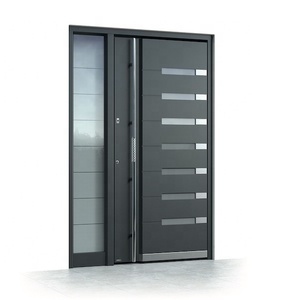
| Aluminium Clad Solid Wood Doors | 0.85 – 1.2 W/m²K | 40 – 45 dB | Class 5 (P3 ≥ 5000 Pa) | Luxury Villas, Passive Houses, Cold Climates |
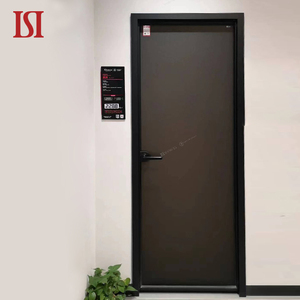
| Thermal Break Aluminium Swing Doors | 1.3 – 1.8 W/m²K | 35 – 40 dB | Class 4 (P3 ≥ 4000 Pa) | High-Rise Balconies, Modern Residential |
| Minimalist Slim-Frame Glass Sliding Doors | 1.5 – 2.2 W/m²K | 32 – 38 dB | Class 4 (P3 ≥ 3500 Pa) | Patio Enclosures, Luxury Commercial Resorts |
| Heavy-Duty Lift & Slide Alu-Clad Doors | 1.0 – 1.4 W/m²K | 38 – 43 dB | Class 5 (P3 ≥ 4500 Pa) | Panoramic Walls, Penthouse Terraces |
| Impact-Resistant Architectural Pivot Doors | 1.4 – 1.9 W/m²K | 36 – 42 dB | High Velocity Hurricane Zone (HVHZ) | Grand Main Entrances, Luxury Estates |
Future Procurement Trends in Aluminium Clad Fenestration (2025–2030)
As international energy codes (such as Europe's EPBD directives and North American IECC mandates) impose increasingly stringent carbon footprint standards on new building constructions, the global fenestration supply chain is undergoing structural shifts. Procurement directors and project buyers are actively leveraging key trends when engaging Chinese manufacturers:
1. Ultra-Slim Sightlines with Concealed Structural Frames
Modern architectural design favors maximum daylight autonomy and unobstructed view corridors. Next-generation aluminium clad doors integrate ultra-thin interlock profiles (as narrow as 20mm to 25mm) while concealing the outer aluminum frame entirely within the architectural wall cavity. This aesthetic refinement demands elevated structural modulus from the aluminum extrusions to withstand lateral wind loads without deflection.
2. Vacuum Insulated Glass (VIG) Integration
While traditional double-pane IGUs rely on 12mm to 16mm argon gas gaps, Vacuum Insulated Glass (VIG) achieves equivalent or superior thermal resistance ($U \le 0.4 \text{ W/m}^2\text{K}$) within a total glass profile of just 8mm to 10mm. Leading Chinese factories are incorporating VIG technology into aluminum clad sashes, dramatically decreasing total sash weight, reducing hinge wear, and enabling unprecedented sash dimensions.
3. Smart Access Automation & Integrated Micro-Ventilation
B2B procurement schedules increasingly request factory-installed motorized actuator systems, biometrical fingerprint scanners, RFID sensors, and smart home bus integration (KNX, Zigbee). Concealed magnetic sensors and automated trickling micro-ventilation slots allow controlled ambient air exchange without compromising structural multi-point perimeter locks or acoustic seals.
4. Sustainable Sourcing & Circular Economy Compliance
Environmental Product Declarations (EPD) and chain-of-custody timber certifications (FSC / PEFC) are becoming mandatory in Western import markets. Forward-thinking Foshan factories utilize low-carbon recycled aluminum billets smelted using hydroelectric power alongside responsibly harvested timber, providing full lifecycle carbon transparency for LEED and BREEAM certified developments.
B2B Importer's Verification Checklist for Chinese Door Suppliers
Mitigating Quality Risks in Overseas Sourcing and Custom Production
1. Drawing Sign-Off Protocol
Ensure the manufacturer produces complete 2D/3D shop drawings detailing cross-sectional profile geometry, wall connection flashings, drainage paths, glass bite depths, and hardware installation points prior to production release.
2. Mock-Up & Pre-Shipment Trial Assembly
Require 100% trial assembly of custom door units in the factory. Verify corner joint flushness, sash-to-frame diagonal tolerances (≤ 1.5mm), smooth roller operation, and latch engagement before crating.
3. Export Packaging Standards
Glass and finished profiles must be protected with protective film, foam corner wraps, moisture-absorbing desiccant, and fully enclosed, non-fumigation plywood crates with internal steel banding to endure maritime transits.
Frequently Asked Questions (FAQ) for Global Buyers
Direct Answers from Engineering & Export Logistics Teams