Engineered Architectural Fenestration Systems
Explore factory-direct thermal break aluminum doors and windows certified to European and international structural performance standards.
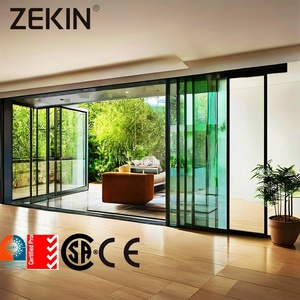
B2B Technical Whitepaper: Engineering CE-Certified Kitchen Fenestration
An authoritative analysis on profile metallurgy, structural dynamics, thermal breaking, and compliance frameworks for commercial and residential developments.
Kitchen environments represent one of the most demanding fenestration micro-climates in modern architectural engineering. Unlike standard living area fenestration, kitchen windows must continuously manage localized thermal shocks, elevated relative humidity, heavy aerosolized grease, organic airborne compounds, and stringent air-exchange mandates. For global procurement directors, real estate developers, and commercial contractors, sourcing CE-certified aluminum kitchen windows from qualified original equipment manufacturers (OEMs) is not merely a matter of aesthetic selection—it is a critical compliance and envelope-performance strategy.
The European Harmonized Standard EN 14351-1 dictates structural, thermal, and safety prerequisites for exterior pedestrian doorsets and windows. When importing kitchen window systems from major manufacturing hubs such as Foshan, Guangdong, engineering teams must evaluate structural load resilience, thermal break continuity, glazing acoustics, and hardware cycling durability against European Norms (EN), North American Fenestration Standard (NAFS/AAMA), and Australian Standards (AS 2047).
Core Information Gain: Technical Procurement Insight
Standard architectural aluminum profiles without PA66 polyamide insulation suffer from high thermal bridge coefficients ($U_f > 5.8 \text{ W/m}^2\text{K}$). Specify micro-chambered 6063-T6 extrusions with reinforced PA66-GF25 (25% glass fiber reinforced polyamide) structural breaks to lower frame thermal transmittance ($U_f$) below $1.6 \text{ W/m}^2\text{K}$, eliminating kitchen envelope condensation risks.
Future Procurement & Development Trends (2025–2030)
Key technological shifts driving global supply chain specs for residential and commercial kitchen fenestration.
Near Zero Energy (NZEB) Integration
Global building codes increasingly require ultra-low energy dissipation. Next-generation kitchen windows utilize triple-glazing with warm-edge composite spacers (e.g., Technoform) and Argon gas fill (90%+ concentration), yielding overall window values ($U_w \le 0.8 \text{ W/m}^2\text{K}$).
Smart Actuation & Smoke Sensor Venting
Modern kitchen fenestration is evolving from manual latching to automated chain-actuated micro-ventilation. Integrated linear drives sync with smart kitchen hoods and carbon monoxide/smoke sensors to clear airborne particulates autonomously.
Ultra-Slim Sightlines & Maximum Daylight
Architectural demand favors minimalist frame-to-glass ratios. Interlock sightlines on sliding kitchen stackers are shrinking to under 20mm using structural silicone bonding (IGU load integration), maximizing ambient illumination without sacrificing wind pressure resistance.
CE Technical Performance & Engineering Benchmark Matrix
Standardized physical testing values according to European Norms (EN) for high-end aluminum kitchen windows.
| Performance Criterion | European Test Standard | Achieved Classification / Value | Engineering Significance |
|---|---|---|---|
| Air Permeability | EN 12207 | Class 4 ($600 \text{ Pa}$) | Prevents infiltration of external drafts, dust, and pressure leakage. |
| Watertightness | EN 12208 | Class E1050 ($1050 \text{ Pa}$ static pressure) | Ensures zero water penetration under tropical storm conditions. |
| Wind Load Resistance | EN 12210 | Class C5 ($\Delta p = 2000 \text{ Pa}, \text{Deflection} < 1/300$) | Guarantees structural integrity on high-rise residential towers. |
| Thermal Transmittance ($U_w$) | EN ISO 10077-2 | $1.1 - 1.4 \text{ W/m}^2\text{K}$ (Double Low-E Argon) | Reduces building HVAC power consumption significantly. |
| Acoustic Insulation | EN ISO 140-3 | $38 \text{ dB} - 44 \text{ dB}$ ($R_w + C_{tr}$) | Attenuates urban noise using asymmetric laminated glazing. |
| Operating Force & Hardware Cycle | EN 13115 / EN 1191 | Class 2 / 25,000 Repeated Opening Cycles | Ensures multi-year mechanism reliability under heavy usage. |
Material Science: Alloy Selection & Surface Treatment Chemistry
Aluminum frame durability relies entirely on chemical composition and heat treatment. Premium OEM factories utilize primary 6063-T5 or 6063-T6 aluminum billet. Standard recycled scrap aluminum containing iron impurities ($\text{Fe} > 0.35\%$) leads to micro-cracking during CNC extrusion and poor anodic oxidation consistency.
For kitchen applications, surface finish selection dictates resistance to localized chemical attack from airborne grease, vinegar, and detergent vapor:
- Qualicoat Class 2 Powder Coating: Fluoropolymer or super-durable polyester coatings offering superior UV protection and chemical inertness against kitchen aerosols. Minimum dry film thickness: $60-80 \mu\text{m}$.
- Anodizing (ISO 7599 Class AA15/AA20): Creates an integral aluminum oxide layer ($15-20 \mu\text{m}$) immune to filiform corrosion and edge blistering in hot, humid cooking environments.
- PVDF (Polyvinylidene Fluoride) 3-Coat Finishes: Recommended for severe coastal environments, delivering extraordinary resistance to salt spray (ASTM B117 pass $> 3000 \text{ hours}$).
Glazing Science & Thermal Physics in Kitchen Environments
Kitchens experience high moisture emission during food preparation. If frame glass surface temperatures drop below the dew point, condensation forms, fostering black mold growth along silicone seals. CE-certified kitchen window engineering addresses this thermal breakdown via multi-pane configurations:
Condensation Mitigation Physics
By pairing double-glazed insulating units ($6\text{mm} \text{ Tempered} + 12\text{Ar} + 6\text{mm} \text{ Low-E}$) with warm-edge butyl/silicone matrix spacers, the internal glass surface temperature remains within $3^\circ\text{C}$ of ambient room temperature, effectively preventing moisture deposition even at $85\%$ indoor relative humidity.
Safety Glazing (EN 12600 & EN 12150)
All kitchen glazing specified near countertops or cooking elements must feature fully tempered toughened glass or laminated safety glass. Tempered glass possesses a surface compression strength exceeding $90 \text{ MPa}$, rendering it thermal-stress resilient up to $250^\circ\text{C}$ temperature gradients.
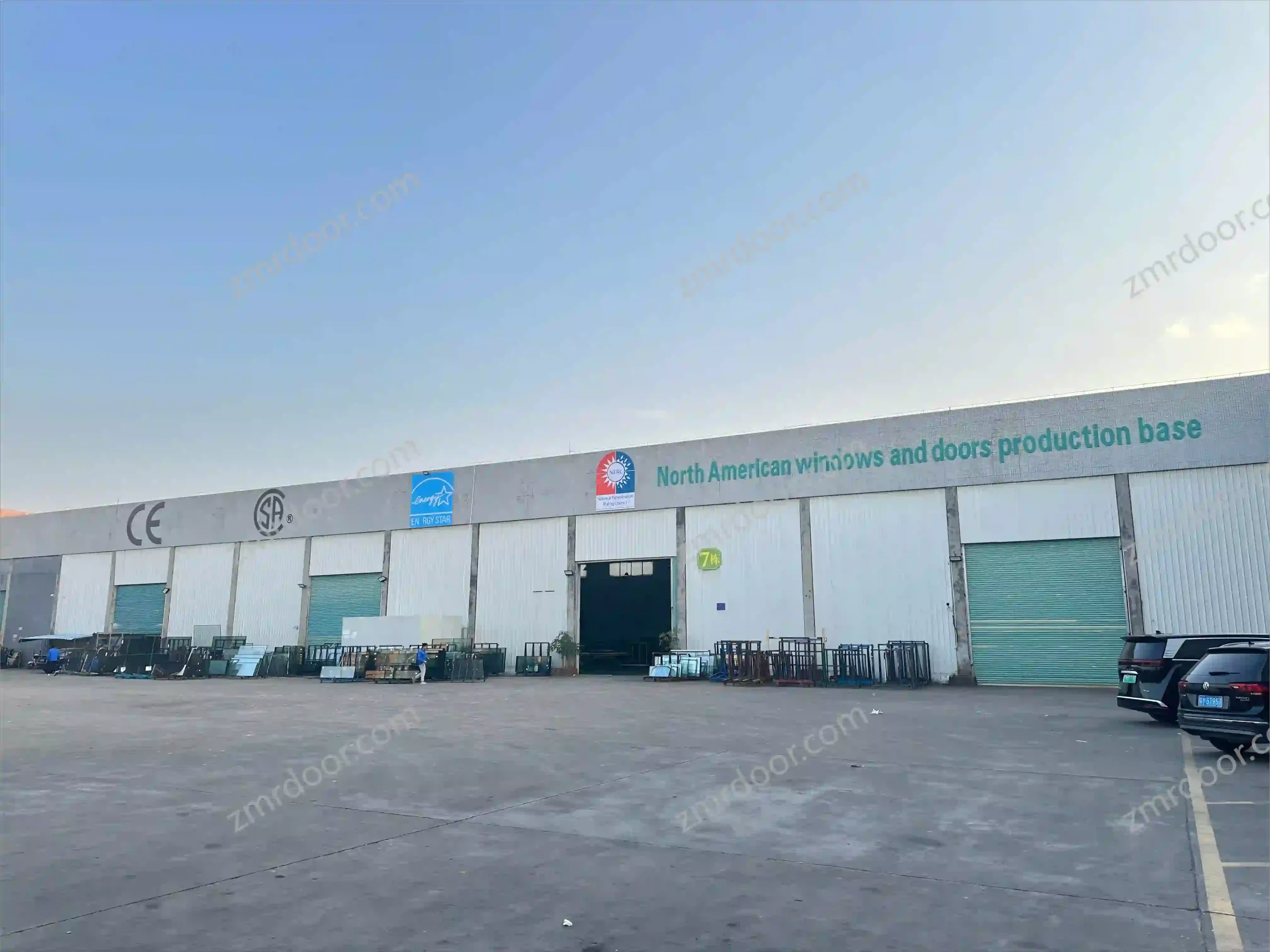
OEM/ODM Manufacturing Infrastructure: The Foshan Advantage
Leveraging deep industrial cluster integration to deliver precision engineered fenestration to international project sites.
Precision CNC Fabrication
Our Foshan manufacturing center utilizes multi-axis automated double-head cutting saws and CNC machining centers. Profile length tolerances are controlled within $\pm 0.5\text{mm}$, ensuring liquid-tight corner joints and exact hardware mortising.
Hydraulic Corner Crimping & Injection
All frame corners undergo dual-component polyurethane adhesive injection combined with heavy-duty cast aluminum corner cleats. Hydraulic crimping guarantees seamless mechanical joints capable of handling high wind pressures.
Export Packaging & Logistics
Each custom unit is individually wrapped in protective poly-film, fitted with heavy EPE corner guards, and loaded into fumigated, steel-banded plywood crates to eliminate transit damage during ocean freight.
Global B2B Procurement Protocol & Verification Checklist
A rigorous audit guideline for project managers and importers sourcing aluminum windows from Chinese suppliers.
Phase 1: Pre-Production Engineering Audits
- Shop Drawing Approval: Verify elevation drawings, section details, anchor placement, and drainage hole locations.
- Alloy Traceability: Request mill test certificates (MTC) verifying 6063-T5/T6 composition compliance.
- Thermal Break Audit: Ensure thermal strip brand is authentic PA66-GF25 (e.g., Technoform or Huafon) and not sub-standard PVC.
Phase 2: Factory Acceptance Testing (FAT)
- Dimensional QC: Measure frame diagonal variances (maximum allowable skew $\le 2.0\text{mm}$).
- Hardware Functionality: Conduct minimum 50-cycle manual opening, locking multi-point gear engagements.
- Water Penetration Spray Test: Perform localized water jet spraying on frame corner joints and weather-strip overlaps.
Frequently Asked Procurement Questions (FAQ)
Clear, direct answers regarding technical compliance, custom orders, logistics, and factory capabilities.
What specific CE testing documentation is provided with your kitchen window shipments?
Every shipment is accompanied by a formal Declaration of Performance (DoP) under the Construction Products Regulation (CPR 305/2011) and EN 14351-1:2006+A2:2016. Initial Type Testing (ITT) reports issued by accredited notified testing bodies cover air permeability, water tightness, wind load resistance, and thermal transmittance calculations ($U_w$).
What is the minimum order quantity (MOQ) for custom project-based procurement?
Because every commercial or residential development requires distinct window schedules and dimensions, we operate on a project-basis rather than strict piece minimums. Our practical minimum order starts at 50 square meters, allowing consolidated container shipping. We also cater to full 20GP/40HQ container dealer orders.
How do thermal break aluminum kitchen windows compare with PVC/uPVC frames?
While uPVC offers reasonable baseline insulation, structural aluminum provides significantly higher tensile yield strength ($> 160 \text{ MPa}$ vs uPVC's $\sim 40 \text{ MPa}$). Aluminum allows slimmer frame profiles, larger uninterrupted glass sashes, superior fire rating performance, non-yellowing UV resistance, and an extended service lifespan exceeding 40 years in harsh kitchen environments.
Can you manufacture windows tailored to hurricane zones or high-rise wind loads?
Yes. For coastal or hurricane-prone regions (such as Florida Miami-Dade or Caribbean zones), we engineer structural frames using reinforced aluminum wall thicknesses up to 2.5mm, laminated impact-resistant glass ($6\text{mm} + 1.52\text{PVB/SGP} + 6\text{mm}$), and multi-point heavy-duty stainless steel (316 grade) locking hardware rated for extreme design pressure ($DP \ge 70 \text{ PSF}$).
What hardware brands are integrated into your custom kitchen window systems?
We partner with premier global fenestration hardware manufacturers, including Siegenia, Hoppe, Roto, and G-U (Germany), as well as top-tier domestic brands like Kin Long and CMECH. Hardware configurations are fully customized according to project budget and operational requirements.
How are export shipments packaged to guarantee damage-free sea freight delivery?
Our standardized export packing protocol involves four protective layers: 1) Protective anti-scratch surface film, 2) EPE foam wrapping, 3) Rigid corner protectors, and 4) Fully enclosed non-coniferous fumigated plywood crates equipped with forklift entry skids and internal timber bracing.
Ready to Request Engineering Specifications & Factory Quotes?
Connect directly with our Foshan engineering and procurement team. Submit your window schedules, CAD drawings, or project specifications for immediate technical review and competitive factory-direct pricing.
Inquire Now