Factory Direct Portfolio
High-Performance Aluminium Door & Window Systems
Explore our export-grade fenestration collection engineered for residential, commercial, and architectural projects worldwide.
Industry Whitepaper
Engineering Standards for CE Certified Aluminium Jali Door Systems
An exhaustive guide for international B2B buyers, project developers, contractors, and fenestration importers evaluating high-security decorative mesh door systems.
What is an Architectural Aluminium Jali Door?
An Aluminium Jali Door (also known as an aluminum security mesh door, laser-cut grill door, or ornamental perforated fenestration panel) integrates heavy-duty extruded aluminum framing with intricate, machine-cut or high-tensile stainless/aluminum mesh inserts. Unlike traditional mild steel or iron grills susceptible to oxidation, aluminum Jali doors deliver superior structural integrity, natural corrosion immunity, lightweight operability, and refined architectural aesthetics.
From modern luxury villas in humid tropical zones to high-traffic commercial complexes in coastal Europe, CE certified aluminium Jali door systems serve as an indispensable multi-functional barrier—providing forced-entry protection, pest isolation, natural ventilation, and solar shading without compromising visual transparency.
Mandatory CE Certification & European Norm Compliance
For exporters and manufacturers supplying the European Single Market and global territories recognizing EU building codes, CE Certification under EN 14351-1 is legally mandatory. This standard specifies material durability, dangerous substance non-emission, structural safety, and environmental protection performance.
- Air Permeability (EN 12207): Classifies airflow resistance under positive and negative pressures up to 600 Pa.
- Water Tightness (EN 12208): Verifies frame drainage capacity against driving rain up to Class E900 (900 Pa test pressure).
- Wind Load Resistance (EN 12210): Ensures frame deflection remains under 1/300th of the span during extreme wind storms (Class P3/C5 load rating).
- Burglar Resistance (EN 1627 to EN 1630): Classifies resistance to physical intrusion from Class RC2 to RC4 using multi-point locking rods and tamper-proof Jali mesh attachments.
Comparative Technical Analysis: Fenestration Barrier Materials
When procuring entrance, balcony, or security doors for commercial projects, engineering buyers must evaluate lifecycle costs, structural behavior, and thermal compliance. The table below contrasts industrial-grade Aluminium Jali doors against conventional fenestration grill solutions.
| Performance Metric | Aluminium Jali Door (CE Certified) | Stainless Steel Security Mesh | Traditional Wrought Iron Grill | uPVC Frame with Mesh Insert |
|---|---|---|---|---|
| Base Material Alloy | Extruded Aluminium 6063-T5 / 6063-T6 | SUS 304 / 316 Marine Grade Mesh | Low-Carbon Mild Steel / Wrought Iron | Unplasticized Polyvinyl Chloride |
| Corrosion Resistance | Outstanding (Anodized 15µm+ / PVDF) | High (Requires frequent cleaning) | Poor (Prone to rust & paint scaling) | High (Degrades under UV radiation) |
| Structural Weight to Strength Ratio | Very High (Lightweight, low hinge load) | Medium (Requires heavy perimeter frame) | Low (Excessive weight strains hinges) | Low (Subject to thermal sagging) |
| Design Customization | Unlimited (Precision CNC Laser Cutting) | Fixed Grid Pattern (Woven mesh) | Manual Forged (Inconsistent tolerances) | Extremely Limited Standard Shapes |
| Thermal Break Integration | Seamless (Polyamide PA66 Strip Option) | Difficult / Complex Retrofit | Not Possible (Thermal bridge) | Inherent (Weak structural rigidity) |
| CE & EN 14351-1 Compliance | Full Certification Support Available | Partial (Mesh only, rarely full assembly) | Non-Compliant for EU Commercial Builds | Varies (Low structural threshold) |
Strategic Market Intelligence
Future Procurement Trends for Aluminium Jali Doors (2025–2030)
Global architectural hardware sourcing is undergoing systemic shifts driven by strict decarbonization targets, digital building modeling (BIM), and heightened security requirements.
1. Smart Access & Concealed Multi-Point Hardware
Procurement teams are shifting away from surface-mounted locks toward fully integrated, motorized multi-point locking systems embedded within the aluminum profile. Modern aluminum Jali doors now seamlessly interface with biometric access control, smart home automation, and electronic magnetic strikes, providing motorized locking mechanisms that pass rigorous CE RC2 security testing without compromising aesthetic sightlines.
2. Carbon Footprint & Recycled Alloy Traceability
European and North American importers increasingly mandate Environmental Product Declarations (EPDs) alongside CE mark certificates. Sourcing trends favor manufacturers capable of supplying Low-Carbon Primary Aluminium (smelted using hydroelectric power) or post-consumer recycled extrusion billets containing over 75% recycled aluminum, reducing embodied carbon in building facades by up to 60%.
3. Prefabricated Modular & Direct-Fit Assemblies
To reduce expensive on-site skilled labor costs in destination markets, project importers are ordering factory-assembled frame-and-Jali units pre-fitted with gaskets, lock cylinders, hardware rebates, and pre-drilled fixing anchors. Standardized shop drawing workflows and 3D BIM (Building Information Modeling) objects allow flawless drop-in jobsite installation.
R&D & Engineering Evolution
Product Development Trends in Aluminium Jali Technology
Advanced manufacturing technologies are pushing the boundaries of functional fenestration, combining acoustic isolation, thermal optimization, and bespoke laser cutting.
Thermal-Break Dual Core Jali Systems
Traditional screen doors often act as thermal bridges. Next-generation aluminum Jali doors utilize high-density Polyamide 66 (PA66) glass-fiber reinforced thermal barrier strips connecting the outer aluminum Jali framework with the inner insulated glass sash. This dual-core geometry achieves U-values below 1.4 W/m²K, allowing projects in harsh winter or scorching desert climates to meet energy code requirements without sacrificing security screening.
High-Precision CNC Laser Perforation Patterns
Advancements in fiber laser cutting machinery allow aluminum Jali panels to feature complex parametric, geometric, and cultural motif patterns cut into 3mm–6mm solid aluminum sheets. Beyond decoration, laser micro-perforations are engineered to calculated porosity ratios—optimizing acoustic damping (sound transmission reduction up to 35 dB) while acting as precise solar shading (shading coefficient SC 0.42) to cut HVAC cooling loads.
C5-M Ultra-Durable Surface Finishes
Aluminum Jali doors exported to marine, island, or industrial zones require specialized surface treatments. Modern production lines utilize 3-coat 70% Kynar 500 / Hylar 5000 PVDF (Polyvinylidene Fluoride) fluoropolymer liquid coatings or architectural Qualicoat Class 2 super-durable powder coats. These surface treatments withstand over 3,000 hours of continuous salt-spray testing (ASTM B117), resisting chalking, gloss retention loss, and filiform corrosion under tropical UV exposure.
Manufacturing Authority
Enterprise Advantages: Why Partner With Our Foshan Factory
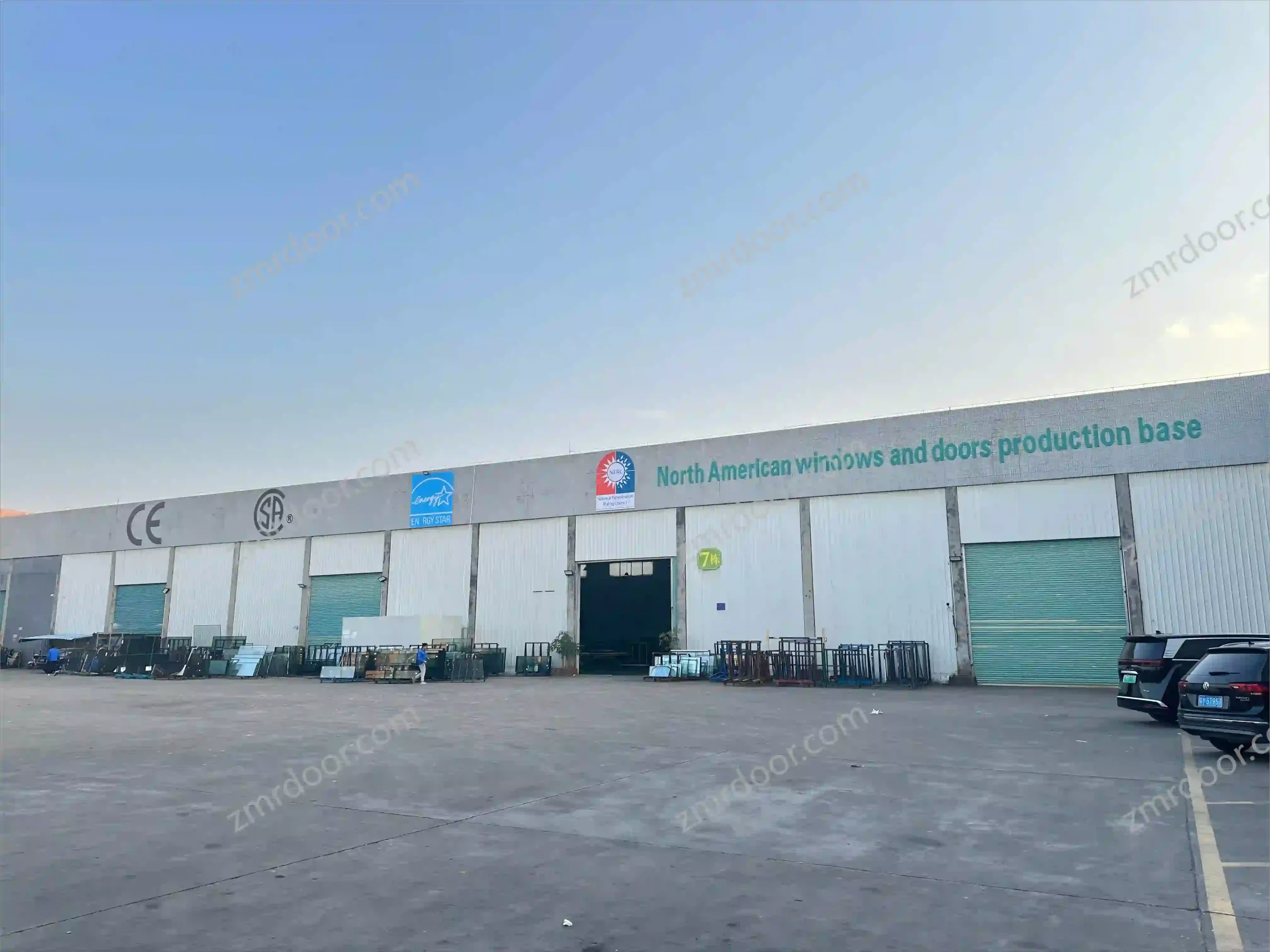
Headquartered in Nanhai District, Foshan—the world's premier cluster for architectural aluminum extrusion—we deliver factory-direct engineering, rigorous quality assurance, and export compliance.
Integrated Supply Chain & Metallurgy
Our strategic position in Foshan provides direct access to primary aluminum billets, custom die extrusions, specialized anodizing lines, and world-class hardware hardware brands (HOPO, Siegenia, Roto). This vertical integration eliminates intermediary markups, ensures consistent metal alloy chemistry, and accelerates production lead times.
100% Pre-Shipment Trial Assembly & Inspection
We enforce strict quality control protocols. Before crating, every aluminum Jali door frame undergoes 100% pre-assembly inspection in our plant. Dimensional accuracy (tolerance within ±0.5mm), corner joint mitre alignment, corner crimping seal integrity, hardware smooth operation, and glass seal fitment are checked and recorded via video logs for buyer approval.
Heavy-Duty Export Packaging & Logistics Cording
Overseas sea freight requires protective packaging engineered to prevent transit damage. Our doors are wrapped with anti-scratch protective film, fitted with impact-resistant corner guards, wrapped in moisture-barrier bubble sheets, and loaded into IPPC-certified fumigated wooden crates labeled with corresponding building floor and opening numbers.
Procurement Guidance
Frequently Asked Questions (FAQ)
Technical answers to common inquiries from international fenestration importers, architects, and project procurement managers.
Q: What documentation is provided to prove CE Certification compliance for Aluminium Jali doors?
A: We provide complete CE conformity documentation, including the Declaration of Performance (DoP) under EN 14351-1, third-party laboratory test reports for wind load, water tightness, air permeability, and initial type testing (ITT) records. Furthermore, factory production control (FPC) audit documentation according to ISO 9001 is made available for commercial project approval.
Q: Can laser-cut aluminum Jali patterns be customized from architect CAD drawings?
A: Yes. Our CNC laser cutting center converts your DWG, DXF, or BIM files into precise cut paths. We can adjust opening perforation ratios to achieve specific daylight transmission percentages, solar heat gain coefficients (SHGC), and privacy privacy requirements while retaining structural frame stability.
Q: How do you handle minimum order quantities (MOQ) for custom project sourcing?
A: Because every aluminum Jali unit is fabricated to exact shop drawings, we support custom project orders as well as full container loads (FCL) for distributors. For mixed container orders, we consolidate aluminum windows, patio doors, and Jali entrance doors to optimize ocean freight economics.
Q: What aluminum alloy grade and wall thickness are used for security Jali door frames?
A: We strictly utilize high-grade 6063-T5 or 6063-T6 architectural aluminum alloy extrusions. Frame structural wall thickness ranges from 1.6mm for standard residential series up to 2.0mm–3.0mm for heavy-duty commercial, high-wind, or large-format entrance doors, ensuring zero structural twisting over time.
Q: What glass specifications can be integrated alongside the outer Jali security screen?
A: Our dual-track and triple-track frames allow inner sash integration with double or triple insulated glass units (IGU). Options include toughened safety glass, laminated hurricane impact glass (PVB/SGP interlayers), Low-E thermal coatings, argon gas fill, and warm-edge spacer bars tailored to your thermal code requirements.
Q: What is the standard lead time from shop drawing confirmation to export loading?
A: Standard manufacturing lead time is 25 to 35 calendar days following final CAD shop drawing sign-off and deposit receipt. For complex anodized finishes or special custom laser-cut patterns, lead times are agreed upon upfront against a written production schedule.
Ready to Engineer Your Custom Aluminium Jali Door Order?
Consult with our Foshan-based fenestration engineers. Send us your door schedules, project CAD plans, or tender specifications for immediate technical review and competitive factory direct pricing within 24 hours.