Commercial & Architectural Double Swing Door Systems
Direct Factory Solutions Certified for Global Wind-Load, Acoustic, and Thermal Performance Compliance
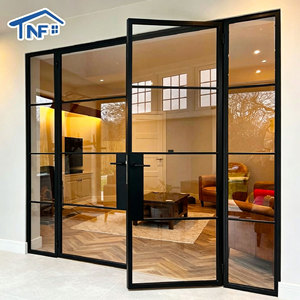
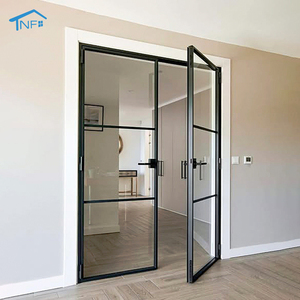
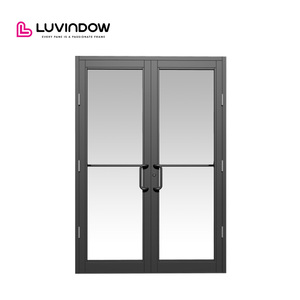
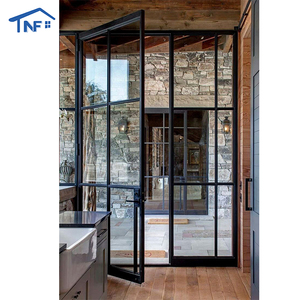
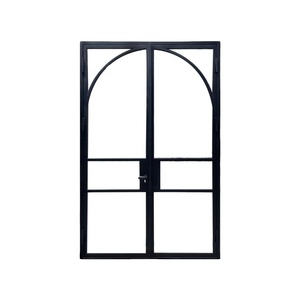
1. Executive Overview: Regulatory Baseline for CE Certified Aluminium Double Swing Doors
In modern commercial architecture and high-end residential real estate developments, the external envelope must meet stringent structural, thermal, and regulatory demands. CE Certified Aluminium Double Swing Doors represent the benchmark for fenestration safety, structural stability, and energy conservation across the European Economic Area (EEA) and global import markets adhering to harmonized standards. Under the European Union Construction Products Regulation (CPR No 305/2011), external pedestrian doorsets without fire resistance or smoke control characteristics are governed by harmonized standard EN 14351-1:2006+A2:2016.
For international project buyers, procurement managers, and commercial building contractors, sourcing double swing doors from verified Chinese manufacturing facilities requires a deep understanding of structural metallurgy, thermal break engineering, glass unit assembly, and Factory Production Control (FPC) audit trails. A authentic CE compliance certificate is not merely a piece of paper; it represents rigorous Initial Type Testing (ITT) covering air permeability, water tightness, resistance to wind load, acoustic performance, thermal transmittance, and operating forces.
Aluminium alloy selection plays a foundational role in achieving long-term mechanical durability. Premium factories utilize primary-grade 6063-T5 or 6063-T6 architectural aluminium extrusions with minimum profile wall thicknesses ranging from 2.0mm to 3.0mm for heavy-duty commercial applications. Compared to standard sliding mechanisms, double swing doors require elevated structural rigidity to withstand torsional stress, high cycle frequencies, dynamic wind pressure loads, and corner shear forces over decades of active service.
Key CE EN 14351-1 Performance Metrics Required for International Procurement
When evaluating suppliers and factories, fenestration engineers and B2B buyers must cross-validate test reports issued by notified bodies against the specific climate zone and architectural load conditions of the project site:
- Resistance to Wind Load (EN 12210): Rated from Class 1 up to Class 5, with frontal deflection classifications (A, B, or C). Commercial storefronts and coastal high-rises require minimum Class C4 or C5 (test pressures exceeding 2000 Pa to 3000 Pa).
- Watertightness (EN 12208): Evaluated under unshielded (Class A) or shielded (Class B) spraying conditions. Premium thermal break double swing doors achieve Class 9A or E750 (750 Pa pressure without water penetration).
- Air Permeability (EN 12207): Classified from Class 1 to Class 4. High-efficiency building envelopes mandate Class 4 rating (leakage rate ≤ 3 m³/h·m² at 600 Pa test pressure).
- Thermal Transmittance (EN ISO 10077-1/2): Total door system U-value ($U_d$). High-performance polyamide thermal barrier break profiles combined with argon-filled, Low-E double or triple glazing reduce $U_d$ values to between $1.0\text{ W/m}^2\text{K}$ and $1.5\text{ W/m}^2\text{K}$.
2. Engineering Specification Matrix: System Architecture & Glass Interlayer Technology
To provide actionable technical insight for structural engineers and facade consultants, the table below outlines the core engineering parameters comparing non-thermal break commercial swing doors, standard residential thermal break French doors, and ultra-high performance hurricane/acoustic insulated entrance doors.
| Performance Specification | Standard Non-Thermal Break Swing | Architectural Thermal Break French | Heavy-Duty Hurricane & Soundproof Swing |
|---|---|---|---|
| Profile Alloy & Temper | 6063-T5 (Wall thickness 1.4mm - 2.0mm) | 6063-T5 / T6 (Wall thickness 2.0mm - 2.5mm) | Structural 6063-T6 (Wall thickness 2.5mm - 3.0mm) |
| Thermal Break Insulation | None (Monolithic profile) | Polyamide PA66-GF25 (14.8mm to 24mm strip) | Multi-Cavity Technoform PA66 Strip (34mm+) |
| Glazing Specification | 5mm + 12A + 5mm Clear Tempered | 6mm Low-E + 16Ar + 6mm Double Tempered | 6mm Low-E + 12Ar + 6.76mm SGP Laminated Acoustic |
| Thermal Transmittance ($U_d$) | 3.8 - 4.5 W/m²K | 1.4 - 1.8 W/m²K | 0.9 - 1.2 W/m²K (Passivhaus Capable) |
| Acoustic Rating (STC / Rw) | 28 dB - 32 dB | 35 dB - 40 dB | 42 dB - 48 dB (Acoustic Compression Seal) |
| Wind Pressure Resistance | 1500 Pa (Class C3) | 3000 Pa (Class C5 / AS2047 N6) | 4500 Pa+ (Miami-Dade Impact Compliant) |
| Hardware & Locking System | Single point deadbolt / Latch lock | German Siegenia / Hoppe 3-Point Lock | 5-Point Multi-Point Mechanical/Electronic Lock |
| Weather Stripping Gaskets | Standard PVC Gaskets | Dual Durometer EPDM Seals | Continuous Triple EPDM Foam Co-extruded Seals |
Polyamide (PA66-GF25) Thermal Barrier vs. Low-Grade Alternatives
The core of any high-efficiency thermal break aluminium double swing door lies in the insulating strip that mechanically joins the interior and exterior extrusion profiles. Premium factories specified in CE, NFRC, and AS2047 compliant projects strictly utilize Polyamide 66 reinforced with 25% glass fiber (PA66-GF25). This material matches the thermal expansion coefficient of aluminium alloys, preventing structural delamination under extreme ambient temperature fluctuations ranging from $-30^\circ\text{C}$ in northern winters to $+70^\circ\text{C}$ direct sun exposure in summer desert climates.
Sub-standard manufacturers often substitute PA66 with cheap PVC (Polyvinyl Chloride) strips to cut production costs. PVC thermal strips exhibit a significantly higher thermal expansion coefficient, low heat deflection temperatures (softening above $70^\circ\text{C}$), and weak shear resistance. Over 3 to 5 years, PVC thermal break swing doors experience frame distortion, air leakage, seal failure, and door leaf sag. B2B buyers must demand material test certificates verifying PA66-GF25 usage for all thermal break orders.
3. Market Analysis: Future Sourcing & Architectural Trends (2025–2030)
The global architectural glass and door market is undergoing a rapid transition toward decarbonization, structural minimalism, and smart building automation. Importers, project developers, and building material distributors sourcing from China must align their product lines with several dominant technological trends shaping the fenestration landscape over the next decade.
Minimalist Ultra-Slim Sightlines
Architects are driving demand for narrow-frame double swing doors that maximize natural daylight while concealing hinges and frame profiles within the building facade reveal, achieving seamless floor-to-ceiling glass integration.
Smart Access & Motorized Automation
Integration of concealed electromagnetic multi-point locking mechanisms compatible with biometrics, RFID, smart home controllers, and automated low-energy swing operators for commercial ADA-compliant barrier-free entryways.
Electrochromic & Dynamic Glazing
Transition from passive Low-E glass to smart dynamic electrochromic double glazing, allowing occupants to alter glass tint levels via mobile app or solar sensors to control solar heat gain coefficient (SHGC) dynamically.
Low-Carbon Recycled Aluminium
EU carbon border adjustment mechanisms (CBAM) are compelling suppliers to adopt hydro-powered primary aluminium billets or post-consumer recycled extrusion stock, cutting embodied carbon emissions by over 65%.
Prefabricated Modular Installation
Factory pre-assembled sub-frames with integrated waterproofing fins and pre-drilled fixing points reduce site installation times, minimize labor costs, and eliminate human error during perimeter sealing.
Extreme Climate & Acoustic Engineering
Rising weather volatility is pushing global demand toward dual-certified doors featuring Miami-Dade hurricane impact ratings combined with heavy sound reduction profiles (STC 45+) for urban acoustic isolation.
4. Enterprise Manufacturing Strengths & Factory Inspection Standards
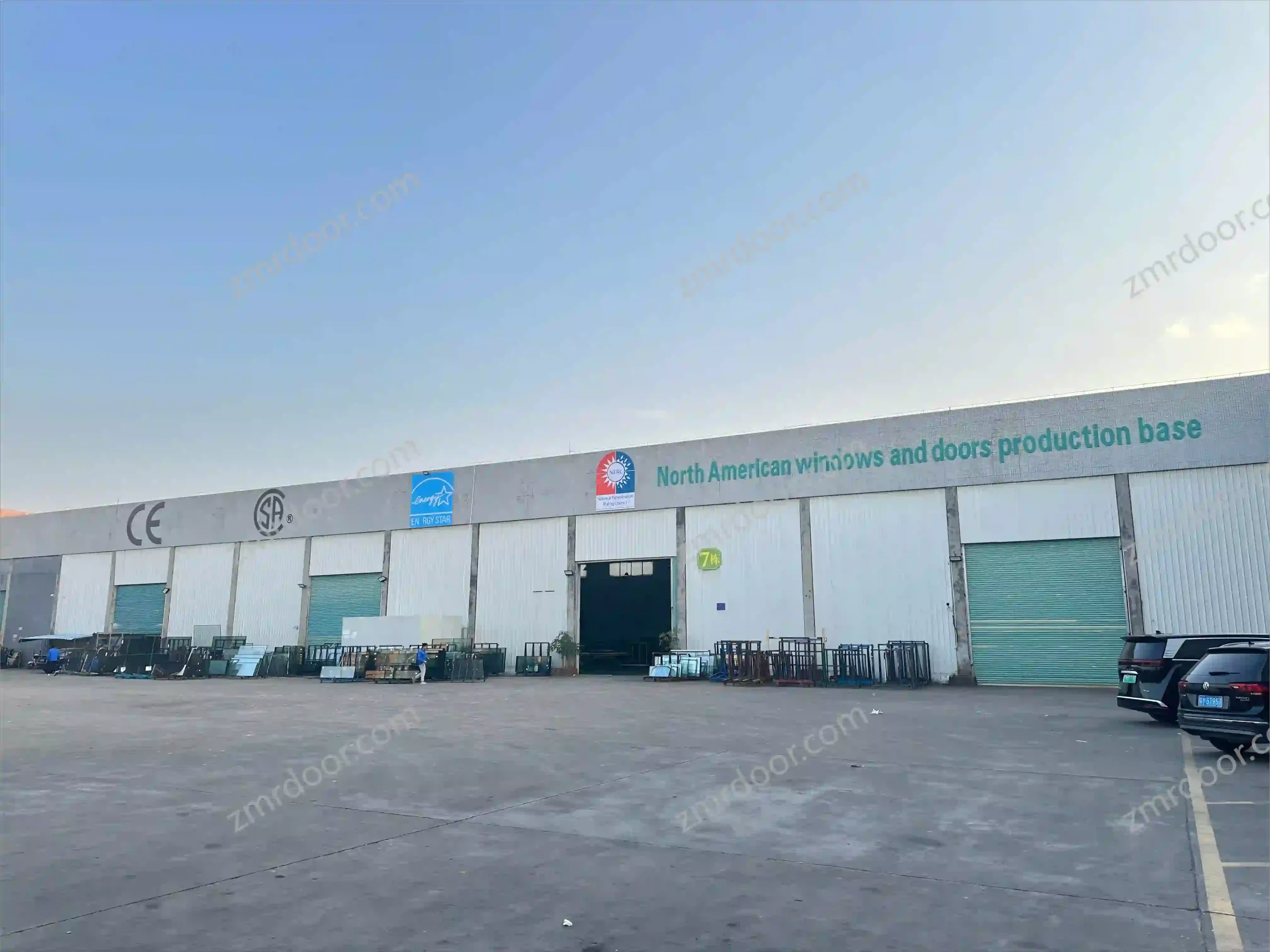
Located in Foshan, Guangdong Province—the absolute heartland of China's architectural aluminium extrusion and fabrication industry—our manufacturing infrastructure combines advanced European CNC machining center technology with rigorous Factory Production Control (FPC) procedures audited to CE EN 14351-1 standards.
5-Axis CNC Precision Fabrication
Every profile length undergoes automated 5-axis CNC milling, corner mitering, drainage slotting, and hardware lock-pocket routing. Dimensional tolerances are held within ±0.5mm, guaranteeing seamless corner alignment, squareness, and zero operational friction upon final installation on site.
Dual-Component Corner Crimping & Glue Injection
Corner joints are structurally fortified using heavy-duty cast aluminium cleats combined with two-component polyurethane corner joint structural adhesive. This dual-crimping process prevents frame sagging over time and ensures 100% watertight integrity at every 45-degree miter corner.
Automated Double-Sealed Insulated Glass Production
All double and triple insulated glass units (IGU) are manufactured on automated washing, gas filling, and dual-sealing lines. IGUs feature primary butyl sealant and secondary structural silicone coating, with warm-edge composite spacers and 90%+ pure argon gas fill for permanent thermal preservation.
100% Pre-Shipment Trial Assembly & Export Packaging
Prior to crating, 100% of custom double swing doors undergo full mock-up trial assembly on dedicated testing rigs. Frame dimensions, diagonal squareness, glass clearance, hinge smooth movement, and multi-point lock alignment are verified. Products are protected with heavy-duty PE film, corner guards, and fumigated solid wooden crates.
5. Frequently Asked Questions (FAQ) for B2B Importers & Contractors
Clear answers to critical commercial, engineering, and logistic questions frequently raised by project developers, architects, and importers during supplier evaluations:
How do CE certified aluminium doors comply with local building codes outside the EU?
The CE EN 14351-1 harmonized framework evaluates universal physical attributes: air permeability, watertightness, wind resistance, and thermal insulation. Because CE test parameters use standardized SI units (Pa, W/m²K, dB), these test reports can be easily converted and mapped to meet North American NFRC/ASTM, Australian AS2047/AS1288, or British Standard BS specifications during architectural review.
What is the practical Minimum Order Quantity (MOQ) and production lead time?
Because every commercial or residential fenestration package is custom-engineered to fit specific shop drawings, we accommodate single-project orders (minimum 15 to 20 sq.m) as well as full container load (20GP/40HQ) dealer orders. Standard production lead time is 25 to 35 calendar days following formal CAD shop drawing approval and color sample sign-off.
What surface finishes are available for severe coastal or high-pollutant environments?
For coastal installations within 1000 meters of saltwater, standard powder coatings are prone to salt-spray corrosion and blistering. We offer Qualicoat Class 2 / Class 3 Fluorocarbon (PVDF 3-coat system) coatings, micro-textured anodic oxidation finishes (Class 15/25), and wood-grain thermal transfer technology guaranteed to resist UV fading, chalking, and salt corrosion for 15 to 25 years.
How are double swing door active and passive leaves structurally secured against air infiltration?
Double swing doors feature an active leaf (primary opening) and a passive leaf (secondary opening). Our engineering utilizes full-height interlocking rebate profiles with continuous double-durometer EPDM gaskets. The passive leaf incorporates concealed top and bottom flush bolts or integrated shoot-bolts connected directly to the master multi-point gear, preventing center gap air leakage.
What hardware brands are integrated, and can buyers specify custom lock brands?
Standard high-tier configurations feature premium German hardware systems including Siegenia, G-U, Hoppe, or Winkhaus, as well as top-tier Asian hardware brands (Kinzong, CMECH). For OEM/ODM commercial contracts, our CNC machining centers can be customized to receive client-specified hardware cutouts, panic bars, electronic mortise locks, or floor springs.
How does the factory prevent shipping damage during ocean freight transport?
All products are packaged according to export protocols: aluminium frames are wrapped in non-adhesive scratch-resistant protective film, corners are shielded with thick polyethylene foam guards, glass units are fitted with anti-vibration rubber separation pads, and the assembled units are encased in fully enclosed, reinforced plywood crates loaded via forklift into containers.
Partner with a Certified Aluminium Double Swing Door Manufacturer
Whether you require comprehensive CAD shop drawings, CE test documentation, or factory-direct pricing for your upcoming commercial project or dealer distribution network, our senior fenestration engineers are ready to assist.
Contact Us