For global buyers, an Aluminium Sliding Window is more than a space-saving opening. It is a daily interface between indoor comfort and changing outdoor conditions. A well-designed unit can frame city views, support natural ventilation, and move smoothly across a compact track. It can also reduce maintenance demands in busy homes, hotels, and commercial buildings.
Dr. Helen Sanders, a recognized fenestration and building-science specialist, states, “Window performance is a system issue, not a frame issue.” That principle matters when comparing suppliers across different markets. The aluminium profile, thermal break, glass specification, seals, rollers, drainage, and installation method must work together. A narrow frame alone proves little.
Climate changes the buying decision. Coastal projects may need stronger corrosion protection. Cold regions often require thermally broken profiles and insulated glass. Hot climates may benefit from solar-control coatings, deeper overhangs, and careful ventilation planning. Smooth operation matters too. A poorly aligned roller can make a beautiful window frustrating within months.
Real project experience reveals uncomfortable details. Product brochures rarely show dust inside tracks, uneven walls, or replacement hardware delays. Buyers should request test reports, finish samples, spare-part policies, and installation guidance. Certifications should match the destination market, not merely the factory’s home country.
The choice is not automatically perfect.
However, when design, performance, and after-sales support align, an Aluminium Sliding Window offers a practical balance of daylight, durability, and architectural flexibility for international projects.
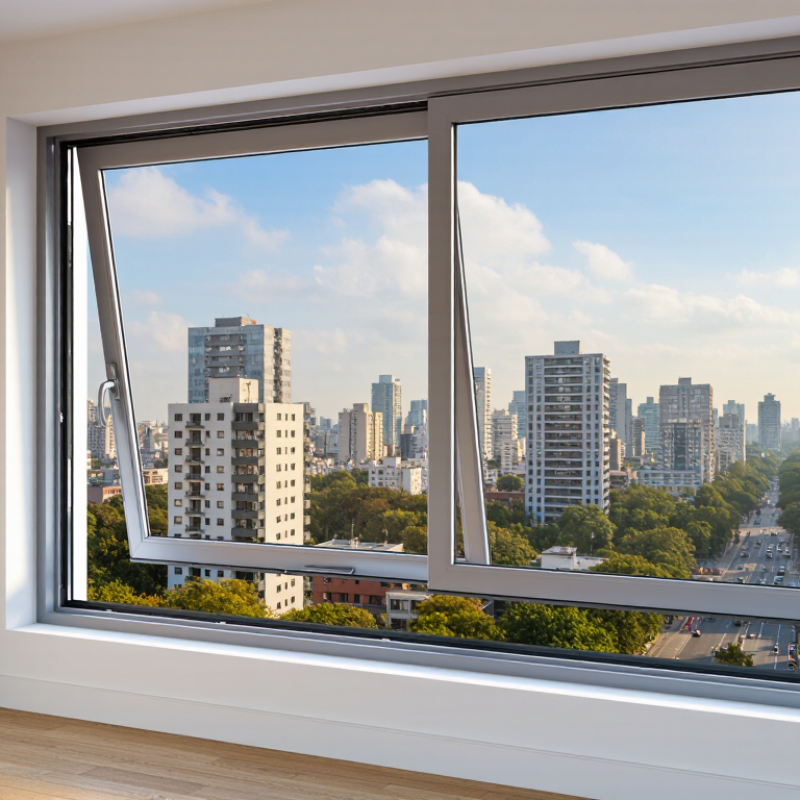
Why Choose Aluminium Sliding Windows for Global Buyers?
Aluminium’s Lifecycle Value: 75% of Historic Production Remains in Use
Aluminium sliding windows suit projects that demand strength, clean lines, and long service life. Their frames resist warping, insects, and everyday moisture better than many alternative materials. This matters in coastal apartments, humid hotels, and high-traffic commercial buildings. Smooth rollers and accurate tracks also make wide openings easier to operate.
The strongest sustainability argument is aluminium’s lifecycle value. Industry lifecycle studies report that about 75% of aluminium ever produced remains in use today. This reflects its durability and strong recycling potential. Unlike many materials, aluminium can be recycled repeatedly without losing its basic performance. A recovered window frame may return to production instead of becoming construction waste. That circular value can reduce demand for primary metal, although recycling still requires collection, sorting, and energy.
Performance depends on the whole window system. Thermal breaks, suitable glazing, drainage, and correct installation affect comfort more than the frame alone. Buyers should request test data, coating specifications, and maintenance guidance from qualified suppliers. Small details matter. A poor track can undermine a high-quality frame.
The statistic is encouraging, but it is not a guarantee. Some old windows are poorly insulated or difficult to recycle because of mixed materials. Global buyers should compare service life, local climate, repair access, and end-of-life options. Aluminium is durable, not automatically perfect. That distinction deserves attention.
Approximately 75% of all aluminium ever produced remains in productive use, while around 25% is no longer in use. This long material lifespan supports aluminium’s lifecycle value and its suitability for durable building products such as sliding windows.
Source: International Aluminium Institute, global aluminium in-use estimate.
For global buyers, aluminium sliding windows need a measured thermal comparison. Whole-window U-value includes the frame, glass, spacer, and edge effects. Lower values mean less heat transfer. The U.S. Department of Energy reports that windows can influence 25–30% of residential heating and cooling energy use. NFRC-certified double-glazed windows commonly achieve about 1.6–2.4 W/m²·K. Advanced low-e double or triple glazing may reach approximately 0.8–1.4 W/m²·K, depending on size and design.
Thermally broken aluminium frames can support whole-window values around 1.2–1.8 W/m²·K in suitable systems. Basic non-thermal frames may exceed 5.0 W/m²·K. These figures are indicative, not guaranteed.
NFRC 100 testing also shows why centre-glass values can mislead buyers. A large sliding sash usually performs differently from a small test sample. Lower U-value is helpful, but it is not the whole comfort story. Solar heat gain, air leakage, installation quality, and local climate still matter.
Tips: Request a complete NFRC or EN 14351-1 performance report. Check the declared whole-window U-value, not glass-only data. Compare identical window sizes. Ask for thermal-break details and spacer specifications. A cheaper frame may appear acceptable on paper, yet create cold interior edges and condensation. That deserves a second look.
For global buyers, aluminium sliding windows offer slim frames, stable dimensions, and practical operation. Their weather performance, however, depends heavily on air permeability. EN 12207 classifies tested windows from Class 1 to Class 4. Class 4 provides the strongest resistance to uncontrolled air leakage under the standard test conditions.
This detail matters in windy coastal areas, high-rise buildings, and buildings with mechanical ventilation. A Class 4 sliding window can help reduce drafts, dust entry, and unnecessary heating or cooling loss. Yet the class is not a promise of perfect comfort. The test applies to a defined window size and pressure range. Real results may change with larger panels, worn seals, or poor installation.
Ask suppliers for the EN 1026 test report and the corresponding EN 12207 classification. Check the tested product size, pressure levels, and leakage values. Do not accept “weather resistant” as a technical specification. It is too vague.
The frame design also deserves attention. Sliding systems use overlapping sashes, which create more potential leakage paths than fixed windows. Quality gaskets, correctly adjusted rollers, and accurate drainage channels are essential. Small gaps can become noticeable during storms.
A useful lesson from site inspections is simple: Class 4 performance can be weakened by careless fitting.
The window may be excellent. The installation may not be. Buyers should require installation tolerances, sealing details, and inspection procedures before approving large-volume orders.
Safety begins with the complete tested assembly, not aluminium alone. EN 1627:2021 defines six resistance classes, from RC1 to RC6. The standard measures forced-entry resistance against specified tools, attack methods, and test durations.
RC1 offers basic resistance for opportunistic attacks. RC2 and RC3 introduce stronger manual attacks, with minimum resistance times of three and five minutes. RC4 reaches ten minutes, while RC5 and RC6 require fifteen and twenty minutes respectively. These figures come from EN 1627:2021 testing requirements, not marketing estimates.
A sliding window should therefore be assessed as one system. Check the frame, locks, rollers, glazing, joints, and installation details. A certificate for one size may not cover another configuration. That assumption is risky.
EN 1627 also distinguishes standard classifications, such as RC2, from variants using different glazing conditions, including RC2N. The European standards framework expects test evidence for the declared configuration, including opening direction and fixing method.
In project reviews, I would request the full test report, scope, drawings, and installation instructions. Small gaps around the frame can weaken a strong product.
Aluminium remains attractive because it supports rigid, slim profiles and stable large openings, but rigidity alone proves nothing. RC is not a magic number. Buyers should compare independent laboratory evidence, hardware protection, glass classification, and site workmanship before selecting a global specification.
Global buyers often choose aluminium sliding windows for their slim frames, smooth operation, and durable performance. Yet product appearance is only one part of a successful order. Regional requirements can differ in wind resistance, water tightness, thermal performance, glass safety, and hardware configuration. A window that performs well in one market may need adjustment before entering another.
An ISO 9001 quality system creates a practical control framework for these differences. Experienced suppliers can link each regional requirement to drawings, material records, production checks, and final inspections. For example, inspectors may verify frame dimensions with calibrated tools, test drainage paths, and record coating thickness before packing. Glass specifications, locking points, rollers, and installation instructions should also match the destination market. Clear batch records make problems easier to trace.
Documentation must be useful, not decorative. Buyers should review inspection plans, corrective-action reports, sample approvals, and shipment photos. Factory audits can confirm whether written procedures match daily work. We have found that small gaps often matter, such as inconsistent labels or unclear revision dates. No system is perfect. A missed measurement can still occur. The important question is whether the supplier detects it, investigates the cause, and prevents repetition. Regional feedback should update the quality system, not remain in scattered emails. That discipline gives global buyers greater confidence when aluminium sliding windows move from production lines to unfamiliar building sites.
It measures heat transfer through the frame, glass, spacer, and edge areas. Lower values usually mean better insulation.
Common tested values range from about 1.6 to 2.4 W/m²·K. Advanced glazing may reach 0.8 to 1.4 W/m²·K.
Suitable systems may achieve whole-window values around 1.2 to 1.8 W/m²·K. Basic frames can exceed 5.0 W/m²·K.
Glass-only data ignores the frame and edge effects. Cold interior edges may still cause discomfort or condensation.
No. Solar gain, air leakage, climate, and installation quality also affect indoor comfort. One number is not enough.
Class 4 offers the strongest resistance within the EN 12207 range. It can help reduce drafts, dust, and energy loss.
No. Testing uses specific sizes and pressure levels. Larger panels, worn seals, or poor fitting may reduce actual performance.
Request complete thermal and air-leakage reports. Check the declared whole-window value, tested size, pressure range, and leakage results.
Overlapping sashes create several possible leakage paths. Accurate rollers, tight gaskets, drainage channels, and proper sealing matter.
Installation tolerances and inspection procedures are often overlooked. The window may perform well, but careless fitting can weaken it.
An Aluminium Sliding Window offers global buyers a practical combination of long-term value, energy performance, weather resistance, and security. Aluminium is highly recyclable, and approximately 75% of all aluminium ever produced remains in use today, demonstrating its strong lifecycle value. When comparing products, buyers should assess whole-window thermal performance through U-values measured in W/m²·K, rather than focusing only on individual frame or glass components. Lower U-values generally indicate better insulation and improved energy efficiency.
For reliable performance in different climates, specifications should include EN 12207 air-permeability classes 1–4 to confirm resistance against uncontrolled air leakage. Safety and durability can be evaluated using EN 1627 resistance classes RC1–RC6, depending on the intended level of protection. For international sourcing, manufacturers should also operate consistent ISO 9001 quality systems and clearly align product testing, documentation, and installation requirements with regional standards. This approach helps buyers make confident, transparent decisions across markets.