Nanhai District, Foshan, Guangdong, China [email protected] Become a Dealer
0%

Choosing the best Aluminum Door in 2026 means weighing more than frame color or price. A slim black frame can sharpen a room, but poor sealing may invite drafts and outside noise. The right choice depends on climate, opening size, exposure, security needs, and installation quality. Small details matter.

The U.S. Department of Energy reports that windows can account for 25–30% of residential heating and cooling energy use. That figure applies to windows, not doors, so it should not be treated as a door-performance estimate. Still, it shows why glazing, seals, and thermal breaks deserve close attention. The National Fenestration Rating Council (NFRC) provides certified product ratings, including U-factor and solar heat gain coefficient, which help buyers compare performance rather than rely on vague claims.

For an aluminum door, check whether the frame includes a thermal break, then compare the complete unit’s ratings and warranty. Look closely at corner joints, weatherstripping, hardware, and the threshold. A heavy panel may feel reassuring, yet poor installation can leave gaps where rain and air find their way in. That part is easy to overlook.

There is no single best model for every home. A sunny patio entrance may need different glazing from a shaded side door. I would not choose by brochure photos alone; they rarely show how a door performs after years of daily use. Some trade-offs remain. A careful comparison can make them clearer.
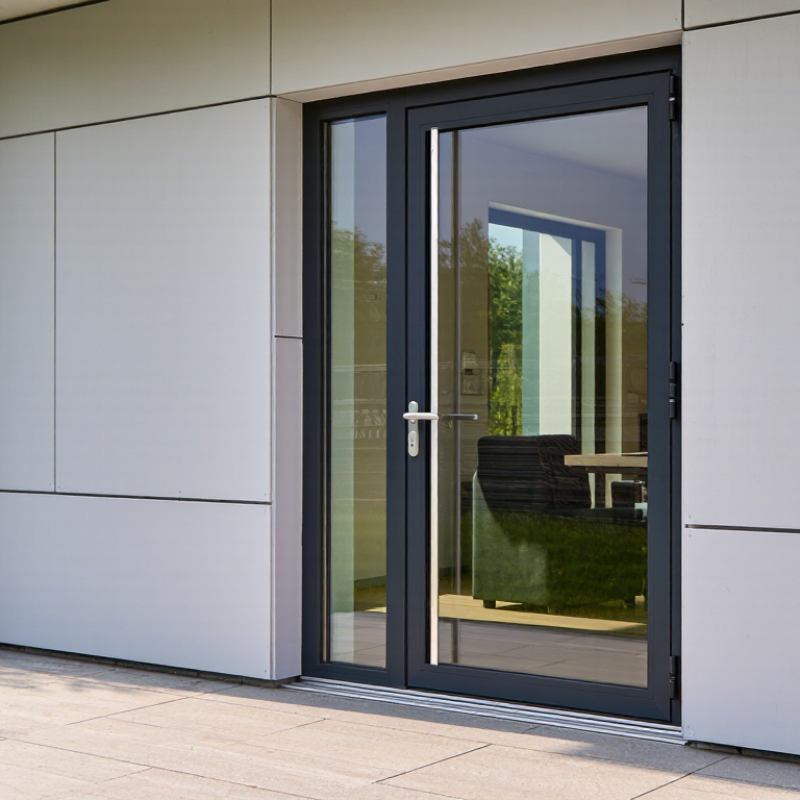
2026 How to Choose the Best Aluminum Door?

Identify the Door’s Purpose, Location, and Required Dimensions

Before choosing an aluminum door, define what it needs to do. A patio door should offer clear passage and suit the available swing or sliding space. An entry door may need stronger security and a more substantial frame. For a frequently used side entrance, easy operation can matter more than a dramatic glass panel. Start with the task. Then consider the location: a wind-exposed opening, a damp laundry room, and a sheltered interior doorway face different conditions. Moisture, direct sun, and salty air can affect finishes and hardware, so check product specifications for the actual setting rather than assuming every aluminum door performs alike.

Measure the opening, not just the old door slab. Record the width at the top, middle, and bottom, then the height at both sides and the center. Check whether the frame is square, and note the threshold, trim, and nearby walls. Measure twice. Small gaps matter. Also allow room for the door to swing, handles to clear walls, or sliding panels to stack. A rough opening and a finished door size are not always identical; confirm which dimensions a supplier requests. If measurements differ, do not simply average them. An out-of-square opening may need adjustment, and that detail is easy to miss when a tape measure is the only check.

Compare Aluminum Door Types, Designs, and Opening Styles

Aluminum doors come in several types, and the right choice depends on how the room is used. Hinged doors suit entrances and smaller openings, with a familiar swing that needs clear floor space. Sliding doors move along a track, making them practical beside patios or narrow walkways. Folding doors can open a wide wall, though their panels and hardware need room to stack. Measure twice.

Design affects comfort as much as appearance. Slim frames create broad glass views, while thicker profiles may support larger panels or improve insulation when designed with thermal breaks. Double glazing can help reduce heat transfer and outside noise. Check the glass specification, frame depth, seals, and drainage details—not just the finish. A dark coating can look striking, but it may show dust and scratches more clearly.

Match the opening style to daily traffic. A frequently used kitchen door may be easier to manage as a slider than as a heavy folding system. For windy locations, consider how panels latch and whether the opening can be controlled safely. Ask for clear measurements and details about cleaning the tracks and adjusting hardware. There is no perfect configuration; a wide opening can be lovely, but it may also mean more glass to clean. Small details matter.

Assess Frame Quality, Thermal Performance, Security, and Durability

2026 How to Choose the Best Aluminum Door?
Assess Frame Quality, Thermal Performance, Security, and Durability

Choosing an aluminum door starts with the frame, not its finish. Look for straight profiles, neat corner joints, and even gaps around the panel. Run your fingers along the edges; sharp burrs or visible sealant blobs may point to rushed assembly. Small details matter. Ask whether the frame includes a thermal break, an insulating barrier between its inner and outer sections. Without one, cold surfaces and condensation can be more noticeable in winter. Check the weather seals by closing the door against a sheet of paper. If the paper slips out easily, the seal may need adjustment. Glazing also matters: confirm the glass type and how it fits the frame.

Security depends on the full assembly, not just a sturdy-looking handle. Check the lock points, hinge attachment, and how firmly the frame anchors to the wall. A multipoint lock can distribute pressure, but poor installation can still leave gaps. Ask for clear details about maintenance and replacement parts. For durability, inspect the coating for consistent coverage, especially near corners and drainage openings. In damp or coastal settings, ask how the finish resists corrosion. I would compare these details in person, because brochures rarely show a door’s weak spots. And be realistic: a heavier frame is not automatically better if it strains the hinges or feels awkward to operate. Test the handle, listen for rattles, and notice whether the door closes smoothly.

Check Glazing, Hardware, Finish, and Maintenance Requirements

Choosing an aluminum door starts with its glazing, not its frame color. The U.S. Department of Energy reports that windows account for about 25–30% of residential heating and cooling energy use. A glazed door can also affect comfort, though its performance depends on the full assembly and installation. Compare certified U-factor and solar heat gain coefficient ratings for your climate. Low-emissivity, double-pane glass may help, but a sun-exposed entry may need different solar control than a shaded one. Check the glass dimensions and frame sightlines in person; catalog images can hide how much daylight the door actually admits.

Hardware deserves a close look. Open and close the sample, if possible, and check handle movement, hinge support, locking points, and replacement-part availability. For finishes, ask for the coating specification and care instructions. AAMA 2604 and 2605 are recognized performance specifications for architectural coatings, but the right level depends on exposure and project needs. Salt air, strong sun, and frequent rain can change maintenance demands. I would not assume a premium finish means zero upkeep; that is an easy assumption to regret.

Tips: Inspect gaskets, drainage slots, and hardware once or twice a year. Clear grit from tracks with a soft brush, and use mild soap on the finish. Ask the supplier which cleaners to avoid. Small checks matter.

2026 How to Choose the Best Aluminum Door? - Check Glazing, Hardware, Finish, and Maintenance Requirements
Selection Factor What to Compare How to Choose Maintenance and Checks
Glazing type Single, double, or triple glazing; insulated glass unit (IGU) construction; low-emissivity (low-E) coating; gas fill, if specified. Compare the whole door’s documented thermal performance, not glass alone. Lower U-factor means less heat transfer; choose a suitable solar heat gain coefficient (SHGC) for the local climate and desired daylight. Clean glass with a non-abrasive cleaner. Inspect seals for damage or moisture between panes, which can indicate an IGU seal failure.
Safety glass Tempered or laminated glazing; safety markings and thickness specified for the door and opening. Where required, use safety glazing that complies with applicable local building codes. Requirements depend on location, door design, and glazing area. Do not drill, cut, or alter installed safety glass. Replace damaged glazing with a compatible unit that meets the applicable requirements.
Frame and thermal break Thermally broken or non-thermally broken frame; door-system U-factor; weatherstripping and threshold design. For conditioned spaces, compare tested whole-door performance. A thermal break separates interior and exterior aluminum sections to reduce heat transfer through the frame. Keep drainage paths clear. Check gaskets, weatherstripping, and threshold seals for compression, gaps, or wear.
Hardware and operation Hinges, rollers, locks, handles, closers, and their stated load capacity, adjustment range, and corrosion resistance. Match hardware to door weight, opening frequency, and exposure. In coastal or corrosive environments, ask for suitable corrosion-resistant materials and finishes; grade selection depends on the exposure and assembly. Clean tracks and moving parts. Inspect fasteners and operation periodically; lubricate only as directed for the specific hardware.
Surface finish Anodized aluminum or a coated finish, such as powder coating; color, gloss, surface preparation, and finish warranty terms. Choose a finish suitable for the installation environment and appearance requirements. Confirm the specified finish system and care instructions rather than judging by color alone. Wash with mild soap and water using a soft cloth, then rinse. Avoid abrasive pads and harsh chemicals that may damage the finish.
Weather performance Documented air leakage, water penetration, and structural performance for the complete door assembly, where available. Compare test results with project needs and local requirements. Ratings depend on the tested size, configuration, installation, and applicable test standard. Inspect perimeter seals, drainage openings, and installation joints. Keep weep holes free of dirt and debris.
Installation and fit Opening measurements, sill condition, frame squareness, flashing, anchoring, and compatibility with the wall assembly. Verify site dimensions and installation details before ordering. Correct installation is essential for smooth operation and expected air and water performance. After installation, confirm the door closes, locks, and seals evenly. Recheck adjustment if the door binds or develops uneven gaps.
Routine care Cleaning access, local dust or salt exposure, moving-part service, and availability of replacement seals and components. Choose a design whose cleaning and service needs suit the site. Follow the door-system care instructions and any applicable warranty conditions. Set inspection frequency according to use and exposure. Clean more often where salt, pollution, or heavy dust accumulates; promptly address loose hardware, damaged seals, or drainage blockages.

Note: Confirm performance values, safety-glazing rules, installation details, and maintenance instructions for the specific door configuration and local requirements.

Compare Quotes, Installation Standards, Warranties, and Total Cost

Compare written quotes line by line: door dimensions, glazing, hardware, finish, removal, disposal, trim, and installation. An unusually low price may exclude flashing or frame repairs. Check the exclusions.

Zonda’s 2024 Cost vs. Value report priced a steel entry-door replacement at $2,355 nationally. Its estimated resale value was $4,430, or 188.1% cost recouped. That is a steel-door benchmark, not an aluminum forecast or guaranteed return. For aluminum, compare the same configuration and ask for its tested performance rating under the applicable NAFS standard. Confirm the installer’s plan for sill-pan protection, flashing, drainage, and fastener placement. Details matter.

Read warranty terms by component. Frame, finish, glass, hardware, and labor may have different coverage periods or exclusions. Ask whether labor is included and whether coverage transfers to a later owner. Then compare total cost, including maintenance and likely repairs, not just the first invoice. One easy mistake: treating every quote as equivalent. A tidy spreadsheet can still hide missing work, and assumptions deserve a second look.

FAQS

What should I consider before choosing an aluminum door?

Define its purpose, location, and available space. A patio door needs clear passage, while an entry door may need stronger security.

How do I measure the doorway accurately?

Measure the opening, not only the old door. Record width at the top, middle, and bottom, plus height at both sides and center. Measure twice.

What if the opening is not square?

Note uneven measurements instead of averaging them. The frame may need adjustment, and that detail is easy to overlook.

How can I check the frame’s build quality?

Look for straight profiles, neat corner joints, and even gaps. Feel the edges for sharp burrs or excess sealant. Small details matter.

What does a thermal break do?

It separates the frame’s inner and outer sections with an insulating barrier. This may reduce cold surfaces and winter condensation.

How can I check weather seals?

Close the door against a sheet of paper. If the paper slips out easily, the seal may need adjustment.

What should I check for security and durability?

Inspect the locks, hinges, and frame anchoring. Ask about replacement parts and maintenance. In damp or coastal locations, check corrosion resistance.

How do I know if a door feels right to use?

Test the handle and listen for rattles. The door should close smoothly without straining its hinges. A heavier frame is not always better.

Conclusion

Choosing the best Aluminum Door starts with understanding where it will be installed, what it needs to do, and the exact dimensions required. Consider whether a hinged, sliding, folding, or other opening style suits the space, then compare designs that fit your home’s layout and appearance. A well-matched door should be practical to use while complementing the surrounding architecture.

Before deciding, evaluate the frame’s construction, thermal performance, security features, and resistance to everyday wear. Check the glazing options, hardware quality, surface finish, and cleaning needs so you know what ongoing care to expect. Finally, compare detailed quotes that include installation, applicable standards, warranty coverage, and likely maintenance costs. Looking at the full cost rather than the initial price can help you select a durable, comfortable door that meets your needs over time.


Charlotte

Charlotte

Charlotte is a professional marketing specialist with a strong understanding of the company’s products, their practical applications, and the needs of the customers they serve. She combines careful research with clear, approachable communication, helping readers understand product features, compare......