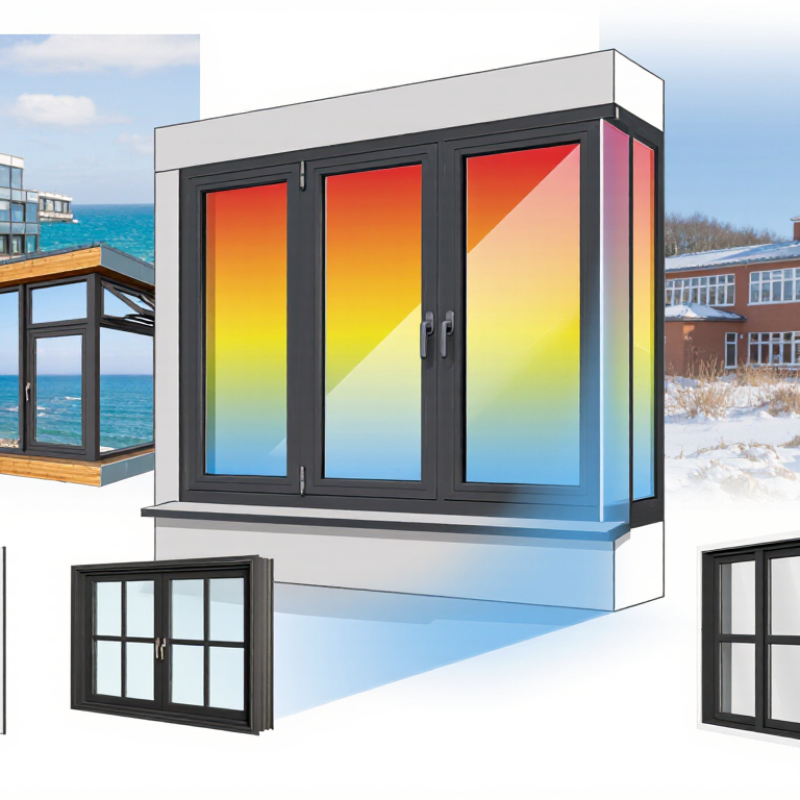
Choosing an Aluminum Window for a global project is not a catalog exercise. It is a decision about climate, building use, installation quality, and long-term maintenance. A coastal hotel in Singapore faces different demands from a school in a cold, windy region. Even within one project, orientation can change the amount of heat and glare each façade receives. Details matter.
Architect Louis Kahn is often credited with saying, “The sun never knew how great it was until it hit the side of a building.” His remark speaks to a practical design challenge: glazing and frames shape how daylight enters, while also affecting comfort and energy use. The right specification starts with measurable project needs, not a fashionable frame color or a single headline performance figure.
This guide explores how to compare thermal performance, air and water resistance, wind-load capacity, glass options, finishes, hardware, and installation requirements. It also considers regional standards and documentation, which project teams should verify for each destination rather than assume are interchangeable. Ask suppliers for test reports, clear product data, and details for the proposed configuration. Check how the frame connects to the wall, too. A strong window can still disappoint when that junction is poorly designed.
There is no perfect specification. Trade-offs remain, and site conditions can expose assumptions that looked tidy on paper. The aim is a defensible choice—one matched to the building, the climate, and the people who will use it.
Define Project Requirements and Window Performance Goals for 2026
Before selecting aluminum windows, define the building’s climate, orientation, occupancy, and maintenance capacity. A coastal school with salty air needs different detailing from a shaded urban office. Record target U-factor, solar heat gain coefficient, air leakage, water resistance, acoustic needs, and design wind pressure. Small details matter. Also specify frame finish, thermal-break requirements, glazing build-up, and hardware access before comparing quotations.
Energy goals should reflect local conditions, not a generic “high-performance” label. The International Energy Agency’s 2023 Global Status Report for Buildings and Construction says buildings used about 30% of global final energy in 2022 and produced 26% of energy-related emissions. Window choices affect that demand, but the right balance varies by façade and climate. The U.S. Department of Energy estimates that window heat gain and loss account for 25–30% of residential heating and cooling energy use; treat this as U.S. residential context, not a universal project forecast.
Translate targets into testable specifications and review them with the façade engineer. Ask for whole-window performance, not glass-only figures, and confirm that mock-up details match the proposed installation. A spreadsheet can conceal weak assumptions. Check shading, frame-to-wall transitions, drainage paths, and replacement access on drawings and at the site. Plans change. Record unresolved trade-offs, such as daylight versus cooling load, rather than hiding them inside a single performance score.
| How to Choose Aluminum Windows for Global Projects in 2026 — Define Project Requirements and Window Performance Goals for 2026 | |||
|---|---|---|---|
| Project Dimension | Information to Define | Planning Target or Selection Guidance | Why It Matters |
| Climate and location | Project coordinates, climate zone, seasonal temperature range, solar exposure, humidity, and exposure to salt or pollutants. | Use local climate data and the applicable energy code as the basis for specifying thermal, solar, drainage, and corrosion performance. | Window performance requirements vary with climate, orientation, elevation, and environmental exposure. |
| Thermal transmittance | Whole-window U-factor or U-value, including the frame and glazing. | Set a project-specific maximum in W/(m²·K). For early comparisons, high-performance whole-window targets often fall around 1.0–1.6 W/(m²·K); confirm feasibility against local codes and the project’s energy model. | Lower U-values generally reduce heat transfer, but the required level depends on climate and building energy goals. |
| Solar heat gain | Solar Heat Gain Coefficient (SHGC), specified for the complete glazing configuration. | Choose by orientation and climate. Lower SHGC can help limit cooling loads in sunny conditions; higher SHGC may be useful where passive solar heat is desired. | A single SHGC target may not suit every façade or climate. |
| Visible light | Visible transmittance (VT) and the balance between daylight, glare control, and solar gain. | Set a minimum VT for occupied spaces and assess it alongside SHGC, glass tint, coatings, and external shading. | Higher daylight access can reduce reliance on electric lighting, while glare may require additional design measures. |
| Air leakage | Permitted air infiltration for the complete window assembly and the test pressure required by the project specification. | Specify a maximum leakage rate using a recognized local test method and clearly state the units, pressure, and tested configuration. | Air leakage affects comfort, energy use, and moisture control; values from different test methods are not directly interchangeable. |
| Water penetration | Required water-test pressure, drainage strategy, and exposure conditions at the building location. | Set the test pressure from the project’s design criteria and require testing of representative assemblies, including joints and interfaces. | Water performance depends on pressure, installation details, drainage paths, and façade exposure. |
| Wind load and deflection | Site-specific design wind pressures, building height, façade zone, opening size, and allowable deflection. | Have the project structural engineer establish design pressures and acceptance criteria; verify the complete window assembly against them. | Wind demand changes with location, building geometry, height, and edge or corner conditions. |
| Acoustic performance | Exterior noise sources, room use, glazing build-up, and required sound rating. | Define a project-specific acoustic target, such as Rw or STC, and confirm the rating for the specified glass and frame assembly. | Glass thickness alone does not determine window sound insulation; the full assembly and installation matter. |
| Safety and impact | Human-impact risk, fall protection, security needs, and exposure to storms or debris. | Identify applicable local safety-glazing and impact requirements. Specify tested glass and frame combinations where required. | Safety requirements depend on the location of the window, building use, and local regulations. |
| Frame and finish durability | Aluminum alloy and temper, surface finish, coastal or industrial exposure, and maintenance access. | Specify the required finish system and corrosion-resistance evidence for the project environment; review drainage and dissimilar-metal interfaces. | Exposure conditions and detailing influence long-term appearance and service life. |
| Thermal bridging | Thermal-break configuration and frame contribution to whole-window performance. | Request whole-window thermal data for the intended frame size and glazing. Review condensation risk at frame edges for cold-climate projects. | Frame geometry and thermal breaks can affect energy performance and interior surface temperatures. |
| Operation and maintenance | Opening type, cleaning access, ventilation needs, hardware duty cycle, and replacement strategy. | Match operation and hardware to the building use, expected frequency of use, occupant needs, and available maintenance resources. | Ease of use and maintainability affect occupant satisfaction and life-cycle performance. |
| Testing and documentation | Required standards, test reports, product configuration, quality records, and project submittals. | Require current, traceable test documentation for the specified assembly and confirm that tested dimensions and components match the project design. | Performance results are meaningful only when the tested configuration represents the supplied product. |
| Important planning note | The numerical ranges above are early-stage planning references, not universal code requirements or guarantees. Confirm final targets with the project team, local regulations, climate data, energy modelling, and verified test documentation. | ||
FAQS
Record the climate, façade orientation, occupancy, and maintenance capacity. Specify whole-window performance, finish, thermal breaks, glazing, and hardware access.
A coastal school faces salt spray and driving rain. A shaded office has different needs. Generic performance labels may hide these differences.
Include U-factor, solar heat gain, air leakage, water resistance, acoustic needs, and design wind pressure. Small details matter.
Glass-only figures do not describe the complete assembly. Ask whether test results match the proposed frame, glass, hardware, and configuration.
Review mock-up details, shading, frame-to-wall transitions, drainage paths, and replacement access. Visit the site if possible. Plans change.
Confirm current requirements with local project professionals or relevant authorities. Check applicable test standards and required performance values before ordering.
Not necessarily. Request reports for the exact proposed configuration and compare them with the project specification. Keep records.
A blocked weep hole can interfere with drainage. Installation details matter. A checklist may still miss a local requirement, so review documents again before fabrication.
Conclusion
Choosing an Aluminum Window for a global project in 2026 starts with clearly defining the building’s purpose, design priorities, budget, and performance goals. Consider expected energy efficiency, sound reduction, security, durability, and appearance. Then assess local climate conditions, such as heat, cold, humidity, wind, and coastal exposure, alongside applicable building codes and certification requirements. These factors help determine which frame design, finish, glazing configuration, and thermal performance are suitable for each location.
Compare available window systems and glass options as a complete assembly, rather than judging frame performance alone. Evaluate manufacturers for consistent product quality, testing information, production capacity, communication, and dependable supply-chain planning. Before ordering, confirm specifications, delivery schedules, and inspection arrangements. Plan installation around local site conditions and ensure installers understand the system requirements. After completion, establish a practical maintenance schedule for cleaning, hardware checks, seals, and drainage. Careful coordination from selection through long-term upkeep can help projects achieve reliable performance across regions.