Choosing an Aluminium Washroom Door in 2026 involves more than comparing the lowest listed price. Moisture resistance, privacy, ventilation, and daily use all affect whether a door suits a particular washroom. A compact ensuite may need a space-saving sliding design, while a busy office washroom may benefit from a durable hinged door and sturdy fittings. Small details matter.
This guide introduces popular aluminium washroom door types, including hinged, sliding, folding, and louvered options. It explains how frame thickness, panel material, finish, lockset, and installation can influence the overall cost. Prices are best treated as estimates, not fixed promises. They vary by country, supplier, dimensions, customization, and labor, so compare like-for-like specifications before choosing. A low quote may exclude hardware or installation; ask what it covers.
For a fair comparison, measure the opening carefully and consider who will use the space. Check whether the finish is easy to clean, whether the lock is suitable for the setting, and whether the door allows enough airflow. An aluminium frame can handle humid conditions well, but quality still depends on construction and maintenance. That point is easy to overlook. The sections ahead offer practical selection guidance and price factors, while recognizing that local quotations and product details should be verified before purchase.
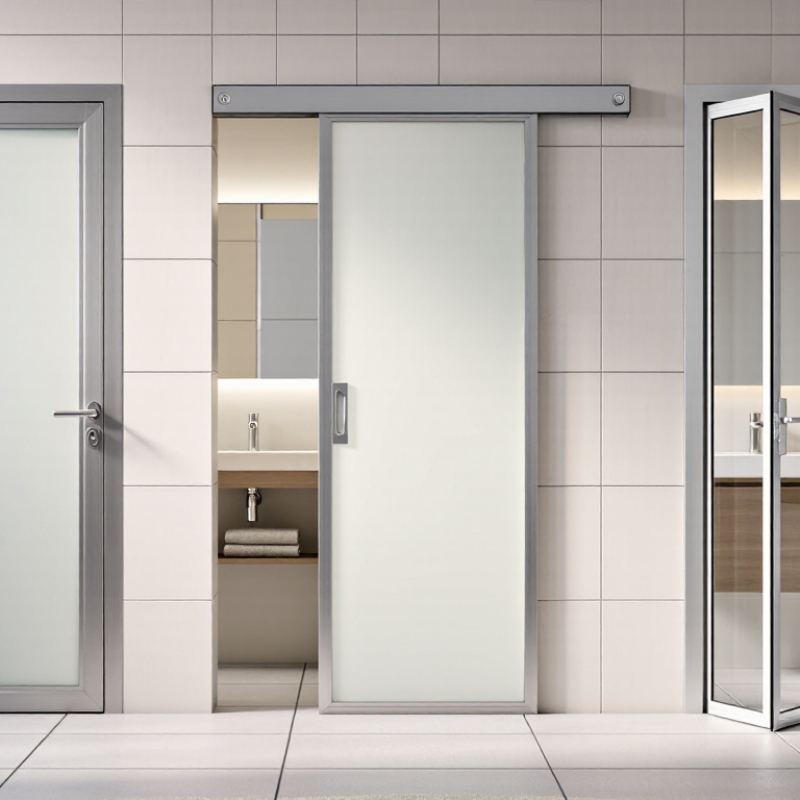
An aluminium washroom door is a door system with a frame, and sometimes a panel, made from aluminium alloy. It separates toilet cubicles, changing areas, or shared washrooms while allowing controlled access. Many designs pair an aluminium frame with a compact laminate or moisture-resistant panel. A thin metal frame alone may not provide enough privacy or impact resistance. The surface handles routine splashes and is relatively easy to wipe, though hinges, locks, and lower edges still need regular inspection. A practical choice.
Common types include framed panel doors, full-height doors, and compact cubicle doors with aluminium edges or fittings. They can be hinged or sliding, depending on space and layout. Aluminium is light, so it can reduce strain on hinges, but the complete door’s weight depends on its panel and hardware. In humid rooms, installation details matter: poorly sealed joints can trap water, and unsuitable fittings may corrode. That part is easy to underestimate. Prices vary with door dimensions, panel material, hardware, finish, and installation requirements, so compare complete specifications rather than frame material alone. A low quoted price may omit essential fittings.
In 2026, aluminium washroom doors are available in several practical styles, each suited to different room layouts. Hinged doors remain a common choice for private bathrooms and toilet cubicles. They swing open on side-mounted hinges and can use solid aluminium panels, compact laminate, or privacy glass within an aluminium frame. Check the available clearance: a door that looks neat on a plan may obstruct a sink or narrow corridor.
Sliding doors are useful where swing space is limited. Top-hung systems keep the floor track clear, though the wall must have room for the door to slide. Bi-fold doors fold inward and suit tight spaces, but their hinges and moving panels need regular inspection. Louvered designs allow airflow through angled slats, while framed panels with frosted glass can bring in light without making the room feel exposed. Privacy details matter.
For humid washrooms, aluminium frames resist moisture-related corrosion better than many untreated metals, but hardware and finishes still affect long-term performance. Look for sealed edges, sturdy hinges, and a finish that is easy to wipe clean. A small gap beneath the door can aid ventilation, yet it may reduce sound privacy. That trade-off is easy to miss. The best type depends on available space, ventilation needs, privacy expectations, and how often the door will be used.
Aluminium washroom doors commonly use lightweight 6063-series extrusions, while compact laminate and stainless-steel doors offer different weight, cost, and wear profiles. Aluminium is easier to handle and can resist moisture, but thin sections may dent around busy cubicles. Check frame thickness, edge construction, and panel rigidity—not just the quoted door price. Small details matter.
Finishes change both appearance and upkeep. Anodising leaves a metallic surface; powder coating offers more colour choices but may chip if edges are poorly protected. The International Aluminium Institute reports that recycling aluminium uses about 95% less energy than producing primary aluminium. That is useful lifecycle context, not proof that one door lasts longer. Hardware also affects cost: stainless-steel hinges and feet generally suit damp rooms better than basic plated parts. Match the grade to cleaning chemicals and ventilation. A low initial price can become a false saving.
Tips: Ask for finish specifications, hardware grade, and warranty exclusions in writing. Inspect hinge fixings and door edges on a sample. For high-traffic sites, compare replacement-part availability too. One point is easy to miss: even good hardware can loosen when installers skip routine adjustment. Prices vary with dimensions, finish, and hardware package, so compare like-for-like quotations.
Aluminium washroom door prices depend on more than the panel itself. Alloy grade and profile thickness affect strength and material use. A thicker frame may suit a busy public restroom, but it can raise the quote. Door size, custom cuts, privacy locks, hinges, ventilation grilles, and edge details also add cost. Powder coating or anodizing can change the finish price, especially when a project needs a non-standard colour. Small details matter.
Installation and site conditions matter too. Uneven floor tiles, narrow corridors, and existing partitions can require extra trimming or labour. The International Aluminium Institute reports that recycled aluminium production uses about 5% of the energy needed for primary aluminium production. This figure describes energy use, not a guaranteed door-price saving; recycled content, processing, and local supply all influence the final cost. That distinction is easy to miss. Ask suppliers to specify material thickness, finish, hardware, delivery, and installation separately, so quotes can be compared fairly.
Tips: Measure the clear opening and check floor clearance before requesting quotes. Choose standard dimensions and finishes where possible. Request a written breakdown, then confirm that the quoted hardware suits the room’s expected use.
For 2026, a standard hinged aluminium washroom door typically costs about $250–$700 for the door and frame, or $450–$1,100 installed. The lower end usually covers a plain panel, basic finish, and standard hinges. A heavier frame, privacy lock, or custom size can raise the quote. Small details add up.
Sliding doors often range from $500–$1,400 for materials and $800–$2,000 installed. Their tracks, rollers, and wall supports explain much of the difference. They can save floor space, but a poor track choice may lead to noisy operation or difficult cleaning. That part is easy to overlook.
A folding aluminium door may cost $350–$900 before installation, with a typical installed price of $600–$1,300. These ranges are broad planning estimates in US dollars for common sizes, not fixed market prices. Regional labor rates, glazing, coatings, hardware quality, and site preparation all affect the final amount. Ask whether removal, delivery, and fitting are included; estimates do not always spell this out clearly.
Typical estimated US prices per door, including the door and standard installation.
Prices are indicative 2026 estimates in USD. Actual costs vary by door size, finish, hardware, site conditions, and local labor rates; taxes and major remodeling work are excluded.
It uses an aluminium frame, and sometimes an aluminium panel. Many designs pair the frame with compact laminate or another moisture-resistant panel. The frame alone may not provide enough privacy or impact resistance.
Common options include hinged, sliding, bi-fold, louvered, and full-height doors. Some use frosted glass to bring light into a washroom while limiting visibility. Privacy still depends on the design.
Sliding doors can work well where a door swing would block a sink or narrow walkway. Top-hung systems keep the floor track clear. The wall still needs space for the door to slide.
Measure the swing area and check nearby sinks, walls, and corridors. A door can look tidy on a plan but obstruct the room in practice. Easy to overlook.
Aluminium frames resist moisture-related corrosion better than many untreated metals. Sealed joints, suitable fittings, and durable finishes still matter. Water can collect at poorly sealed edges.
Angled slats allow airflow through the door. A gap beneath the door can also help ventilation, but it may reduce sound privacy. A small trade-off.
Wipe surfaces to remove routine splashes, then inspect hinges, locks, and lower edges regularly. Check for trapped water near joints. That detail gets missed.
Price depends on dimensions, panel material, hardware, finish, and installation needs. Compare complete specifications, not just the frame. A low quote may leave out essential fittings.
This guide explains what an Aluminium Washroom Door is and why it is a practical choice for bathrooms and other humid spaces. It compares common 2026 options, including hinged, sliding, folding, and louvre-style doors, highlighting how each design suits different layouts, privacy needs, and ventilation requirements.
It also outlines how frame and panel materials, surface finishes, glazing, locks, hinges, and other hardware affect durability, appearance, and cost. Typical prices can vary by door type, size, finish, hardware specification, and installation needs: simpler standard designs are generally more affordable, while custom sizes, upgraded finishes, and specialized hardware tend to increase the total. The guide helps readers compare options and plan a realistic budget before choosing a door.